




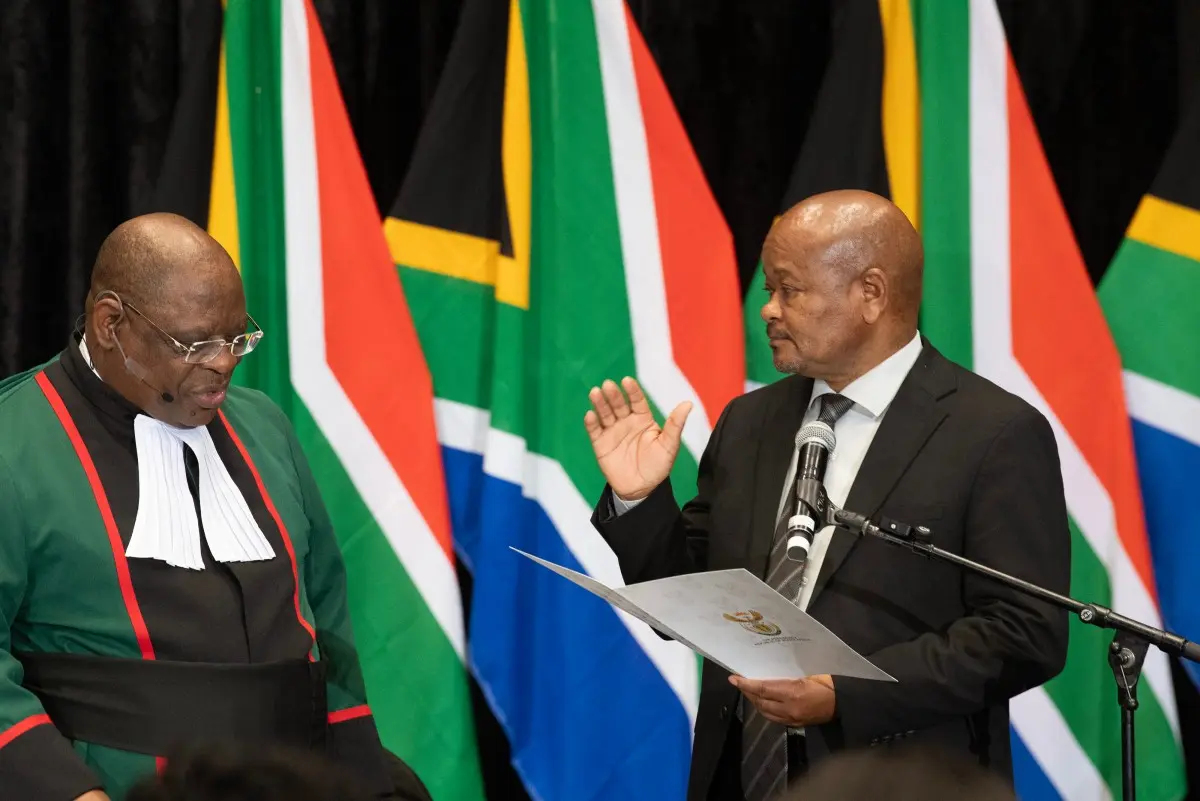
“President Cyril Ramaphosa has officially sworn in new Ministers and Deputy Ministers as part of the Government of National Unity, signaling a major governance shift in South Africa. The reshuffle is designed to strengthen accountability, improve service delivery, and stabilize coalition politics amid growing public pressure.”
South Africa entered a new chapter in its governance on July 1, 2026, when President Cyril Ramaphosa presided over the swearing-in of new Ministers and Deputy Ministers under the framework of a Government of National Unity (GNU). This development comes at a time of heightened political tension, economic uncertainty, and public demand for stronger accountability. The GNU represents a coalition of diverse political parties, designed to foster inclusivity and stabilize governance.
Background
The decision to form a GNU follows months of political negotiations and growing dissatisfaction with service delivery. Persistent issues such as non-payment of government invoices within 30 days, corruption scandals, and inefficiencies in public administration have eroded public trust. Ramaphosa’s move is seen as an attempt to restore confidence by bringing multiple stakeholders into the governance process.
Key Appointments
- New Ministers and Deputy Ministers were sworn in, representing a mix of ANC members and coalition partners.
- The appointments aim to balance political representation while ensuring competence in critical portfolios such as finance, energy, housing, and justice.
- Chief Justice Raymond Zondo presided over the ceremony, underscoring the constitutional legitimacy of the process.
Governance Challenges
Despite the optimism surrounding the GNU, several challenges remain:
- Service Delivery Failures: The Public Service Commission highlighted ongoing violations of the Public Finance Management Act due to late payments.
- Economic Pressures: Johannesburg’s reliance on loans to fix electricity infrastructure reflects broader fiscal strain.
- Public Protests: Recent nationwide marches against illegal immigration revealed deep social divisions, though most were conducted peacefully.
Political Implications
The GNU is expected to:
- Strengthen coalition politics by integrating opposition voices into governance.
- Reduce instability by addressing xenophobic tensions and ensuring peaceful demonstrations.
- Enhance accountability through shared responsibility across party lines.
Public Reaction
Civil society organizations, including Amnesty International South Africa, have welcomed the GNU but warned that systemic issues such as corruption and xenophobia must be addressed urgently. Business leaders have also called for collaboration to reverse urban decay and restore investor confidence.
International Dimension
Ramaphosa’s leadership extends beyond domestic governance. His upcoming African Union mission to the DRC highlights South Africa’s role in continental solidarity, particularly in responding to public health crises like Ebola.
Conclusion
The swearing-in of the new Cabinet under the GNU marks a pivotal moment in South Africa’s governance. While the move promises inclusivity and stability, its success will depend on the government’s ability to deliver tangible improvements in service delivery, economic management, and social cohesion. For Ramaphosa, this is both an opportunity and a test of leadership in navigating coalition politics while addressing the pressing needs of citizens.



