




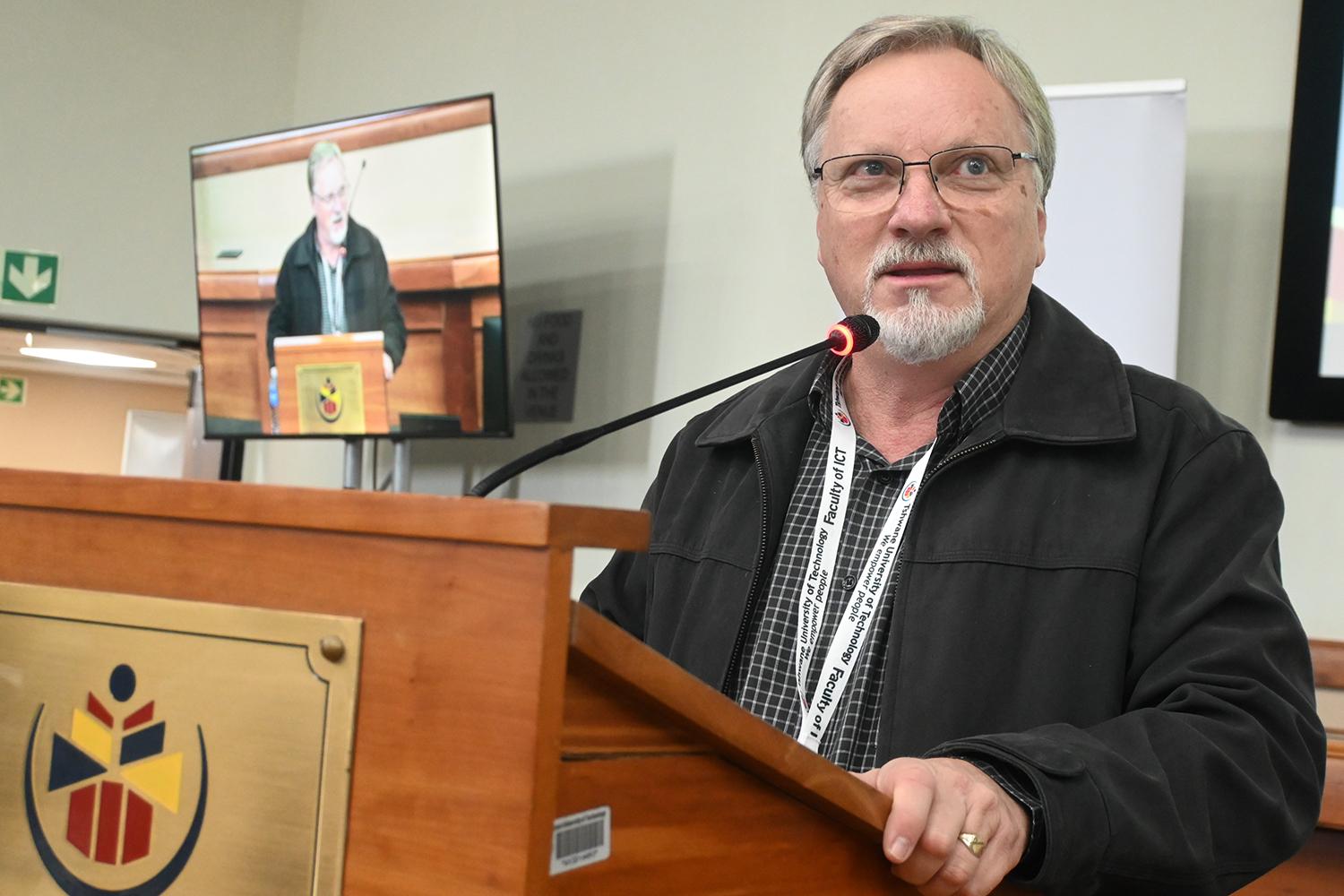
“The Tshwane University of Technology hosted its 2026 Faculty of Information and Communication Technology Research Day, showcasing South African research into artificial intelligence, cybersecurity, machine learning, software development, wildlife surveillance and quantum computing. The event also highlighted responsible research, AI-informed higher education and practical technology skills, illustrating how university research can contribute to solving challenges in South Africa and beyond.”
South Africa Advances Technology Innovation as TUT Researchers Explore AI, Cybersecurity and Emerging Technologies
Introduction
South Africa’s technology innovation landscape received another spotlight on 14 October 2026, when the Tshwane University of Technology (TUT) published details of its 2026 Faculty of Information and Communication Technology Research Day. The event brought researchers, academics and postgraduate students together to present work addressing emerging challenges in information technology, artificial intelligence, cybersecurity and other developing fields.
The research showcase reflects the important role universities play in developing knowledge, strengthening technical skills and exploring solutions to real-world problems. As digital technologies become increasingly important to businesses, government institutions, education and environmental management, research that connects technological progress with practical needs has the potential to deliver significant benefits.
According to TUT, the programme covered artificial intelligence (AI), machine learning, software development, wildlife surveillance, quantum computing and research integrity. Presentations also explored the use of AI in higher education and new methods for detecting cyberattacks against connected devices.
Artificial Intelligence Takes Centre Stage
Artificial intelligence featured prominently at the research event, reflecting its growing influence on workplaces, education and technological development. The keynote address was delivered by Dr Willem Thompson, Data Science Delivery Lead and Director at Trizio Consulting.
His presentation, titled “Agentic AI in the Workplace: The New Leadership Paradox”, examined emerging AI technologies and their implications for leadership and organisational practices.
Agentic AI generally refers to systems capable of pursuing defined objectives through multiple steps, sometimes using tools and adjusting their actions in response to results. These capabilities could change how organisations approach administrative work, information analysis, customer support and selected operational processes.
However, introducing more autonomous AI systems also raises questions about accountability, supervision and decision-making. Organisations must determine which tasks can safely be delegated to automated systems, which decisions require human approval and how errors should be identified and corrected.
For South African businesses, these questions matter because the potential value of AI depends on more than access to sophisticated software. Organisations also need appropriate infrastructure, skilled employees, reliable information and governance arrangements.
The keynote placed workplace leadership within this changing environment. It highlighted a central challenge for decision-makers: adopting technological capabilities while maintaining effective oversight and ensuring that employees understand how automated systems influence their work.
Strengthening Cybersecurity for Connected Devices
Another important presentation addressed cybersecurity in the Internet of Things (IoT). Researcher Coster Baloyi presented a study titled “A Hybrid Machine Learning-Based Security Algorithm for Distributed Denial of Service Attacks Detection and Prevention on the Internet of Things.”
The research focused on applying machine learning approaches to strengthen the detection and prevention of distributed denial-of-service (DDoS) attacks in IoT environments.
A DDoS attack attempts to overwhelm a digital service or network with excessive traffic or requests, preventing legitimate users from accessing it. Such attacks can involve numerous compromised devices working together, making detection and mitigation challenging.
The growing use of connected devices creates additional security considerations. Smart equipment, industrial sensors, connected infrastructure and networked monitoring systems can increase operational efficiency, but poorly secured devices may also provide opportunities for cybercriminals.
Machine learning can help cybersecurity systems recognise patterns associated with malicious activity. A hybrid approach may combine different techniques to improve detection, although its effectiveness depends on the specific methods, training data and testing conditions involved.
The TUT announcement did not publish detailed performance measurements or establish that the proposed algorithm had been deployed commercially. Nevertheless, the research topic demonstrates the relevance of developing security approaches suited to increasingly connected digital environments.
For South Africa, stronger cybersecurity research could support organisations that depend on digital services. Financial institutions, businesses, universities and public-sector agencies all have reasons to protect information systems against disruption.
Practical impact will ultimately depend on whether promising research can be validated, adapted to different environments and implemented at an appropriate cost.
Rethinking Higher Education in the Age of Generative AI
Education was another major theme. Elesa Ntuli presented research titled “Rethinking Curriculum Design in the Era of Generative AI: Towards Contextually Responsive Learning in South African Higher Education.”
Generative AI tools can produce text, explanations, summaries, computer code and other content in response to instructions. Their availability is prompting universities to reconsider teaching methods, assessment practices and the skills students need to develop.
The challenge is not simply deciding whether students should use AI. Higher education institutions must also consider how to help learners evaluate machine-generated information, recognise errors, protect personal information and demonstrate their own understanding.
A curriculum that responds to these changes could incorporate AI literacy, critical thinking, ethical reasoning and practical problem-solving. At the same time, students need opportunities to develop foundational knowledge rather than relying entirely on automated assistance.
South African universities must also consider their own circumstances. Access to reliable connectivity, appropriate devices and paid digital tools can differ considerably among students. Curriculum changes should therefore account for unequal access and avoid creating additional barriers to participation.
Ntuli’s research placed particular emphasis on contextually responsive curriculum design. This is important because international technology trends cannot always be transferred directly into local educational settings without considering institutional priorities, student needs and available resources.
The research offers a useful perspective on the relationship between innovation and education: technological adoption is most meaningful when it strengthens learning outcomes and prepares students to participate responsibly in a changing economy.
Building Practical Software Development Skills
Mashitishi Phurutsi presented research titled “A Framework for Adopting a Hackathon for Enhancing Cloud-Native Software Development Competencies in South African Universities.”
Hackathons typically bring participants together to develop solutions within a limited period. They can encourage collaboration, experimentation and rapid prototyping, giving students opportunities to apply theoretical knowledge to practical challenges.
Cloud-native software development involves building applications around technologies and practices designed for modern cloud environments. Depending on the project, these can include containers, automated deployment processes, distributed services and scalable infrastructure.
Developing competence in this area requires more than understanding programming concepts. Students also need experience with collaborative workflows, testing, deployment, debugging and the integration of different software components.
A structured hackathon framework could help universities connect classroom learning with these practical activities. It could also create opportunities for students to work in teams and learn how to communicate technical decisions.
However, a hackathon alone cannot guarantee professional readiness. Its educational value depends on preparation, mentoring, suitable project design and assessment that measures genuine learning.
If incorporated into broader academic programmes, such activities could help students build portfolios of work and become more familiar with the development practices used in technology organisations.
Applying Artificial Intelligence to Wildlife Surveillance
The programme also explored an application of AI beyond conventional business and computing environments. Kanda Tshinu presented research titled “Edge-Optimised DINOv3-YOLOv8-DeepSORT: A Self-Supervised Approach for Real-Time Cross-Dataset Wildlife Surveillance.”
The research examined an AI-based approach to wildlife monitoring, focusing on computer vision and edge optimisation to support real-time surveillance across different datasets.
Computer vision enables software to analyse visual information, including images and video. In wildlife surveillance, such systems may help identify animals, track movement and process footage collected by cameras in conservation areas.
Real-time monitoring can be valuable where large areas must be observed and human monitoring is difficult or expensive. Automated analysis may help researchers and conservation teams process substantial amounts of visual data more efficiently.
Edge optimisation concerns running computational tasks on or near the devices collecting information instead of sending every item of data to a distant server. Depending on the implementation, this can reduce communication requirements and support faster responses where connectivity is limited.
The research combines several named computer-vision technologies, but the university announcement does not provide numerical results or confirm a completed operational deployment. Its potential contribution should therefore be understood as an area of investigation rather than proof of a fully implemented conservation system.
Even so, the topic demonstrates how South African technology research can explore applications that connect digital innovation with environmental priorities.
Quantum Computing and the Limits of Emerging Technologies
Dr Vianney Kambale delivered a technical presentation titled “Quantum Machine Learning: Promise, Hype, and Open Problems.”
Quantum computing uses principles of quantum physics to process information in ways that differ from conventional computing. Researchers are investigating whether particular quantum techniques could offer advantages for selected computational problems.
Quantum machine learning explores the intersection of quantum computing and machine-learning methods. It is an active research area, but many proposed applications remain experimental, and practical advantages over classical alternatives are not established for most real-world tasks.
The presentation’s emphasis on promise, hype and open problems is particularly relevant as emerging technologies attract attention from researchers, investors and businesses.
Responsible innovation requires distinguishing demonstrated capabilities from theoretical possibilities. Organisations considering emerging technologies need evidence that a proposed approach solves a meaningful problem better than available alternatives.
For universities, this means encouraging curiosity while teaching students to assess claims critically. Research can advance through investigating unresolved questions, even when immediate commercial applications are uncertain.
The presentation also illustrates why research events are valuable: they create opportunities to discuss both technological possibilities and the technical barriers that remain.
Research Integrity and Responsible Innovation
Dr Tonderai Muchenje, a senior lecturer in TUT’s Department of Information Technology and deputy chair of the university’s Human Research Ethics Committee, addressed research integrity in a presentation titled “Responsible Conduct of Research in ICT: Research Integrity, Misconduct and Questionable Research Practices in the Digital Age.”
The session focused on responsible research practices as technology changes how studies are conducted, managed and shared.
Research integrity is essential across scientific disciplines, including computer science and AI. Researchers need to report methods and findings accurately, respect privacy, document limitations and avoid presenting unsupported conclusions as established facts.
AI tools introduce additional considerations. Researchers must evaluate the reliability of generated content, protect sensitive data and follow relevant institutional policies. They must also remain accountable for the accuracy and originality of the work they publish.
These principles matter when technologies influence important decisions, including security monitoring, education and environmental management. Incorrect conclusions can have consequences beyond the research environment if systems are later adopted in practical settings.
By including research ethics alongside technical presentations, TUT’s programme highlighted that innovation involves both capability and responsibility.
Supporting Postgraduate Research and Wider Social Impact
TUT also provided postgraduate students with opportunities to present research posters across master’s and doctoral, postgraduate diploma and national diploma categories.
The university reported that the wider programme addressed areas including cybersecurity, education, agriculture, water management, wildlife conservation and digital authentication.
This breadth demonstrates how information and communication technology can intersect with challenges in several sectors. Digital tools may support more efficient processes, improve information management and help researchers investigate complex problems.
However, moving from academic research to practical implementation requires sustained effort. Promising ideas may need additional funding, testing, partnerships, infrastructure and engagement with the people expected to use them.
Universities can contribute by connecting students with industry, public institutions and communities. Such partnerships can help researchers understand real needs while giving potential users an opportunity to assess whether a proposed solution is practical.
Postgraduate research also helps develop specialised skills that South Africa needs to sustain a capable technology workforce. Providing students with platforms to explain and defend their work can strengthen scientific communication and collaboration.
Conclusion
TUT’s 2026 Faculty of Information and Communication Technology Research Day showcased a broad range of South African research interests, from AI-enabled workplace systems and cyberattack detection to curriculum design, cloud-native software development, wildlife surveillance and quantum machine learning.
The event also placed research integrity and postgraduate participation within the wider discussion of technological progress.
The significance of the showcase lies not in proving that every research project is ready for commercial use, but in demonstrating the variety of questions researchers are investigating. Turning those investigations into measurable public and economic benefits will require rigorous evaluation, responsible implementation, skilled people and sustained collaboration.
As South Africa continues to navigate digital transformation, university research can help build the knowledge needed to respond to local challenges and emerging opportunities. TUT’s research showcase offers a snapshot of that work, while highlighting the importance of ensuring that innovation remains practical, inclusive and accountable.



