




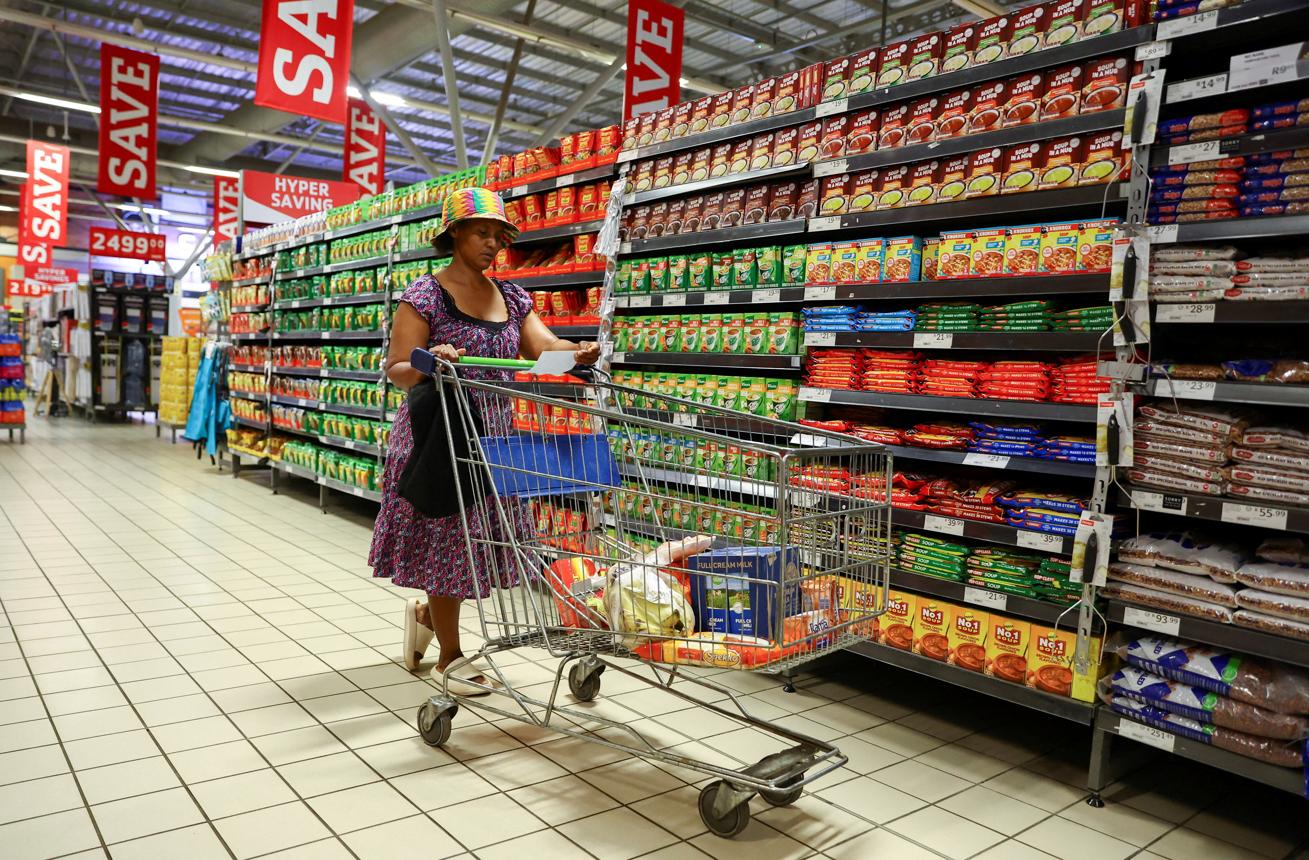
“South Africa’s retail sales volumes increased by 3.3% year on year in August 2026, but declined by 0.3% compared with July, indicating that consumer demand remained positive over the year while losing some short-term momentum. Clothing, footwear and textile retailers performed strongly, whereas hardware, paint and glass retailers experienced weaker sales amid pressure from rising living costs, transport expenses and interest rates.”
South African Retail Sales Show Uneven Recovery as Household Budgets Remain Under Pressure
Retail growth conceals a divided consumer market
South Africa’s retail sector is showing signs of resilience, but the latest sales figures suggest that the recovery in consumer demand remains uneven. Retail sales volumes increased by 3.3% in August 2026 compared with the same month in 2025. However, sales declined by 0.3% compared with July, following a stronger monthly increase of 2.4% in July. These figures suggest that consumers continued purchasing goods, although the pace of spending weakened during August.
The distinction between annual and monthly growth is important for understanding the country’s microeconomic conditions. Annual growth indicates that retailers sold a greater volume of goods than they did a year earlier. Monthly performance, meanwhile, offers a more immediate indication of whether demand is strengthening or weakening.
The August figures therefore present a mixed picture. Although retailers sold more goods than they did in August 2025, the monthly decline suggests that businesses cannot assume consumers will continue increasing their purchases at the same pace.
Microeconomics examines decisions made by individual consumers, households and businesses, including how people allocate limited income, how retailers set prices, and how companies respond to changes in demand. South Africa’s retail performance illustrates these relationships, particularly as households attempt to balance essential expenditure against discretionary purchases.
Clothing retailers outperform while hardware businesses struggle
One of the most significant features of the latest retail figures is the difference in performance between product categories.
Clothing, footwear and textile retailers recorded a 6.5% increase in sales volumes compared with August 2025. By contrast, hardware, paint and glass retailers experienced a 3.6% annual decline. Hardware sales also fell compared with the previous month.
hese contrasting results demonstrate that consumer demand does not move uniformly across the economy. Different categories respond to household priorities, income expectations, purchasing cycles and the perceived urgency of a purchase.
Clothing demand can benefit from seasonal shopping, promotional campaigns, changing fashion preferences and consumers replacing essential items. Retailers that offer attractive discounts or a broad selection of products may also attract shoppers who compare prices before spending.
Hardware products, however, can involve larger purchases that households and businesses may postpone when finances become uncertain. Consumers might delay renovations, maintenance projects or home improvements if they are concerned about transport costs, loan repayments or other essential expenses.
The decline in hardware sales does not, by itself, prove that consumers have permanently abandoned these purchases. Instead, it indicates that demand in this category was weaker during the period under review.
For retailers, this divergence has practical consequences. Businesses need to understand which products customers consider essential, which purchases can be postponed, and which promotions are most likely to influence purchasing decisions.
Household purchasing power remains central to demand
Consumer purchasing power is a key factor in determining retail performance. It describes the amount of goods and services that people can afford with their available income.
When household income increases faster than prices, consumers may be able to purchase more products. However, when essential expenses absorb a growing proportion of income, households often have less money available for clothing, electronics, home improvements, entertainment and other discretionary goods.
South Africa’s latest inflation figures illustrate why this distinction matters. Statistics South Africa reported that annual consumer inflation increased to 4.5% in September 2026, from 4.4% in August and 4.3% in July. Prices increased by 0.4% between August and September.
Although the overall inflation rate does not reveal the experience of every household, it provides an indication of the changing cost of the consumer basket.
Different families face different pressures depending on where they live, how they travel, whether they rent or own a home, and how much they spend on food and transport. A household that depends on daily minibus taxi journeys, for example, may experience a different cost-of-living burden from a household with limited commuting expenses.
As essential costs rise, consumers may respond by switching brands, buying smaller quantities, postponing purchases or searching for cheaper retailers. These individual decisions can collectively influence sales volumes across entire industries.
For businesses, understanding this behaviour is increasingly important. Retailers that fail to recognise customers’ changing budgets risk losing sales to competitors that provide more affordable alternatives.
Rising transport costs affect retail prices and consumer choices
Transport expenses are particularly important because they affect both households and businesses. Consumers pay to travel to work and shops, while retailers and suppliers pay to move products through distribution networks.
Statistics South Africa reported that the fuel price index increased by 6.2% between August and September 2026 and was 27.9% higher than a year earlier. Passenger transport inflation reached 12.3% in September, while minibus taxi fares were 13.8% higher year on year.
These increases create several channels through which transport costs can influence retail demand.
First, commuters may have less disposable income after paying for daily travel. Second, retailers may face higher freight, delivery and distribution expenses. Third, suppliers may increase their prices to compensate for higher operating costs, potentially passing some of the additional expense on to consumers.
However, businesses cannot always transfer every cost increase to customers. If shoppers are highly sensitive to prices, a retailer that raises prices too aggressively could lose sales to competing businesses.
This creates a difficult commercial decision. Retailers must balance profitability against affordability while considering whether consumers are willing and able to absorb higher prices.
Some businesses may respond by improving logistics, renegotiating supplier agreements, reducing waste or concentrating on products with stronger demand. Others may introduce promotions to protect market share.
The effectiveness of these strategies depends on the competitive environment, the products being sold and the financial circumstances of customers.
Interest rates and borrowing costs influence spending
Interest rates provide another important link between financial conditions and consumer behaviour.
When borrowing becomes more expensive, households with variable-rate loans or other interest-sensitive debt may face higher repayments. This can leave less money available for non-essential purchases.
Businesses also experience the effects of higher borrowing costs. Retailers that depend on credit to finance inventory, equipment, expansion or daily operations may need to reconsider investment decisions when financing becomes more expensive.
Business Day’s coverage of the August retail figures highlighted the pressure associated with rising living costs and the Reserve Bank’s September interest-rate increase.
The effect of interest rates is not identical across all consumers. Households with substantial debt may be more exposed to higher repayments, while people who save money may receive better returns on interest-bearing deposits.
Nevertheless, expensive credit can discourage purchases that rely on financing, including certain household appliances, vehicles and other durable goods.
Retailers therefore need to consider not only current sales but also customers’ expectations about future income, employment and borrowing costs.
When households become uncertain about their finances, they may increase precautionary saving or postpone large purchases, even when their current income has not changed significantly.
Food prices and the competition between essential and discretionary spending
Food expenditure illustrates how household budget constraints influence other parts of the retail economy.
Consumers generally cannot eliminate essential food purchases altogether, but they can change the quantities, brands and products they buy. They may choose less expensive alternatives, compare supermarket prices or reduce spending on premium products.
Statistics South Africa’s September inflation report showed that annual inflation for food and non-alcoholic beverages increased to 1.2%, from 1.1% in August. Cereal products recorded annual deflation of 1.9%, although their prices increased by 0.3% between August and September.
These figures show why the overall inflation rate does not tell the complete story. Some food products can become cheaper over a year while other categories become more expensive.
Consumers respond to these relative price differences by adjusting their shopping baskets. When one product becomes more expensive relative to a substitute, demand may shift towards the alternative.
For retailers, this means that category-level sales can change even when total household spending remains relatively stable. A supermarket may sell more of one brand and less of another as consumers compare prices and perceived quality.
The same principle applies outside the food sector. When essential expenditure takes up a larger share of household budgets, consumers may cut back on clothing, furniture, electronics and home improvement products.
Consequently, weak performance in a retail category can reflect broader household budget decisions rather than a lack of interest in the products themselves.
Competition is becoming increasingly important
South Africa’s uneven retail performance places greater emphasis on competition between established retailers, independent businesses and informal traders.
Retailers compete through pricing, convenience, product availability, promotions, store locations, payment options and customer service. Consumers compare these characteristics when deciding where to shop.
Research reported by Business Day in September indicated that South African fast-moving consumer goods shoppers were increasingly dividing their spending between budget and premium products, placing pressure on the middle of the market. The report also described consumers switching between brands and responding to promotions depending on the product category.
This behaviour illustrates that consumers do not always follow a single pattern of trading down to cheaper products. Someone might buy a low-cost household essential while choosing a premium item in another category.
Retailers must therefore understand the specific needs of different customer groups rather than assume that one pricing strategy will work across their entire product range.
Promotional pricing can attract shoppers and increase sales volumes, but excessive discounting can also reduce profit margins or train customers to wait for special offers.
Smaller businesses may find it difficult to compete with large retailers on purchasing power and distribution costs. However, they can still differentiate themselves through personal service, convenient locations, specialised products and relationships with local customers.
Healthy competition can benefit consumers by improving choice and encouraging efficiency. However, its effectiveness depends on whether businesses can enter markets, expand operations and compete on fair terms.
What the figures mean for retailers and small businesses
The latest sales figures suggest that retailers should focus on the quality of demand, not simply headline growth.
A 3.3% annual increase in retail sales volumes is encouraging, but the monthly decline highlights the importance of monitoring short-term changes in consumer behaviour.
Businesses can respond by tracking sales by product category, monitoring stock turnover, comparing promotional results and reviewing customers’ purchasing patterns.
Inventory management is particularly important. Ordering too much stock when demand is weakening can increase storage costs and create pressure to discount unsold products. Ordering too little, on the other hand, can lead to missed sales when demand strengthens.
Retailers may also benefit from offering products at different price points, allowing customers to choose according to their budgets. Transparent pricing and reliable product availability can help build trust when consumers are paying closer attention to spending.
Small businesses should also monitor operating expenses, particularly transport, utilities and supplier costs. Improving delivery efficiency and reducing unnecessary expenditure may help protect margins without relying exclusively on price increases.
Nevertheless, businesses must avoid assuming that every consumer is equally price-sensitive. Some customers prioritise quality, convenience or durability, while others focus primarily on the lowest available price.
The most effective commercial decisions will depend on evidence about the business’s own customers and market conditions.
Outlook: A cautious consumer market
South Africa’s retail outlook remains mixed. Annual sales growth suggests that consumer demand has not disappeared, but weaker monthly performance indicates that momentum is not uniform across the sector.
Inflation, transport costs, household debt commitments and employment conditions will remain important influences on purchasing decisions. Changes in these factors can affect both the quantity of goods consumers buy and the prices businesses can charge.
The September inflation figures are particularly relevant because rising transport costs can affect household budgets and retailers’ operating expenses simultaneously.
However, it would be premature to conclude from one month’s retail data that South Africa is entering a sustained retail downturn. Monthly results can fluctuate, and individual sectors can perform differently depending on seasonal patterns, promotions and other market conditions.
Further retail releases will help establish whether the August slowdown was temporary or part of a broader trend. Businesses will also need to assess whether improvements in household purchasing power can translate into stronger demand across a wider range of products.
For policymakers, the figures underline the importance of conditions that allow households to participate in the economy while enabling businesses to operate efficiently and compete.
For consumers, the immediate concern remains affordability. For retailers, the challenge is to provide products that meet customers’ needs without undermining profitability.
The central microeconomic lesson is clear: retail growth depends not only on the overall state of the economy, but also on how individual households allocate limited incomes, how businesses respond to costs, and how competition influences prices and purchasing decisions.
South Africa’s latest retail figures show that demand remains resilient in some areas, but a sustained recovery will depend on whether consumers can afford to spend and businesses can respond to their needs in an increasingly cost-conscious market.



