




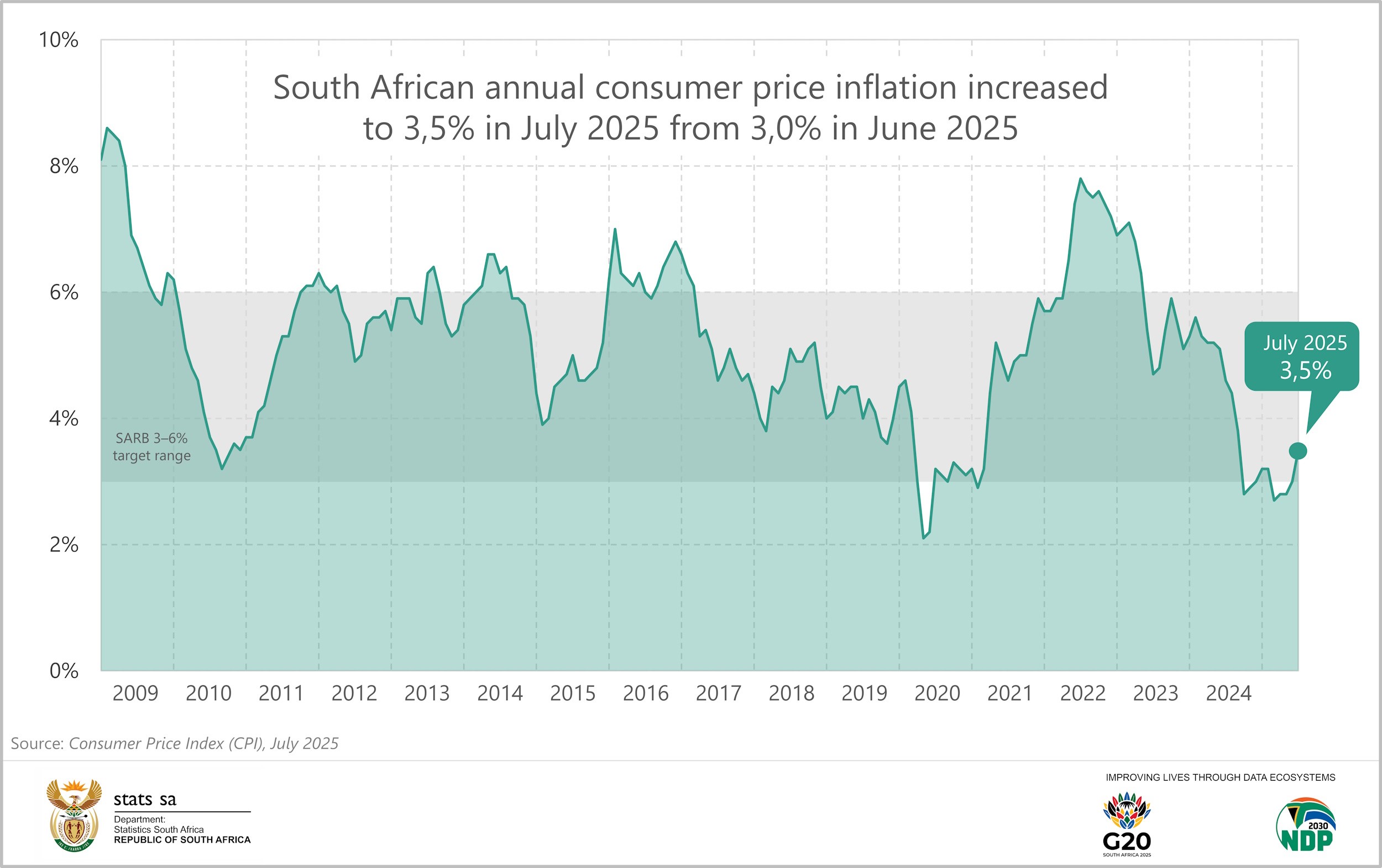
“South Africa’s consumer inflation rose sharply in June, driven by higher fuel and food prices. Households face reduced disposable income as borrowing costs increase.”
South Africa’s inflation rate climbed from 3% earlier this year to 4% in June, largely due to global oil price volatility and domestic food cost increases. This rise has forced the Reserve Bank’s Monetary Policy Committee (MPC) to raise the repo rate to 10.5%, directly impacting mortgage repayments and household credit costs. For consumers, this means tighter budgets and reduced spending power. Microeconomically, inflation erodes real wages, shifts consumption patterns, and pressures firms to adjust pricing strategies. Retailers report declining sales in non-essential goods, while grocery chains see increased demand for cheaper substitutes. The policy shift also highlights the tension between combating inflation and sustaining growth. Economists warn that restrictive monetary policy may not fully address supply-side shocks like oil prices, leaving households vulnerable. The broader implication is a slowdown in consumer-driven sectors, with ripple effects across employment and investment.



