




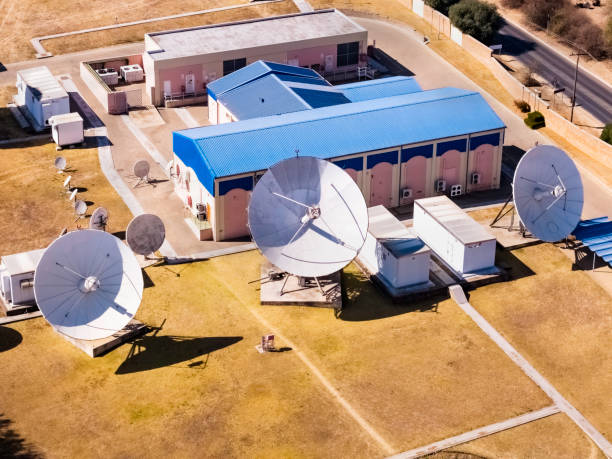
“South Africa’s newly launched state-backed satellite communications company is rapidly expanding its services to improve national connectivity, particularly in underserved rural areas. The initiative marks a significant step in Africa’s broader space ambitions, positioning South Africa as a continental hub for satellite infrastructure and innovation.”
South Africa has taken a bold step in its space and telecommunications strategy by launching a state-backed satellite communications company aimed at expanding national connectivity. This initiative, announced on July 2, 2026, is already making waves across the continent, as it promises to address long-standing challenges of digital inequality and infrastructure gaps.
Background
For years, South Africa has grappled with uneven access to internet and communications services, particularly in rural and remote regions. While private companies like Starlink and OneWeb have begun offering services in parts of Africa, the government’s move ensures that connectivity is not left solely to foreign operators. The new company is designed to integrate with existing infrastructure while building a nationally controlled satellite backbone.
Strategic Importance
- National sovereignty: By owning and operating its own satellite systems, South Africa reduces reliance on foreign providers.
- Economic growth: Improved connectivity supports entrepreneurship, digital trade, and education.
- Continental leadership: South Africa positions itself as a hub for African space innovation, complementing initiatives like the African GNSS Lab and Academy launched in June.
Technical Rollout
The company is deploying geostationary and low-earth orbit (LEO) satellite systems to cover both urban and rural areas. Early reports suggest that pilot programs in the Eastern Cape and Limpopo provinces are already showing improved broadband speeds and reliability. The rollout is expected to scale nationwide by the end of 2026.
Challenges
Despite optimism, challenges remain:
- Funding sustainability: Maintaining satellites and ground stations requires significant investment.
- Regulatory clarity: The Independent Communications Authority of South Africa (ICASA) recently clarified licensing rules for satellite operators, but enforcement will be key.
- Global competition: International providers continue to expand aggressively in Africa, raising questions about market share.
Broader African Context
South Africa’s move comes amid a surge of space-related activity across Africa:
- Namibia recently went live with LEO satellite connectivity through Twoobii-OneWeb.
- Lesotho expanded Starlink’s reach into police and disaster management services.
- Egypt is building a “Space Gateway” to strengthen its infrastructure.
These developments highlight Africa’s growing ambition to secure autonomy in space technology and communications.
Conclusion
The launch of South Africa’s satellite communications company is more than a national project—it is a continental milestone. By investing in space-based infrastructure, South Africa is not only bridging its own digital divide but also contributing to Africa’s collective push for technological sovereignty. The coming months will reveal whether this bold initiative can deliver on its promise of universal connectivity and economic transformation.



