




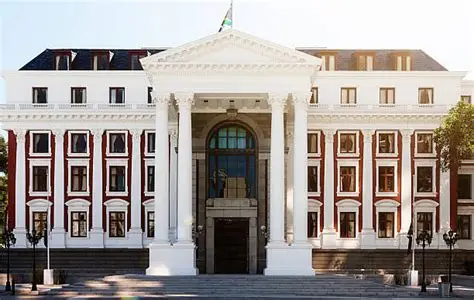
“South Africa has officially commenced the Constitution Eighteenth Amendment Act, expanding the High Court’s jurisdiction and strengthening judicial oversight of Parliament and the executive. The reform is expected to enhance accountability, improve judicial efficiency, and bolster investor confidence ahead of the 2026 Local Government Elections.”
On 2 July 2026, South Africa entered a new constitutional era with the commencement of the Constitution Eighteenth Amendment Act, a legislative milestone that reshapes the balance of power between the judiciary, Parliament, and the executive. This reform comes at a critical juncture as the Government of National Unity (GNU) faces mounting pressure to demonstrate stability and accountability ahead of the 2026 Local Government Elections (LGE).
Background and Context
South Africa’s constitutional framework has long emphasized the separation of powers, but disputes over land reform, employment equity, and healthcare regulation have exposed the limits of parliamentary and executive authority. Judicial oversight has increasingly become the “third actor” in resolving these disputes, often through Constitutional Court interventions.
Previous amendments focused on fiscal discipline and administrative reforms. However, this latest change directly addresses judicial independence and constitutional enforcement, ensuring that executive power is exercised within constitutional boundaries.
Key Provisions of the Amendment
- Expanded High Court Jurisdiction: The High Court now has broader authority to adjudicate constitutional matters, reducing reliance on the Constitutional Court for preliminary disputes.
- Strengthened Oversight Mechanisms: Parliament and executive actions are subject to stricter judicial review, reinforcing accountability.
- Erratum Notice: Corrections in the Gazette ensure clarity in the application of the amendment, minimizing ambiguity in interpretation.
Political Implications
The GNU has struggled with ideological divisions, particularly on land reform, employment equity, and healthcare regulation. The amendment formalizes the judiciary’s role as a stabilizing force, ensuring that constitutional principles are upheld even amid political disagreements.
Political analysts argue that this reform could restore investor confidence, as it signals a commitment to the rule of law and judicial efficiency. Ahead of the 2026 LGE, the amendment is expected to shape campaign narratives, with opposition parties likely to highlight its role in curbing executive overreach.
Economic and Social Impact
South Africa’s economy has faced challenges from municipal dysfunction, high fuel prices, and global supply chain disruptions. By strengthening judicial oversight, the amendment indirectly supports economic recovery by ensuring that policy decisions are constitutionally sound and less vulnerable to legal disputes.
Socially, the amendment enhances citizens’ trust in democratic institutions. With broader High Court jurisdiction, ordinary South Africans can expect faster resolution of constitutional disputes, reducing the backlog at the Constitutional Court.
Reactions from Stakeholders
- Legal Community: Lawyers and judges have welcomed the amendment, noting that it will streamline constitutional adjudication and reduce delays.
- Civil Society: Advocacy groups see the reform as a victory for accountability, particularly in areas like land reform and healthcare regulation.
- Business Sector: Investors view the amendment as a stabilizing measure that could improve South Africa’s global competitiveness.
Challenges Ahead
Despite its promise, the amendment faces challenges:
- Implementation Capacity: Expanding High Court jurisdiction requires additional resources, training, and infrastructure.
- Political Resistance: Some factions within the GNU may resist stricter judicial oversight, fearing constraints on executive power.
- Public Awareness: Ensuring that citizens understand the implications of the amendment will be crucial for its legitimacy.
Conclusion
The Constitution Eighteenth Amendment Act represents a bold step toward strengthening South Africa’s democracy. By expanding judicial oversight, the country is reinforcing its commitment to accountability, transparency, and the rule of law. As the 2026 Local Government Elections approach, this reform will likely serve as a cornerstone of political debate, shaping the future of governance in South Africa.



