




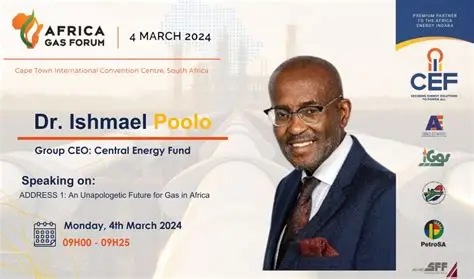
“South Africa’s Central Energy Fund (CEF) has revealed plans to rescue PetroSA from severe financial distress while launching a massive US$7.15 billion refinery project under the new South African National Petroleum Company (SANPC). The initiative aims to stabilize the petroleum sector, diversify revenue streams, and position SANPC as the country’s future national energy champion.”
South Africa’s energy landscape is undergoing a critical transformation. On 23 September 2026, the Central Energy Fund (CEF) presented to Parliament its strategic roadmap to stabilize PetroSA, strengthen its subsidiaries, and accelerate the operationalization of the South African National Petroleum Company (SANPC). This comes at a time when global oil markets are volatile, supply chains are strained, and domestic petroleum demand is under pressure.
PetroSA’s Financial Crisis
- PetroSA faces provisional liquidation due to a R600 million claim from Nako Energy.
- Liquidity challenges have crippled operations, raising concerns about fuel security.
- The company’s survival hinges on restructuring and government-backed stabilization.
CEF’s Strategic Priorities
Dr. Tshepo Mokoka, CEF’s CEO, emphasized four pillars:
- Stabilize operating entities like PetroSA.
- Strengthen execution capability across subsidiaries.
- Diversify revenue streams to reduce reliance on crude imports.
- Accelerate SANPC development as a national energy champion.
SANPC Refinery Programme
- Planned 400,000 barrels per day refinery.
- Estimated cost: US$7.15 billion.
- Designed to reduce import dependency and create a sustainable petroleum supply chain.
- Expected to generate thousands of jobs and stimulate industrial growth.
Subsidiary Performance
- iGas: Net profits of R4.2 billion over five years, boosted by Mozambique pipeline investments.
- Strategic Fuel Fund (SFF): Maintained assets of R10.4 billion and cash reserves of R5.19 billion.
- These subsidiaries demonstrate resilience, providing a financial backbone for SANPC’s rollout.
Geopolitical and Market Context
- Global oil price volatility has pressured South Africa’s import bill.
- Supply chain disruptions from geopolitical instability highlight the need for domestic refining capacity.
- SANPC is positioned as a strategic hedge against external shocks.
Governance and Oversight
- CEF presented improved governance outcomes to Parliament.
- Emphasis on transparency, accountability, and sustainable financial management.
- Parliament’s Portfolio Committee welcomed the plan but stressed execution risks.
Economic and Social Impact
- Job creation: Thousands of direct and indirect jobs expected.
- Energy security: Reduced reliance on imports strengthens national resilience.
- Industrial growth: Refinery will anchor downstream industries, including petrochemicals and plastics.
- Fiscal benefits: Potential to reduce foreign exchange outflows and stabilize the rand.
Risks and Challenges
- Funding: Raising US$7.15 billion amid fiscal constraints is daunting.
- Execution: Large-scale infrastructure projects in South Africa often face delays.
- Market shifts: Global transition to renewables could affect long-term viability.
Conclusion
The CEF’s plan represents a bold attempt to reshape South Africa’s petroleum sector. While PetroSA’s crisis underscores the fragility of state-owned enterprises, the SANPC refinery project offers a vision of resilience, industrial growth, and energy sovereignty. Success will depend on disciplined execution, transparent governance, and strategic alignment with global energy trends.



