




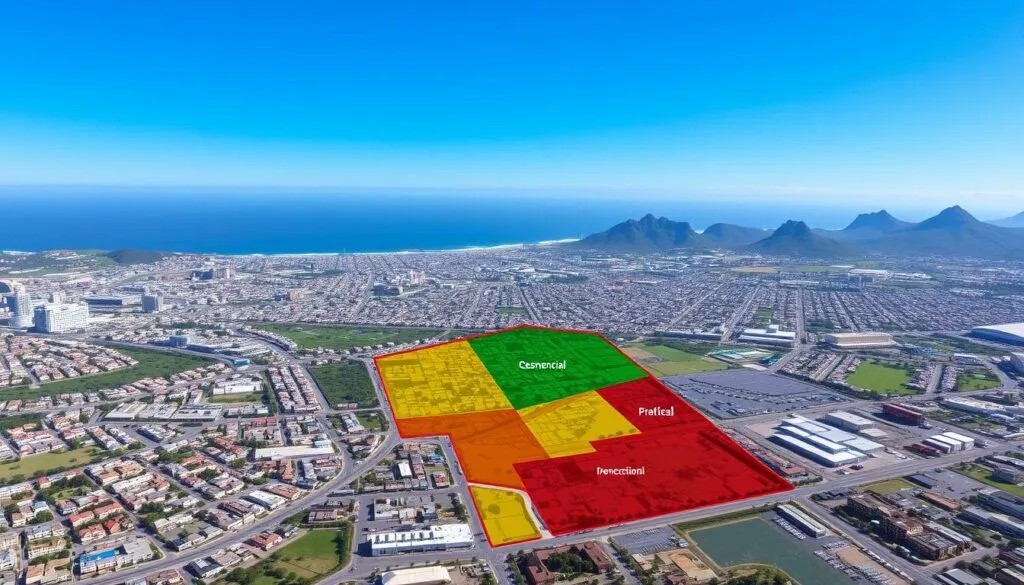
“South Africa’s land market in July 2026 is experiencing renewed confidence, with national property prices up 3.2% year-on-year and coastal hotspots like Cape Town and the Garden Route leading growth. Stable interest rates and semigration are fueling demand for vacant land, positioning it as a key asset class for investors and developers.”
The South African land real estate market has entered July 2026 with a wave of optimism. After years of volatility caused by inflationary pressures, interest rate hikes, and uneven regional growth, the latest data shows a stabilizing environment. Investors, developers, and homeowners are increasingly confident, particularly in land transactions across coastal and semigration hotspots.
Interest Rate Stability
The South African Reserve Bank (SARB) has maintained the repo rate at 7.00% and the prime lending rate at 10.50%. This stability is crucial for land buyers, as borrowing costs remain predictable. Analysts note that while affordability challenges persist, the absence of further hikes has allowed buyers to plan long-term investments in land with greater certainty.
National Price Movements
National property prices grew 3.2% year-on-year in July 2026. While modest, this growth signals improved consumer sentiment. Land parcels in high-demand regions are appreciating faster than the national average, underscoring the importance of location in real estate investment.
- Western Cape: Suburbs such as Bloubergstrand and Durbanville are experiencing 6.5% price growth, driven by family buyers and investors seeking short-term rental opportunities.
- Garden Route: George and Knysna report 5.8% appreciation, fueled by semigration from Gauteng and other provinces.
- Gauteng: Average growth is more moderate at 2.1%, but niche nodes with strong infrastructure and employment opportunities continue to attract land buyers.
Semigration and Lifestyle Shifts
Semigration remains a defining trend in 2026. Families and professionals are relocating from congested metros to coastal towns, seeking lifestyle improvements and better municipal services. This migration is reshaping land demand, with smaller towns experiencing unprecedented growth in land transactions.
Vacant Land Development Boom
Vacant land has become increasingly sought after by developers, land bankers, institutions, and private investors. As South Africa’s cities expand and infrastructure investment continues to reshape growth corridors, development land is one of the few asset classes where value is created—not simply acquired.
Greg Dart, director at The High Street Auction Co., explains:
“The greatest developments begin with the right piece of land. The greatest land transactions begin with the right marketplace. Auction brings both together—connecting vision with opportunity and transforming potential into realised value.”
Banking and Financing
Major banks—Absa, FNB, Nedbank, Standard Bank, Investec, and SA Home Loans—are offering competitive mortgage products aligned with SARB’s stable rates. Buyers are encouraged to negotiate aggressively, as favorable financing terms can significantly impact affordability in land purchases.
Policy and Municipal Rates
Municipalities often charge higher property rates on vacant land compared to developed properties. This policy is designed to encourage development and recover infrastructure costs. By discouraging owners from leaving serviced land vacant, municipalities aim to stimulate economic growth and ensure efficient use of urban space.
Case Study: DBSA Student Housing
The Development Bank of Southern Africa (DBSA) recently invested R119.6 million in student housing projects, delivering 520 beds across Bloemfontein and Qwaqwa. This initiative highlights how land development extends beyond profit, contributing to social infrastructure and improved educational outcomes.
Risks and Challenges
- Affordability: Despite stable rates, land prices in hotspots are rising faster than incomes.
- Infrastructure Gaps: Smaller towns experiencing semigration may struggle to keep up with demand for services.
- Policy Uncertainty: Municipal rate structures vary, creating unpredictability for investors.
Conclusion
South Africa’s land real estate market in July 2026 is defined by confidence, semigration, and strategic investment in vacant land. With stable interest rates, competitive financing, and strong demand in coastal regions, the sector is poised for sustained growth. However, affordability and infrastructure challenges remain critical issues that policymakers and investors must address.



