




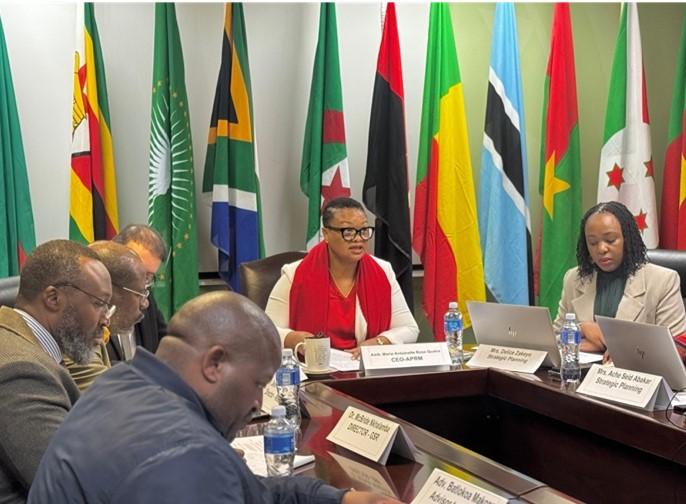
“South Africa’s governance agenda is taking a practical turn in KwaZulu-Natal through the African Peer Review Mechanism’s Governance Support Programme, which is being used to strengthen public administration and service delivery. The initiative includes a Public Value Governance programme supporting Msunduzi Local Municipality in Pietermaritzburg, with an emphasis on cleaner public spaces, safer infrastructure, stronger coordination and more citizen-centred administration.”
South Africa’s governance agenda is taking a practical turn in KwaZulu-Natal as public servants and local government officials work through the African Peer Review Mechanism’s Governance Support Programme. A report published on 3 October 2026 by The Public Servant Online says the programme is being applied through a Public Value Governance initiative designed to help translate governance principles into visible improvements in public services.
The programme is focused on Msunduzi Local Municipality in Pietermaritzburg, where a special cohort of KwaZulu-Natal public servants has been deployed part-time from 1 July 2026 to 30 June 2027. According to the Department of Public Service and Administration, the group is supporting a “Clean and Safe City” programme that includes the beautification of public spaces, improved protection of municipal infrastructure and cooperation on urban safety. The deployment is linked to a broader effort to strengthen public administration through citizen-centred governance.
The development matters because South Africa’s local government system carries many responsibilities that citizens experience directly. Municipalities are responsible for a range of basic services and local functions, and the quality of administration can affect whether policies become reliable services. The new programme therefore places attention not only on governance rules and institutional design, but also on how officials organise work, respond to communities and solve problems.
The Public Value Governance approach is being presented as part of the APRM’s effort to close the gap between governance recommendations and implementation. The APRM was created as a voluntary African Union mechanism through which participating states assess governance and identify areas for improvement. Its current Governance Support Programme is intended to help countries implement recommendations from peer-review processes rather than leaving those recommendations at the level of reports.
That implementation question is particularly significant for South Africa. The APRM’s second-generation country review of South Africa, published in 2023, described the country’s self-assessment as providing a balanced view of governance and identified the review process as a basis for strengthening governance. More broadly, the APRM’s 2025–2028 strategic plan places implementation of National Programmes of Action and stronger institutional capacity among its priorities.
In KwaZulu-Natal, the programme is being connected to the work of senior public managers. Acting Director-General of the Department of Public Service and Administration Willie Vukela said the initiative demonstrates how public servants can go beyond routine duties to accelerate service delivery. He linked the approach to the Batho Pele principle of putting people first and to constitutional expectations that public administration should be accountable and transparent.
The programme’s practical focus is visible in its choice of projects. The reported areas include public-space beautification, municipal infrastructure safety and cooperation between municipal security personnel and the South African Police Service. The work is also connected to projects listed under the Pietermaritzburg Vision 2040 framework, including an Urban Development Indaba, a Service Delivery Top-Up Service, Freedom Square revitalisation, city entrances, the Maritzburg Mall upgrade, Timber Street revitalisation and the proposed repurposing of cemetery sites.
These projects illustrate an important feature of governance: implementation often takes place through many small administrative decisions rather than through a single national policy announcement. Maintaining public facilities, protecting infrastructure, coordinating departments and communicating with residents require capable institutions and consistent management. When these functions work effectively, residents can experience governance through cleaner public areas, safer infrastructure and more predictable municipal responses.
The programme also reflects a wider African governance agenda. Patrick Sokhela, Acting Deputy Director-General for Government Service Access Improvement, said the initiative is intended to institutionalise APRM and Open Government Partnership principles within public administration. He emphasised citizen-centred governance and the need to ensure that government policies are translated into programmes that improve people’s quality of life.
The emphasis on marginalised groups is another important element. Sokhela specifically referred to women, people with disabilities and young people as groups that should be prioritised in citizen-centred governance. In practice, inclusive administration requires more than naming groups in policy documents. It involves making public information accessible, designing services around real needs and creating channels through which residents can raise concerns and receive responses.
The APRM’s wider strategy reinforces this implementation focus. Its strategic documents describe the Governance Support Programme as a mechanism for mobilising technical and financial resources to help participating countries implement national action plans. The programme is also linked to capacity development, peer learning and efforts to strengthen national governance institutions. The approach reflects an understanding that governance reforms require sustained administrative capacity rather than one-off interventions.
The reported programme also raises questions that will be important to monitor. First is whether interventions produce improvements that residents can see and measure. Second is whether lessons from the programme can be incorporated into ordinary municipal systems rather than remaining dependent on a temporary cohort. Third is whether the approach can strengthen accountability alongside service delivery. Governance programmes are more durable when responsibilities, performance indicators, reporting arrangements and public feedback mechanisms are clearly defined.
There is also a broader question about coordination between different spheres of government. South Africa’s government system involves national, provincial and local institutions, each with distinct responsibilities. Programmes that bring officials together can help address problems that cross institutional boundaries, but they also need clear mandates to avoid duplication or uncertainty about who is responsible for outcomes.
The timing is notable because South Africa is approaching the 4 November 2026 Local Government Elections. Cabinet has separately approved a revised White Paper on Local Government, saying the review responds to persistent governance, institutional, financial and service-delivery challenges in municipalities. The White Paper proposes stronger implementation, accountability, institutional coherence and financial sustainability, alongside a coordinated implementation programme involving the Department of Cooperative Governance, the Presidency and National Treasury. These reforms provide a national policy context for initiatives seeking to improve municipal administration.
The KwaZulu-Natal programme should therefore be understood as one component of a wider governance effort rather than as a standalone solution. Its significance lies in attempting to connect continental governance principles, public-service professionalisation and local municipal practice. The approach is explicitly designed to move from principles to practical support, while retaining a focus on citizens.
For residents, the key test will ultimately be tangible outcomes. A governance programme becomes meaningful when improved planning leads to functioning infrastructure, when officials respond to problems, when public spaces are maintained and when communities can see how decisions are made. The APRM framework provides a platform for peer learning and reform support, but local institutions must still translate that support into day-to-day performance.
The latest development in KwaZulu-Natal shows that the governance debate is increasingly concerned with implementation. The Public Value Governance programme places senior officials closer to local administrative challenges and gives the APRM Governance Support Programme a concrete setting in which its principles can be tested. Its progress through 2027 will provide an opportunity to assess whether this model can strengthen municipal capacity, improve coordination and deliver more responsive public administration in Pietermaritzburg and potentially beyond.
For South Africa’s governance system, the central issue is not simply whether new frameworks are adopted. It is whether institutions can consistently turn those frameworks into accountable decisions and reliable services. The KwaZulu-Natal initiative is an example of that implementation challenge being addressed through cooperation between public servants, provincial authorities, municipal officials and the continental APRM framework.



