




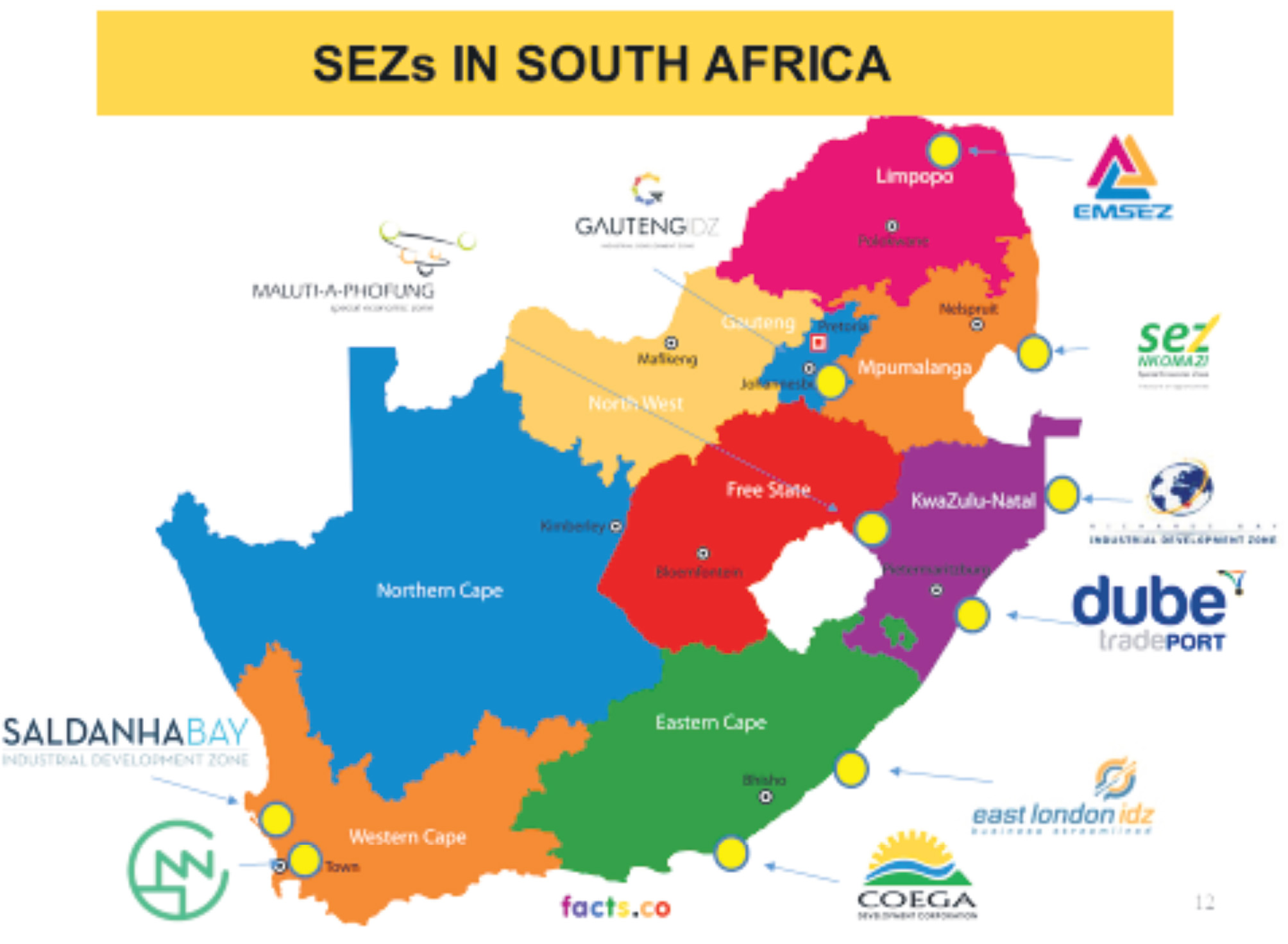
”South Africa has announced a bold plan to attract R750 billion in investment into Special Economic Zones (SEZs) by April next year, with commitments already secured from infrastructure investors and development finance institutions. The initiative aims to reverse the decline in manufacturing’s share of GDP, which has dropped from 24% in 1994 to just 11% today.”
South Africa’s economic policymakers have placed Special Economic Zones (SEZs) at the center of a sweeping industrial revival strategy. Acting Deputy Director General of Trade, Maoto Molefane, confirmed at the SEZ Investment Conference in Durban that the government is targeting R750 billion in new investment by April 2027. This announcement comes at a critical juncture for the economy, as manufacturing output continues to decline and global competitiveness remains under pressure.
Background: Manufacturing in Decline
Manufacturing once accounted for nearly a quarter of South Africa’s GDP in 1994. Today, that figure has fallen to 11%, reflecting structural weaknesses, rising costs, and infrastructure bottlenecks. The SEZ initiative is designed to reverse this trend by creating hubs of industrial activity with preferential policies, tax incentives, and streamlined logistics.
Investment Commitments
Earlier this year, South Africa secured R800 billion in pledges at an investment forum, underscoring investor appetite for industrial projects. The SEZ plan builds on this momentum, with capital expected from development finance institutions, infrastructure investors, and global lenders. The government hopes to leverage these commitments to catalyze job creation, export growth, and technology transfer.
Toyota’s Landmark Investment
The announcement coincided with Toyota South Africa’s R10.4 billion investment in its Prospecton plant in Durban, the largest in the company’s local history. The ninth-generation Hilux rolled off the assembly line this week, symbolizing the potential of coordinated industrial policy. Toyota’s MD, Andrew Kirby, emphasized that collaboration between government, labor, and industry is essential for sustainable industrialization.
Infrastructure Challenges
President Cyril Ramaphosa, speaking at the same event, highlighted the urgent need to improve ports and rail networks. Transnet’s vehicle terminals in Gqeberha, East London, and Durban handled 792,000 fully built vehicles in 10 months, a record for productivity. However, inefficiencies in logistics remain a major obstacle to scaling industrial exports.
Market Implications
The SEZ investment drive is expected to boost confidence in the Johannesburg Stock Exchange (JSE), particularly in sectors tied to manufacturing, logistics, and infrastructure. Analysts note that companies like Standard Bank, MTN, and Anglo American Platinum could benefit indirectly from increased industrial activity. The South Africa Stock Market Index (Composite) recently traded at 110,337 points, up 13.34% year-on-year, signaling resilience despite global volatility.
Risks and Challenges
Despite optimism, risks remain.
- Global headwinds: A sell-off in chip and memory stocks has rattled international markets, with the Nasdaq down 1.5% and Tokyo’s Nikkei plunging 4.2%.
- Domestic constraints: Energy shortages, governance issues at state-owned enterprises, and policy uncertainty could undermine investor confidence.
- Labor relations: Sustained cooperation between unions and employers will be critical to avoid disruptions.
Strategic Importance
The SEZ plan is not just about manufacturing—it is about positioning South Africa as a regional industrial hub. By attracting global capital and fostering export-oriented industries, the government hopes to reduce reliance on raw commodity exports and diversify the economy.
Conclusion
South Africa’s R750 billion SEZ investment plan represents one of the most ambitious industrial strategies in recent decades. If successful, it could mark a turning point for the country’s manufacturing sector, restore investor confidence, and strengthen its role in global supply chains. The coming months will reveal whether pledges translate into tangible projects and whether infrastructure reforms can keep pace with industrial ambitions.



