




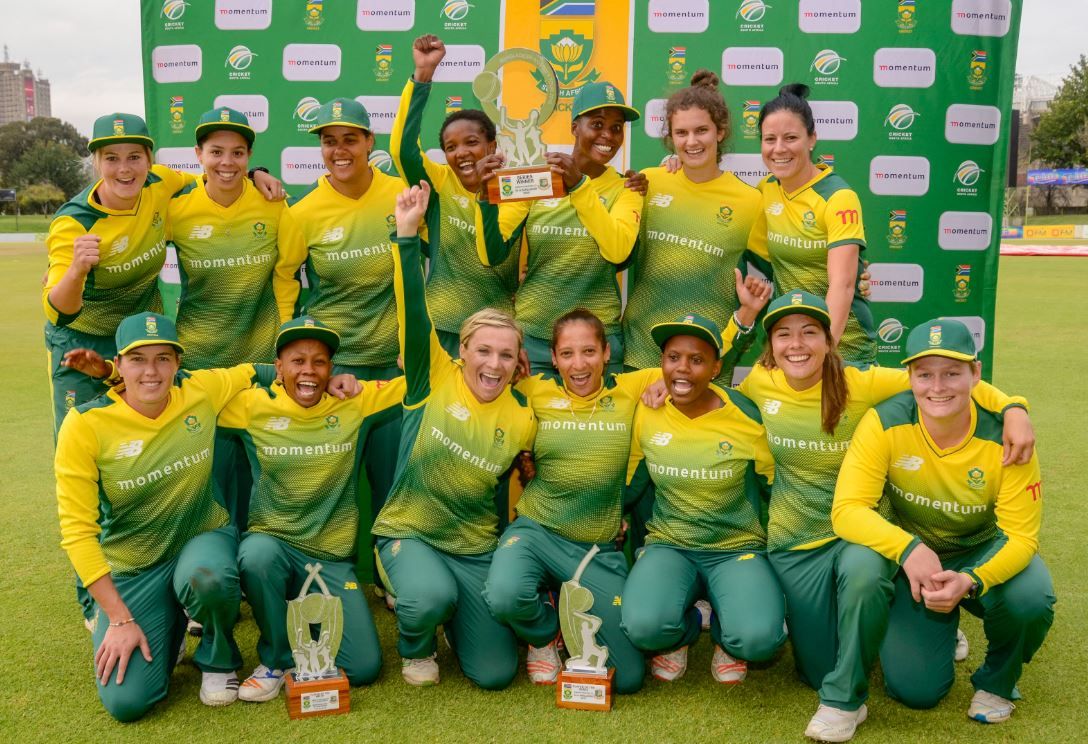
“South Africa’s women’s cricket team has qualified for the semi-finals of the ICC Women’s T20 World Cup 2026 after a strong group-stage performance, finishing second in Group A. They will now face unbeaten hosts England in a high-stakes clash at The Oval on July 2.”
The ICC Women’s T20 World Cup 2026 has reached its knockout stage, and South Africa’s women’s cricket team has emerged as one of the four semi-finalists. Alongside Australia, England, and the West Indies, the Proteas have secured their place in the final four, setting up a thrilling semi-final against hosts England. This achievement represents both continuity and progress for South African women’s cricket, which has consistently reached the latter stages of major tournaments but has yet to clinch a world title.
Road to the Semi-Finals
South Africa’s campaign began with a tough defeat against Australia, losing by 65 runs in Manchester. However, the team bounced back with resilience, defeating Pakistan by two wickets, India by six wickets, the Netherlands by 88 runs, and Bangladesh by four wickets. These victories showcased the team’s depth, adaptability, and ability to perform under pressure. Key performances came from captain Laura Wolvaardt, all-rounder Marizanne Kapp, and batter Tazmin Brits, who provided stability in crucial matches.
Key Match Highlight: Victory Over Bangladesh
One of the defining moments of South Africa’s group stage was their nail-biting win against Bangladesh at Lord’s. Despite losing Wolvaardt on the very first ball, the Proteas rebuilt their innings through partnerships and contributions from Annerie Dercksen, Tazmin Brits, and Chloe Tryon. Marizanne Kapp’s milestone of reaching 100 T20I wickets added historical significance to the match. This victory not only kept South Africa’s hopes alive but also demonstrated their ability to handle high-pressure scenarios.
Semi-Final Clash: England vs South Africa
South Africa’s semi-final opponent, England, enters the knockout stage unbeaten, having won all five of their group matches. England’s dominance at home tournaments is well-documented—they have never lost a T20 or ODI World Cup hosted on their soil. Facing such a formidable opponent, South Africa will need to deliver a flawless performance. The match is scheduled for Thursday, July 2, 2026, at 6:30 p.m. BST at The Oval, London.
Historical Context
South Africa has reached the semi-finals in the last two editions of the Women’s T20 World Cup but fell short of advancing to the final. This year, the team is determined to break that barrier. With a blend of experienced players like Kapp and Wolvaardt, and emerging talents such as Dercksen, the Proteas are better positioned than ever to challenge for the title. Their journey reflects the growing strength of women’s cricket in South Africa, which has seen increased investment, grassroots development, and rising popularity.
Challenges Ahead
Despite their strong performances, South Africa has shown occasional vulnerabilities, particularly in batting collapses and shaky starts. Against England’s disciplined bowling attack and aggressive batting lineup, the Proteas must avoid early wickets and maintain composure. England’s home advantage and unbeaten record add psychological pressure, but South Africa’s resilience in past matches suggests they are capable of rising to the occasion.
Broader Impact
South Africa’s success in reaching the semi-finals has significant implications beyond the cricket field. It boosts the visibility of women’s sports in the country, inspires young athletes, and strengthens the case for further investment in women’s cricket. The team’s progress also contributes to the global narrative of women’s cricket gaining parity with men’s tournaments in terms of competitiveness, viewership, and recognition.
Conclusion
As South Africa prepares to face England in the semi-final, the stakes could not be higher. Victory would not only secure a place in the final at Lord’s on July 5 but also mark a historic breakthrough for South African women’s cricket. Regardless of the outcome, the Proteas have already demonstrated their growth, resilience, and potential to become world champions.



