




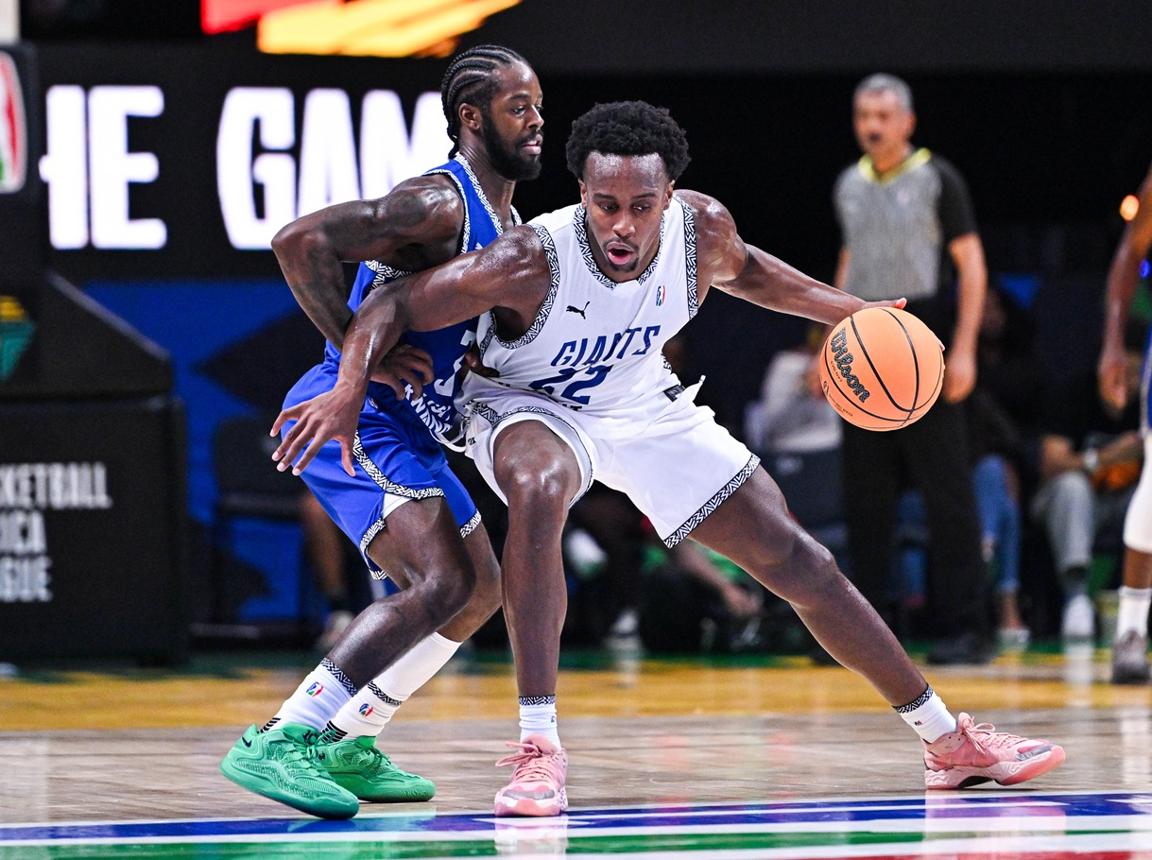
“South African basketball is facing renewed debate over governance, competition structures and international representation after Johannesburg Giants coach and CEO Florsheim Ngwenya called for a new national league built around independently operated clubs. His concerns follow the controversial selection of Soweto Panthers instead of national club champions Johannesburg Giants for the Road to the Basketball Africa League qualifiers, raising questions about accountability, competitive fairness and the future of the sport in South Africa.”
South African Basketball Faces Renewed Governance Challenges as Calls Grow for a More Competitive National League
South African basketball is approaching a critical turning point as disagreements over governance, club competition structures and international representation intensify. Johannesburg Giants coach and chief executive Florsheim Ngwenya has called for a new competitive national league built around independent clubs, arguing that the existing arrangements are not providing the stability and fairness required to develop the sport.
A dispute that has exposed deeper problems
South African basketball has experienced growing uncertainty following disagreements about which club should represent the country in the Road to the Basketball Africa League (BAL) 2027 qualification competition.
The disagreement involves Basketball South Africa (BSA), the Basketball National League (BNL), Johannesburg Giants and Soweto Panthers. It has become one of the most significant administrative controversies affecting the country’s basketball community in 2026.
Johannesburg Giants won the 2026 Basketball South Africa National Club Championship. Consequently, the club’s leadership believed that winning the national competition had earned the team the right to represent South Africa in the continental qualification tournament.
However, the Basketball National League announced Soweto Panthers as the country’s representatives following their victory in the 2026 BNL championship.
This created competing claims about which organisation had the authority to determine South Africa’s representative.
According to reporting by The Big Tip Off on 19 November, Ngwenya remains dissatisfied with the decision and believes that his club was unfairly denied an opportunity earned through its performance on the court.
The controversy has subsequently raised questions about the relationship between domestic competitions, national federation authority and international basketball administration.
Florsheim Ngwenya calls for a new national basketball league
One of the most important developments emerging from the dispute is Ngwenya’s proposal to establish a national basketball competition organised and governed by participating clubs.
He believes that clubs should have a meaningful role in determining the direction of the competition rather than operating under a structure in which a single league organisation controls participating franchises.
His proposed model would involve clubs establishing a collective governing structure through a board of governors.
Under this arrangement, participating clubs would have an opportunity to contribute to decisions concerning competition regulations, financial management, administration and the long-term development of the league.
The proposal is intended to create a more accountable and competitive environment in which clubs have ownership of the structures that determine their sporting future.
Ngwenya has also questioned the financial requirements associated with participating in the existing league structure. His concerns include the costs imposed on clubs and whether the investment required provides sufficient value.
He has suggested that the Premier Soccer League model offers useful lessons for basketball, particularly concerning club participation, ownership, promotion and relegation.
Although implementing such a system would require substantial planning, the proposal has introduced an important discussion about how South African basketball can become more sustainable.
Johannesburg Giants and Soweto Panthers controversy
The disagreement over continental representation remains central to the current crisis.
Johannesburg Giants believe that their national club championship victory should have secured their place in the Road to BAL qualification competition.
The BSA position, reported by EWN on 19 October, was that Johannesburg Giants were the legitimate national champions and that the federation had already submitted the club’s confirmation to FIBA Africa.
The federation challenged the appointment of Soweto Panthers, describing the process as irregular and procedurally flawed.
Meanwhile, the BNL announced that Soweto Panthers had earned the opportunity through their performance in its 2026 championship.
The disagreement is particularly important because international club competitions provide South African teams with opportunities to compete against some of the strongest basketball organisations on the African continent.
Participation can improve player development, coaching experience, international visibility and commercial opportunities.
Therefore, disputes about qualification procedures have consequences extending beyond the clubs directly involved.
The situation demonstrates why competition regulations must clearly establish how national representatives are selected and which organisations have responsibility for confirming those decisions.
It also highlights the importance of transparent communication between clubs, domestic leagues, national federations and continental basketball authorities.
The Basketball South Africa governance challenge
The current controversy cannot be understood without considering the wider administrative difficulties affecting Basketball South Africa.
The Department of Sport, Arts and Culture previously withdrew recognition of BSA following governance concerns connected to the hosting of the 2024 AfroBasket tournament.
In March 2026, Sports Minister Gayton McKenzie publicly discussed the process of rebuilding basketball governance in cooperation with FIBA Africa and SASCOC.
The government indicated that the rebuilding process would involve developing a roadmap for restructuring the federation and establishing credible leadership.
These developments demonstrate that the problems facing South African basketball are not limited to disagreements between individual clubs.
They involve broader questions about institutional authority, accountability, administration and the responsibilities of organisations managing the sport.
A national federation should provide leadership, coordinate development programmes, support national competitions and maintain relationships with international basketball authorities.
When these responsibilities become uncertain, the consequences can affect the entire basketball development system.
Players need properly administered competitions. Coaches require development opportunities, while referees and technical officials need recognised training and consistent professional standards.
Clubs also need confidence that the competitions in which they participate are governed by clear and consistently applied regulations.
Without these foundations, attracting investment and developing sustainable sporting programmes becomes more difficult.
New administrators appointed to support the revival
An important development in the rebuilding process came with the appointment of experienced sports administrators Anne Vermaak and Mandla Gagayi to a task team supporting the revival of Basketball South Africa.
The announcement was made by acting SASCOC president Lwandile Simelane during a media briefing in Cape Town on 17 November 2026.
Vermaak brings experience from South African Gymnastics and Golf RSA, while Gagayi has worked in university sports administration and currently serves as Director of Sports at the University of the Witwatersrand.
Their appointments provide an opportunity to strengthen the administrative capacity of the national federation.
Vermaak’s experience in managing a national sporting organisation could contribute to improved operational systems and organisational accountability.
Gagayi’s university sports experience could also be valuable in strengthening relationships between educational institutions, basketball clubs and national development programmes.
However, appointments alone cannot resolve all the challenges facing the sport.
The task team will need to support practical reforms, encourage cooperation between stakeholders and help establish administrative structures that can operate effectively over the long term.
Its work will be particularly important in rebuilding confidence among players, clubs, sponsors and supporters.
The appointments therefore represent an important development, although the success of the initiative will ultimately depend on the reforms implemented.
The financial future of South African basketball
Financial sustainability is another major issue highlighted by the current debate.
Basketball clubs require resources to recruit and develop players, employ coaches, arrange transportation, secure facilities and participate in organised competitions.
They also need funding for medical support, equipment, administration and youth development.
A competitive national league could help create a more attractive commercial environment by offering sponsors a consistent platform for reaching basketball supporters.
Regular fixtures, organised broadcasting, professional marketing and reliable competition schedules could increase the visibility of participating clubs.
Furthermore, stronger commercial structures could create opportunities for partnerships with sporting brands, financial institutions, telecommunications companies and other businesses.
However, sponsors generally require confidence that their investment will support professionally administered competitions.
Consequently, governance reform and financial sustainability must be addressed together.
A new league would need transparent financial reporting, realistic participation costs and clear responsibilities for managing commercial partnerships.
It would also need to avoid creating financial barriers that prevent smaller clubs from participating.
The objective should be to build a system that rewards sporting achievement while giving clubs a realistic opportunity to operate sustainably.
Developing young basketball talent
South Africa has an opportunity to strengthen its basketball future through schools, universities, community clubs and organised national competitions.
However, talent development requires more than identifying gifted players.
Young athletes need regular competitive opportunities, qualified coaches, appropriate facilities and access to development programmes.
A well-organised national league could create clearer pathways between youth basketball and senior competition.
Schools could identify promising players, universities could provide additional sporting opportunities, and clubs could offer advanced training and competitive experience.
This would help create a more structured progression system.
Women’s basketball also needs continued attention. Sustainable development requires investment in women’s competitions, coaching opportunities, facilities and increased media exposure.
A stronger national basketball structure should therefore support both men’s and women’s programmes.
In addition, developing referees, coaches and technical officials would help improve the overall quality of domestic competitions.
The long-term success of South African basketball will depend on building a system that develops the entire sporting community rather than concentrating only on senior professional teams.
International opportunities and the Basketball Africa League
The Basketball Africa League has become an important platform for showcasing African basketball talent and connecting clubs with international audiences.
South Africa has previously hosted BAL competition, including the 2026 Kalahari Conference at the SunBet Arena in Pretoria.
The league’s sixth season began on 27 March 2026 and featured 12 clubs from 12 African countries, with further competition taking place in Morocco and Rwanda.
The tournament demonstrated the commercial and sporting potential of continental basketball.
For South African clubs, participation in the Road to BAL offers opportunities to measure their standards against leading teams from other African basketball markets.
It can also create exposure for players who aspire to compete internationally.
However, the current qualification controversy demonstrates that international ambitions require strong domestic foundations.
South African basketball needs clear selection procedures, reliable administration and competitive clubs capable of representing the country effectively.
Without these structures, opportunities for international participation may become increasingly difficult to secure.
The importance of resolving the current crisis
The immediate priority for South African basketball stakeholders should be establishing a transparent process for resolving disagreements involving national representation and competition administration.
Basketball South Africa, the Basketball National League, participating clubs, SASCOC and relevant international authorities need constructive engagement.
The Johannesburg Giants and Soweto Panthers controversy should be addressed through clearly documented regulations and appropriate dispute-resolution procedures.
Equally important is ensuring that players are not disadvantaged by administrative disagreements beyond their control.
Athletes dedicate considerable time and effort to training and competing. They deserve an environment in which sporting achievement is respected and competition opportunities are administered fairly.
The appointment of the new task team provides an opportunity to encourage this process.
However, meaningful progress will require cooperation from all parties, including those with different views about the future structure of South African basketball.
Conclusion: South African basketball needs a stronger foundation
South African basketball is facing a defining moment in its development. The controversy involving Johannesburg Giants and Soweto Panthers has exposed longstanding disagreements about governance, competition structures and international representation.
Florsheim Ngwenya’s proposal for a new national league organised around independent clubs has introduced an important discussion about accountability, financial sustainability and sporting competitiveness.
Meanwhile, the appointment of Anne Vermaak and Mandla Gagayi provides an opportunity to strengthen Basketball South Africa’s administrative structures.
The challenge now is to translate these developments into meaningful improvements.
A successful basketball revival should deliver transparent leadership, credible competitions, sustainable club finances, stronger youth development and better opportunities for women and men to compete.
South Africa has the sporting talent and potential to become a stronger force in African basketball. Nevertheless, achieving that ambition requires institutions that work together and put the long-term interests of the sport first.
Ultimately, the future of South African basketball will depend on whether its administrators, clubs and stakeholders can transform the current disagreements into an opportunity to build a more competitive, inclusive and professionally managed national basketball system.



