




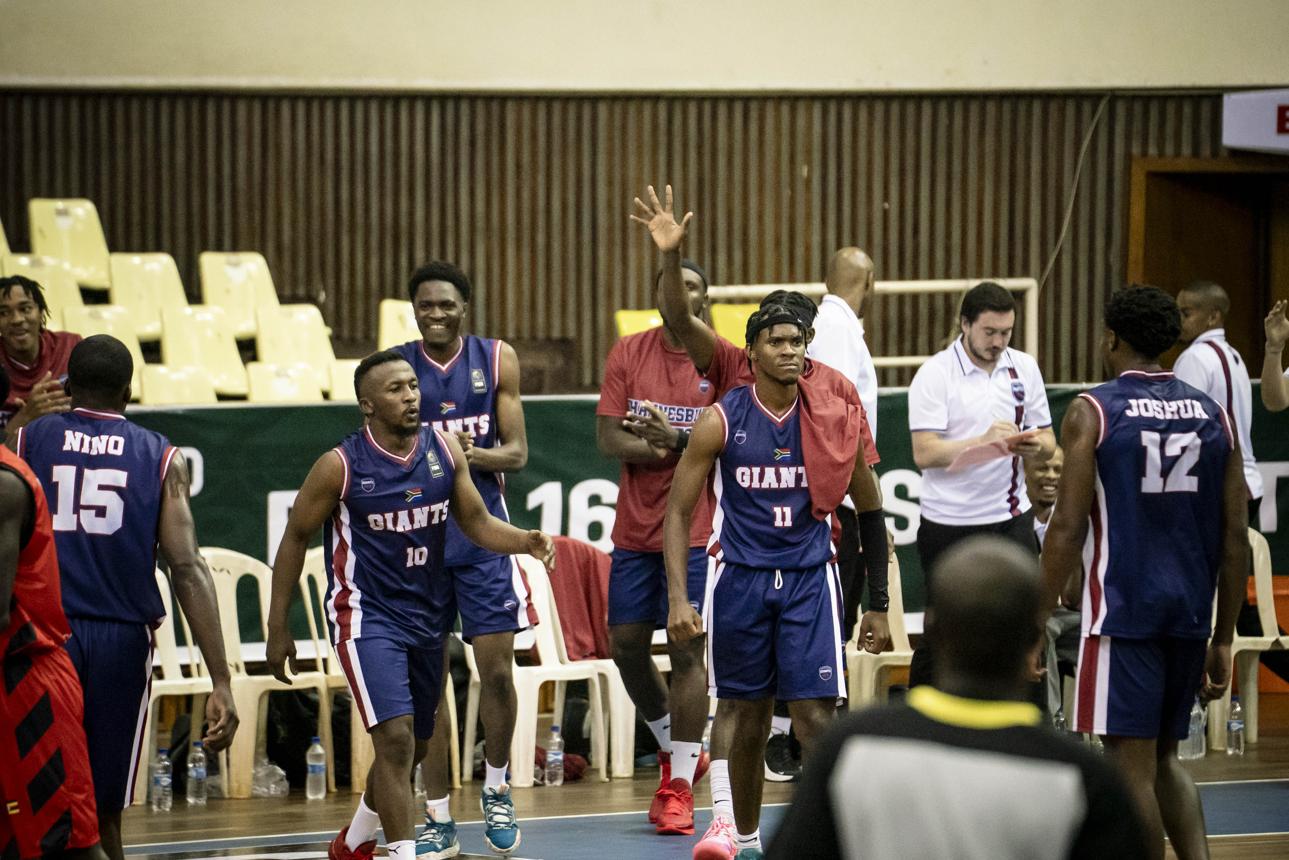
“South African basketball continues to face a significant governance dispute over which club should represent the country in the Road to Basketball Africa League (BAL) 2027 qualification competition. Basketball South Africa has challenged the recognition of Soweto Panthers, maintaining that Johannesburg Giants are the legitimate national representatives, highlighting continuing disagreements over authority, competition recognition and the future administration of the sport.”
South African Basketball Governance Dispute Raises Questions Over Road to BAL 2027
South African basketball continues to confront a significant governance challenge as disagreements over club representation in the Road to the Basketball Africa League (BAL) 2027 qualification competition expose deeper divisions within the country’s basketball administration. The dispute involving Basketball South Africa (BSA), the Basketball National League (BNL), Johannesburg Giants and Soweto Panthers has become an important development for the domestic game, raising questions about institutional authority, competition recognition and the future of professional basketball in the country.
At the centre of the controversy is the disagreement over which club should represent South Africa in the Road to BAL qualification process. The Basketball National League announced Soweto Panthers as the country’s representatives after the club won the 2026 BNL championship. However, Basketball South Africa rejected the appointment, arguing that Johannesburg Giants should be recognised as the legitimate national representatives following their success in the federation’s national club championships.
The disagreement has attracted considerable attention because the Road to BAL provides an important opportunity for African basketball clubs to progress towards participation in the Basketball Africa League, one of the continent’s leading professional basketball competitions.
Disagreement Over South Africa’s Continental Representative
The Basketball National League announced on 15 October 2026 that Soweto Panthers had been confirmed as South Africa’s representative for the Road to BAL 2027 qualification cycle. The announcement followed the Panthers’ victory in the 2026 BNL competition, which the league regarded as sufficient grounds for their participation in the continental qualification pathway.
Basketball South Africa subsequently challenged that decision. The federation argued that the appointment was irregular and procedurally flawed because the BNL was no longer recognised or affiliated with the national federation.
According to BSA, Johannesburg Giants emerged as the legitimate national champions after winning the federation’s national club championships. The organisation maintained that the Giants had already been confirmed as South Africa’s representatives through communication with the FIBA Africa Competitions office.
The disagreement consequently developed into a broader contest over the recognition of domestic competitions and the authority to determine national representatives for international basketball events.
The dispute illustrates how competing administrative structures can create uncertainty for clubs, players and supporters. Although both organisations have presented arguments concerning their respective competitions, the issue ultimately requires clarity regarding applicable regulations, recognition procedures and the authority responsible for confirming continental participation.
Basketball Governance Challenges Remain Significant
The controversy cannot be understood independently of the wider governance challenges affecting South African basketball.
On 28 January 2026, the Department of Sport, Arts and Culture announced a process aimed at rebuilding and stabilising basketball administration following the derecognition of Basketball South Africa within the domestic government sports framework.
The intervention involved cooperation between the Department of Sport, Arts and Culture, FIBA Africa and the South African Sports Confederation and Olympic Committee.
The government stated that prolonged governance and administrative failures had undermined basketball development and affected confidence in the sport’s administration.
Consequently, the recovery process was designed to establish a properly governed national basketball federation, improve accountability and create sustainable development opportunities for athletes.
The initiative also sought to establish a roadmap for basketball’s revival and support the eventual election of credible and representative executive leadership.
FIBA Africa appointed a representative to provide oversight and technical guidance during the process.
These developments demonstrate that the current disagreement over continental representation forms part of a larger institutional challenge involving the organisation, regulation and development of basketball in South Africa.
The Breakdown Between BSA and BNL
Another important dimension of the controversy is the deteriorating relationship between Basketball South Africa and the Basketball National League.
According to correspondence reported by Eyewitness News, BSA formally notified the BNL in June 2024 that its licensing agreement would not be renewed.
The agreement, originally signed in October 2013, reportedly ended on 30 September 2023.
Basketball South Africa subsequently stated that competitions and programmes organised by the BNL were not supported or endorsed by the federation.
The correspondence also requested that the league discontinue the use of BSA and FIBA logos in its activities.
This disagreement has complicated the relationship between domestic league competition and national federation recognition.
The BNL has continued organising competitions and providing opportunities for clubs to compete. However, BSA’s position raises questions about the relationship between those competitions and the federation’s official national championship structures.
The resulting uncertainty has important implications for players and clubs seeking access to international opportunities.
Why the Road to BAL Matters
The Road to BAL is an important pathway for African basketball clubs aspiring to compete at the Basketball Africa League level.
The BAL provides a professional platform for clubs from across Africa to compete, showcase talent and increase the visibility of basketball on the continent.
South Africa has an important relationship with the competition because Pretoria has hosted BAL games and the country possesses established basketball communities, professional facilities and a growing pool of talent.
The 2026 BAL season opened at SunBet Arena in Pretoria on 27 March before continuing in Morocco and Rwanda.
The competition brought together clubs from different African countries and offered opportunities for players, coaches and supporters to experience high-level basketball.
For South African clubs, qualification participation represents more than a sporting achievement. It can create opportunities for professional exposure, player development, sponsorship and partnerships.
The uncertainty surrounding the country’s representative therefore raises concerns about the continuity of these opportunities.
Johannesburg Giants and Soweto Panthers
The disagreement has placed Johannesburg Giants and Soweto Panthers at the centre of a national basketball debate.
Johannesburg Giants’ position is linked to their success in Basketball South Africa’s national club championships.
The federation maintains that the competition established the Giants as the country’s legitimate national champions and that the club was consequently entitled to represent South Africa internationally.
Soweto Panthers, meanwhile, were identified by the Basketball National League following their championship victory.
The competing claims highlight the importance of establishing transparent and consistently applied qualification procedures.
For clubs, a clear system would provide certainty regarding eligibility, competition recognition and progression towards international tournaments.
For players, it would reduce the possibility of administrative disputes interfering with sporting opportunities.
For supporters, clarity would help preserve confidence in the legitimacy of competitions and their results.
Implications for Players and Basketball Development
The governance disagreement has implications extending beyond the immediate question of which club participates in continental qualification.
South African basketball depends on a coordinated development structure connecting schools, community programmes, provincial competitions, national championships and professional leagues.
When administrative disagreements undermine cooperation, these development pathways can become more difficult to navigate.
Young players require consistent competition opportunities and credible structures through which they can progress.
Coaches also benefit from stable competition systems, professional development opportunities and clear institutional support.
Similarly, sponsors and commercial partners are more likely to invest in competitions when organisational responsibilities and governance arrangements are transparent.
The dispute consequently reinforces the importance of resolving institutional disagreements without compromising opportunities for athletes.
The Importance of Transparent Resolution
A sustainable resolution requires cooperation among the organisations involved and clarity regarding the applicable regulations.
Basketball South Africa has indicated that it intends to challenge the recognition of Soweto Panthers through the relevant FIBA Africa structures.
The federation has also emphasised the importance of protecting the integrity of basketball administration and ensuring that national representation follows appropriate procedures.
However, determining the final outcome requires consideration of the applicable competition rules, the authority responsible for confirming representatives and the status of the relevant organisations.
The competing claims should therefore be evaluated through transparent processes that provide all affected parties with an opportunity to present their positions.
Such an approach would help establish a credible outcome while protecting the interests of clubs, players and supporters.
Rebuilding Confidence in South African Basketball
The broader governance recovery process offers an opportunity to address longstanding challenges affecting basketball administration.
A properly functioning national federation could strengthen coordination between clubs, provincial structures, leagues and development programmes.
It could also improve the management of national competitions, establish clearer qualification procedures and strengthen relationships with international basketball institutions.
The government’s cooperation with FIBA Africa and SASCOC reflects recognition that basketball possesses significant potential for youth development, social cohesion and international participation.
Basketball remains accessible to many communities because it can be introduced with relatively limited infrastructure.
Furthermore, the growth of street basketball and the international popularity of three-on-three basketball provide additional opportunities for participation and commercial development.
These opportunities underline the importance of establishing stable institutions capable of supporting the sport’s long-term development.
Conclusion
South African basketball’s dispute over the Road to BAL 2027 has become a defining governance issue for the country’s basketball community.
The disagreement between Basketball South Africa and the Basketball National League over the recognition of Johannesburg Giants and Soweto Panthers highlights the importance of transparent competition structures and clearly established institutional authority.
Beyond the immediate qualification question, the controversy reflects broader challenges involving governance, administration and the development of basketball in South Africa.
Resolving these issues will require constructive engagement, regulatory clarity and a commitment to protecting athletes’ interests.
Ultimately, the future of South African basketball depends on building credible institutions, strengthening domestic competitions and ensuring that talented players have reliable opportunities to progress towards continental and international competition.
The Road to BAL dispute therefore represents not only a disagreement about club representation, but also an important test of South Africa’s efforts to rebuild confidence in basketball administration and establish a sustainable future for the sport.



