




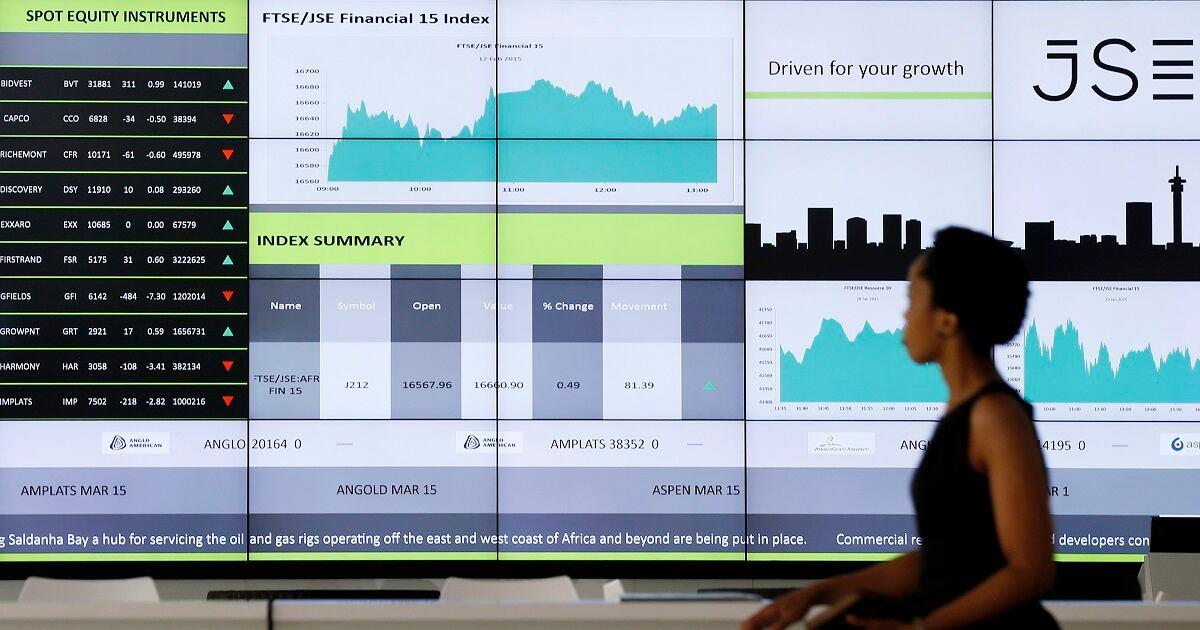
“The South African rand traded broadly unchanged against the US dollar on Tuesday as investors waited for the government’s medium-term budget policy statement and September inflation figures, both expected to influence expectations for the country’s fiscal outlook and interest rates. Investors were also monitoring elevated fuel costs and consumer demand, with the results expected to help determine the outlook for South African bonds, equities and the currency.”
South African markets adopt a cautious stance as investors await crucial budget and inflation signals
Markets remain focused on economic policy
South Africa’s financial markets entered Tuesday, 20 October 2026, with investors adopting a cautious approach as attention shifted towards two important economic developments: the government’s medium-term budget policy statement and the latest consumer inflation figures.
The South African rand remained broadly steady against the US dollar during early trading, reflecting a market waiting for clearer signals before making substantial adjustments to currency positions. Reuters reported that the rand traded at approximately R16.4150 per dollar at 06:00 GMT, little changed from its previous close.
The relative stability is significant because currency markets often react sharply when investors anticipate changes in government borrowing, inflation, interest rates and the broader economic outlook. In this case, traders were assessing whether incoming information would strengthen confidence in South Africa’s public finances or introduce new concerns about the cost of living and economic growth.
For businesses, investors and households, the direction of the rand matters beyond the trading floor. Currency movements can influence the cost of imported goods, fuel, industrial equipment and other products purchased from overseas suppliers. They can also affect the value of South African exports and the returns international investors receive when converting local investments into foreign currencies.
However, a stable currency does not necessarily indicate that uncertainty has disappeared. It may simply mean investors are waiting for information before committing to a particular direction.
The medium-term budget takes centre stage
The main domestic event influencing investor sentiment is the medium-term budget policy statement scheduled for Wednesday, 21 October 2026.
Finance Minister Enoch Godongwana is expected to provide an updated assessment of government revenue, expenditure, borrowing requirements and the country’s fiscal position. Investors will be particularly interested in whether the Treasury can use stronger tax receipts to improve the budget balance and slow the accumulation of public debt.
The budget statement matters to financial markets because government finances help determine how investors assess sovereign risk. When investors believe that a government can manage its spending obligations and maintain a credible borrowing strategy, they may be more willing to hold its bonds. Conversely, concerns about rising debt or persistent deficits can place upward pressure on borrowing costs.
South Africa has faced the challenge of balancing demands for public services, infrastructure investment and economic support against the need to maintain fiscal discipline. The Treasury must also consider the consequences of weak economic growth, which can limit the pace at which government revenue increases.
Reuters reported on 19 October that stronger corporate tax receipts, supported by mining profits, had improved expectations for the upcoming budget. Corporate tax collections reportedly increased by 22.8% during the first five months of the fiscal year, according to figures cited by BNP Paribas.
Nevertheless, higher tax receipts do not automatically translate into a permanent improvement in public finances. Commodity prices can fluctuate, company profits can change, and economic conditions can weaken. Investors will therefore be looking for evidence that any revenue improvement can be sustained rather than relying on a temporary boost.
The government’s decisions on how much additional revenue to save, spend or use to reduce borrowing could influence the market response following the budget announcement.
Government bonds reflect the importance of fiscal credibility
The bond market is another important part of the story.
Government bonds allow the state to borrow money from investors in exchange for scheduled interest payments and repayment under the relevant terms. Their prices and yields respond to expectations about inflation, interest rates, government finances and the perceived risk of lending to the state.
According to Reuters, South Africa’s benchmark 2035 government bond was broadly unchanged in early trading on Tuesday, with its yield at approximately 8.735%.
That figure provides a snapshot of the market’s borrowing-cost environment at the time reported. It should not be interpreted as a forecast of the bond’s future yield or as a guaranteed return for every investor.
If the budget demonstrates credible progress towards stabilising public debt, investors could become more confident in South African government securities. Stronger demand for existing bonds can push their prices higher and their yields lower, although the final outcome also depends on global interest rates, inflation expectations and market liquidity.
On the other hand, if investors conclude that spending commitments or borrowing requirements will remain higher than expected, bond yields could rise. Higher yields generally mean that the government must offer more attractive returns to attract lenders, potentially increasing the cost of financing future deficits.
These changes can also influence borrowing costs elsewhere in the economy. Government bond yields serve as important reference points in domestic financial markets, helping shape the pricing of some corporate debt, loans and other financial products.
For that reason, the budget statement is not simply an announcement about government accounts. It is also a test of the credibility of the country’s economic policy framework.
Inflation figures could influence interest-rate expectations
The second major development is the release of September consumer inflation data by Statistics South Africa, also expected on Wednesday.
Inflation measures the pace at which prices for goods and services increase over time. It affects household purchasing power, business operating costs and the decisions made by monetary policymakers.
Economists surveyed by Reuters expected headline consumer inflation to accelerate to 4.7% in September from 4.4% in August. This was a forecast ahead of the data release, not a confirmed September result.
If inflation rises more quickly than expected, investors may reassess the likelihood and timing of future interest-rate adjustments. Stronger price pressures can make monetary easing more difficult, particularly if policymakers believe inflation could remain elevated.
Conversely, a lower-than-expected inflation reading could strengthen expectations that price pressures are manageable. However, the interpretation would depend on the composition of the figures, the persistence of underlying inflation and the outlook for fuel and other essential expenses.
The South African Reserve Bank considers inflation conditions when setting monetary policy. Its decisions influence short-term interest rates and help shape broader financial conditions, although the bank also assesses economic activity and risks to the inflation outlook.
For investors, the distinction between temporary and persistent inflation is particularly important. A short-lived increase in fuel prices may have different policy implications from widespread price increases across food, services, housing-related expenses and other categories.
The September figures will therefore be examined not only for the headline rate but also for what they suggest about the future direction of inflation.
Fuel prices add another layer of uncertainty
Elevated fuel costs are an additional concern for South Africa’s economy and financial markets.
South Africa imports crude oil and petroleum products, leaving domestic fuel costs exposed to international energy prices, exchange-rate movements and other factors affecting supply. When global oil prices rise, the country may face greater pressure on its import bill and domestic transport costs.
Higher fuel expenses can affect households directly through transport and commuting costs. Businesses may also experience higher distribution expenses, particularly in sectors that depend heavily on road freight, delivery vehicles and industrial transport.
Those costs can eventually feed into the prices of consumer products and services. Companies may absorb some of the increase through lower profit margins, pass it on to customers or adopt a combination of both approaches.
The effect on the rand can be complicated. Higher oil prices may increase demand for foreign currency to pay for energy imports, while global geopolitical developments can simultaneously influence investor appetite for emerging-market assets.
Reuters identified elevated fuel costs amid Middle East conflict as a concern for the inflation and economic outlook.
The implication for investors is that the inflation report must be interpreted against the wider international environment. Even if domestic price pressures appear manageable, a sustained increase in energy costs could complicate the outlook.
Retail sales will provide a view of consumer demand
The market is also watching retail sales data, which offers insight into household spending and the performance of consumer-facing businesses.
Reuters reported that economists expected annual retail sales growth to slow to 3.0% in August from 3.4% in July. These figures were expectations published before the release, rather than confirmed outcomes.
Retail sales are important because household consumption is a significant component of economic activity. Stronger sales can indicate that consumers are spending more, potentially supporting retailers, suppliers and other businesses. Weaker sales may point to pressure on household budgets or greater caution about discretionary purchases.
However, retail sales growth must be interpreted carefully. Changes in sales values do not necessarily represent equivalent changes in the quantity of goods sold, particularly when prices are increasing. Analysts also consider the performance of different retail categories and whether growth is broad-based or concentrated in a small number of segments.
For listed companies, the figures can help investors evaluate potential revenue trends. Retailers may be affected differently depending on their customer base, product mix, operating costs and ability to maintain margins.
For policymakers, consumer spending data helps provide context for the wider economy. Inflation that accelerates while retail activity weakens can create a difficult combination: households face rising costs even as businesses confront uncertain demand.
The Johannesburg Stock Exchange faces competing influences
Although the rand was the main focus of Tuesday’s Reuters report, the same economic developments are relevant to equities traded on the Johannesburg Stock Exchange.
Stocks can respond to changes in the outlook for economic growth, interest rates, commodity prices and investor confidence. The effect of a budget announcement will not necessarily be uniform across the market.
Banks may be sensitive to bond yields, credit demand, lending conditions and the performance of borrowers. Retailers can be affected by household spending and inflation. Property companies may respond to financing costs and expectations for rental income, while mining shares are influenced by global commodity prices and production conditions.
A stronger fiscal outlook could support confidence in South African assets, but it would not guarantee gains across all sectors. Company-specific earnings, international developments and valuations would continue to matter.
Equity investors will also need to distinguish between an improvement that is already reflected in share prices and an announcement that is better or worse than market expectations. Financial markets frequently respond to the difference between anticipated outcomes and the information ultimately released.
For that reason, even an apparently positive budget announcement may produce a muted market reaction if investors had already priced in a similar improvement.
What the rand’s stability means for businesses and consumers
The rand’s relatively narrow movement on Tuesday illustrates the importance of expectations in currency trading. Investors are not only responding to current economic conditions; they are also assessing what upcoming announcements could mean for future returns and risks.
A stronger rand can reduce the local-currency cost of imported products, provided other factors remain unchanged. This may benefit companies that purchase machinery, technology, raw materials or finished goods from international suppliers. It can also reduce some imported inflation pressures.
A weaker rand can have the opposite effect by increasing the cost of imports. Exporters, however, may benefit from receiving foreign-currency revenue that converts into more rand, although their results also depend on production costs, hedging arrangements and international demand.
Households may experience these movements through changes in the prices of fuel, electronics, vehicles and other imported goods. The relationship is not immediate or automatic, because exchange-rate changes may take time to affect prices and businesses can adjust margins or use existing inventories.
For investors, the key issue is whether the rand’s stability continues after the budget and inflation announcements. A currency can remain relatively calm ahead of an event and then move substantially once uncertainty clears.
The international environment remains important
South Africa does not operate in isolation from global financial markets. Movements in the US dollar, international interest rates, energy prices and global risk appetite can influence demand for the rand and South African financial assets.
When investors become more cautious about emerging markets, they may reduce exposure to assets perceived as riskier. When confidence improves, capital can flow towards markets offering attractive valuations or returns.
These movements can sometimes outweigh positive domestic developments. An improvement in South Africa’s fiscal outlook, for example, might support investor sentiment, but a sharp deterioration in global risk appetite could limit the benefit.
This makes the combination of domestic policy announcements and international conditions particularly important during the current trading period.
Investors should therefore avoid treating a single exchange-rate movement as a definitive signal about the economy. Currency performance reflects multiple influences, and short-term changes may not reveal the longer-term direction.
Outlook: Investors await clearer signals
The immediate outlook for South African markets will depend on the information delivered by the medium-term budget policy statement and September inflation release.
A credible improvement in the government’s fiscal position, accompanied by inflation that remains manageable, could strengthen confidence in the rand and government bonds. However, the strength of any response would depend on whether the announcements meet market expectations and how global conditions develop.
Higher-than-expected inflation or concerns about government borrowing could create the opposite effect. Elevated fuel costs and subdued economic growth remain important risks that could complicate an otherwise encouraging fiscal outlook.
Retail sales data will add another dimension by indicating whether consumers are maintaining spending momentum or becoming more cautious.
For businesses, the coming announcements may influence currency exposure, financing decisions, import budgets and sales forecasts. Investors will need to assess the implications for individual companies and asset classes rather than assuming that all South African investments will respond in the same way.
Ultimately, Tuesday’s stable rand reflects a market waiting for evidence. The next phase of trading will depend on how investors interpret the government’s fiscal plans, the direction of consumer prices and the broader economic consequences.
The medium-term budget and inflation figures are therefore central to the immediate market outlook. Together, they will help investors assess whether South Africa is making progress towards stronger fiscal credibility while keeping inflation and economic pressures under control.



