




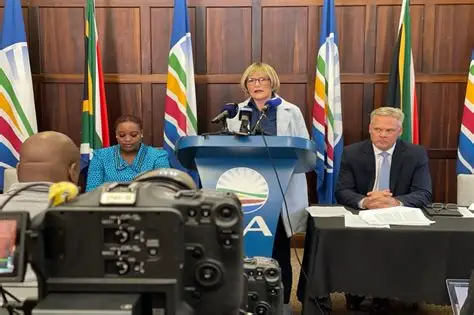
“Finance Minister Enoch Godongwana’s 2026 Budget Speech has been hailed as a landmark in South Africa’s fiscal and business policy, stabilizing debt at 78.9% of GDP and projecting a decline below 75% within five years. The budget combines fiscal discipline with social protection, offering tax relief, infrastructure investment, and regulatory reforms to restore investor confidence.”
South Africa’s 2026 Budget Speech, delivered by Finance Minister Enoch Godongwana, represents a turning point in the nation’s economic and political trajectory. After years of fiscal deterioration and investor uncertainty, the announcement that gross national debt has stabilized at 78.9% of GDP signals a structural shift in policy. The budget outlines a comprehensive plan to balance fiscal discipline with social protection, while simultaneously stimulating growth through infrastructure investment and regulatory reforms.
Debt Stabilization: A Structural Turning Point
- Debt-to-GDP peaked at 78.9% in 2025/26 but is projected to decline below 75% within five years.
- Debt servicing costs, which absorbed nearly 5% of GDP, will ease, freeing resources for growth-oriented spending.
- Stabilization reduces sovereign risk premiums, lowering borrowing costs and improving South Africa’s credibility in capital markets.
This policy shift is crucial for restoring investor confidence and ensuring that fiscal sustainability becomes the cornerstone of economic planning.
Growth Prospects and Structural Constraints
- GDP growth forecast: 1.6% in 2026, rising to 2% by 2028.
- Persistent challenges include energy shortages, logistics inefficiencies, and municipal governance weaknesses.
- Reforms in energy, transport, and infrastructure are expected to unlock productivity gains.
The government acknowledges that growth cannot be achieved without addressing systemic weaknesses, particularly in energy and logistics.
Tax Relief and Business Incentives
- Withdrawal of a proposed R20 billion tax increase.
- Inflation-linked personal income tax relief.
- VAT registration threshold raised from R1 million to R2.3 million, easing compliance for small businesses.
- Retirement fund deduction cap increased to R430,000, encouraging long-term savings.
These measures are designed to ease the burden on households and businesses, fostering entrepreneurship and long-term investment.
Infrastructure Investment
- Over R1 trillion allocated to public infrastructure projects.
- Priority areas: energy, logistics, rail corridor recovery, and municipal upgrades.
- Public-private partnerships encouraged through a Credit Guarantee Vehicle with the World Bank.
Infrastructure-led reform is central to the government’s growth strategy, highlighting recognition that sustainable development requires systemic upgrades.
Social Spending and Governance
- Government spending projected at R2.67 trillion in 2026/27, with more than 60% allocated to social programs.
- Expanded social grants and prioritization of the “social wage” aim to balance fiscal discipline with social protection.
This demonstrates the government’s commitment to ensuring that fiscal consolidation does not come at the expense of vulnerable communities.
Market Reaction
- Bond yields fell following the announcement.
- S&P maintained a positive outlook on South Africa’s fiscal trajectory, signaling renewed investor confidence.
The market’s response underscores the credibility of the government’s fiscal plan and its potential to restore stability.
Conclusion
The 2026 Budget Speech represents a pivotal moment in South Africa’s policy under politics, combining fiscal discipline with growth-oriented reforms. By stabilizing debt, easing tax burdens, and investing heavily in infrastructure, the government aims to create a more predictable environment for businesses and investors while safeguarding social protection. This balance between fiscal responsibility and social equity is likely to define South Africa’s economic trajectory in the coming years.



