




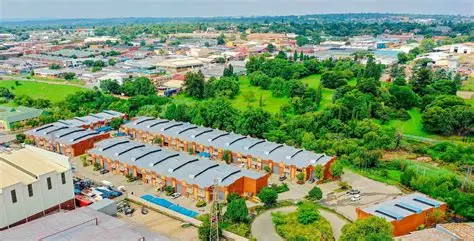
“South Africa’s industrial property sector is experiencing a logistics-driven boom in 2026, with Gauteng and the N3 corridor emerging as prime hubs for warehouse and distribution investments. E-commerce growth, port upgrades, and supply chain reconfiguration are tightening vacancies and compressing yields, making industrial real estate the star performer of the commercial property market.”
Industrial real estate has become the backbone of South Africa’s commercial property resurgence in 2026. With e-commerce penetration accelerating, infrastructure upgrades underway, and supply chain strategies shifting, logistics corridors across Gauteng, Durban, and Cape Town are seeing unprecedented demand for modern warehouses and distribution hubs. This transformation is not only reshaping property yields but also redefining industrial assets as strategic infrastructure critical to national and continental trade.
Key Drivers of Growth
- E-commerce Warehousing: Online retail continues to expand, requiring temperature-controlled and last-mile facilities near major population centers.
- N3 Corridor Logistics: The Durban–Johannesburg freight artery is being upgraded with interchanges, truck stops, and logistics parks, attracting speculative developments in Hammarsdale, Pinetown, and Harrismith.
- Port & Rail Upgrades: Investments in Durban and Richards Bay terminals, alongside private inland logistics hubs, are enabling larger distribution centers and container parks.
- Supply Chain Reconfiguration: Manufacturers and importers are adopting “just-in-case” inventory strategies, increasing demand for cross-dock and medium-term storage facilities.
rents of R60–120/sqm/month. Last-mile sites near Sandton and Midrand are achieving premium yields of 6–7%.
- N3 Corridor: Strategic freight spine linking Durban to Johannesburg. Investors are prioritizing sites with direct highway access and sufficient truck marshalling space.
- Cape Town: Logistics corridors are seeing rental growth of 8.4% year-on-year, with vacancies dropping below 5%.
Investor Confidence
Investor sentiment has rebounded strongly in 2026. REITs are reporting robust returns, and auctions are gaining traction as transparent transaction channels. Industrial property is increasingly viewed as resilient and scalable, aligning with global supply chain trends. This confidence is positioning South Africa as a logistics hub for the African continent, leveraging ports, rail corridors, and highways to support industrial absorption.
Risks and Challenges
- Currency Volatility: Rand fluctuations remain a concern for foreign investors.
- Infrastructure Bottlenecks: Despite upgrades, congestion at ports and highways can still disrupt logistics flows.
- Speculative Development Risks: Overbuilding in certain nodes could lead to localized oversupply.
- Energy Reliability: Load-shedding continues to pose operational risks for industrial tenants.
Strategic Outlook
Industrial real estate is expected to remain the most attractive investment class in South Africa through 2026. Investors should focus on:
- Big-box warehouses in Gauteng for core distribution.
- N3 corridor sites with direct highway access.
- Cape Town logistics hubs benefiting from e-commerce and port activity.
- Sustainable developments incorporating energy efficiency and ESG compliance to attract premium tenants.



