




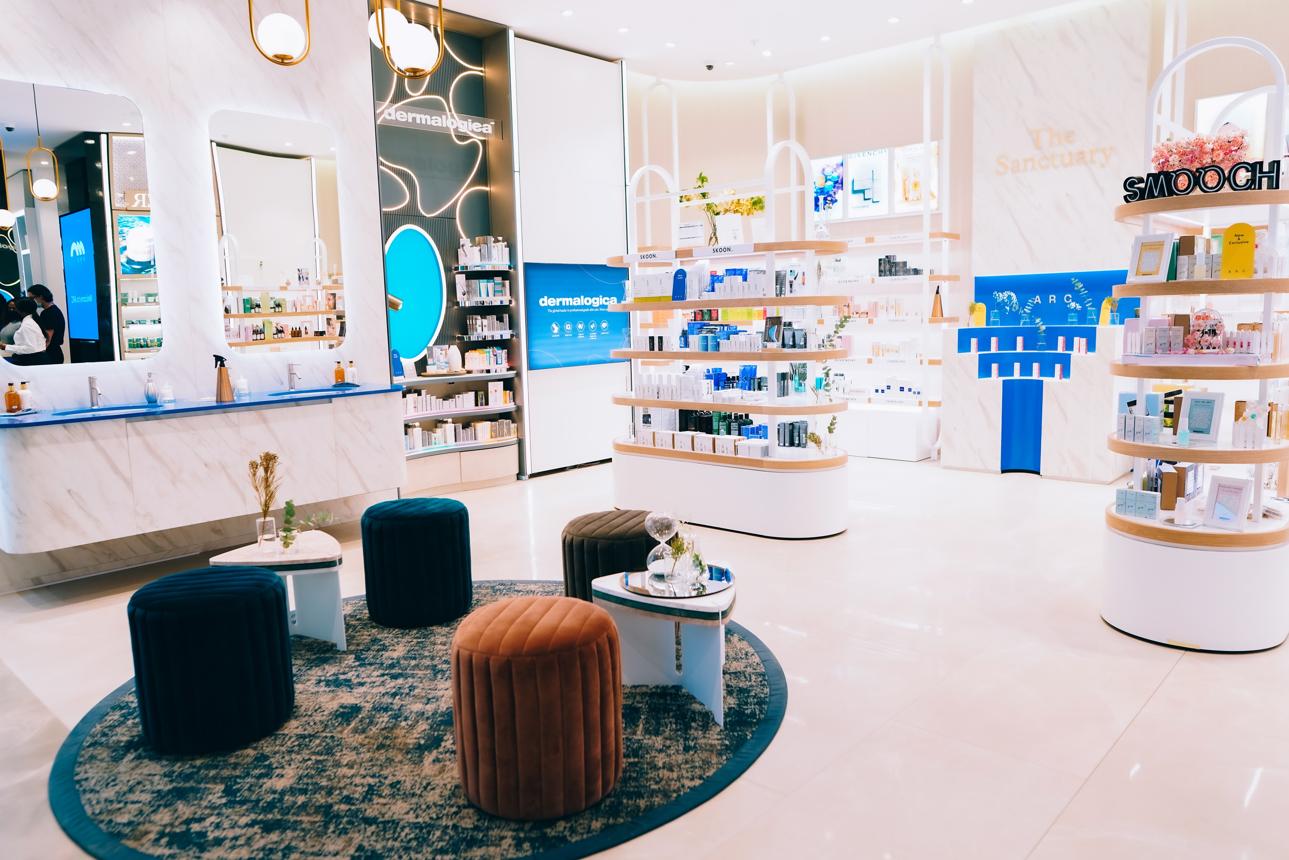
South Africa’s beauty retail industry is increasingly reconsidering the traditional strategy of offering ever-expanding product ranges, as retailers face rising operational complexity, customer choice overload and pressure to maintain profitability. The emerging opportunity lies in carefully selected beauty products, stronger customer trust, personalised shopping experiences and more focused retail strategies.”
Introduction: A changing beauty retail landscape
South Africa’s beauty industry is entering a period of strategic reconsideration as retailers increasingly question whether expanding product ranges remains the most effective route to sustainable growth. Traditionally, beauty businesses have competed by introducing more cosmetics, skincare products, fragrances and personal-care collections. However, growing product complexity, operational costs and changing consumer expectations are encouraging retailers to reconsider this approach.
A report published by THEPROFILER. on 2 November 2026, titled Is it time for beauty retailers to cut back?, highlights an important development in premium beauty retail. Instead of relying exclusively on product expansion, retailers are increasingly recognising the commercial value of carefully curated selections, customer confidence and more meaningful shopping experiences.
This development reflects a broader transformation in the South African beauty market, where affordability, product quality, accessibility and personalised recommendations are becoming increasingly important to consumers.
The traditional strategy of expanding beauty product ranges
For many years, beauty retailers operated according to a straightforward commercial principle: introducing additional products could attract more customers and create additional sales opportunities.
Consequently, stores expanded their selections across makeup, skincare, haircare, fragrance and body-care categories. Customers could choose from numerous brands, formulations, colours, textures and price points.
Although this strategy created opportunities for product discovery, it also introduced considerable challenges.
Retailers must manage increasingly complicated inventories, maintain sufficient stock levels, coordinate supplier relationships and monitor products that may sell at different speeds. Furthermore, expanding a product portfolio requires investment in merchandising, marketing, storage and distribution.
Products that fail to generate sufficient demand can eventually become expensive inventory.
Therefore, the relationship between product variety and profitability is not necessarily straightforward. A larger assortment may increase customer choice, but it can also reduce operational efficiency if businesses struggle to identify which products genuinely contribute to sales.
Customer choice and the challenge of product overload
Beauty consumers are exposed to an enormous volume of information through social media, online advertising, influencers and product reviews.
Every week, customers encounter recommendations for new skincare ingredients, makeup techniques, fragrances and beauty routines. Consequently, choosing appropriate products can become increasingly complicated.
For customers unfamiliar with particular ingredients or formulations, an extensive product selection may create uncertainty rather than convenience.
This challenge is particularly relevant to skincare, where consumers frequently encounter products promoted for acne, pigmentation, hydration, ageing and sensitive skin.
Retailers therefore have an opportunity to simplify shopping experiences by providing clearer information and practical recommendations.
Rather than encouraging customers to purchase numerous products, businesses can concentrate on helping shoppers identify suitable essentials and understand how products complement one another.
Such an approach can improve confidence, reduce unnecessary spending and strengthen customer relationships.
Premium beauty retailers reconsider their competitive advantage
South Africa’s premium beauty market has attracted increasing attention from retailers and investors.
Daily Maverick reported on 30 October 2026 that social media-driven beauty discovery is creating opportunities for specialised physical stores offering premium products and distinctive shopping experiences. The report discussed ARC Store and the growing demand for alternatives between traditional pharmacy cosmetics and luxury beauty products.
This emerging retail category demonstrates how consumer expectations are changing.
Customers increasingly want access to products they discover online while also benefiting from physical stores where they can examine textures, test cosmetics and receive guidance.
Consequently, premium beauty retailers are competing through more than product availability.
Their advantages can include carefully selected brands, knowledgeable employees, engaging store environments and personalised recommendations.
However, maintaining these advantages requires investment. Retailers must determine which products justify shelf space and which categories offer genuine opportunities for differentiation.
A more focused product assortment may therefore become an important component of retail strategy.
South African beauty brands gain opportunities
The changing retail environment also creates opportunities for locally developed beauty products.
South African consumers have access to an expanding selection of domestic brands offering skincare, cosmetics, fragrances and personal-care products.
Local businesses can compete by understanding consumer preferences, climatic conditions, affordability requirements and specific beauty concerns.
Furthermore, locally developed products may provide retailers with opportunities to differentiate themselves from competitors relying heavily on international brands.
However, local origin alone does not guarantee commercial success.
Consumers increasingly expect credible product information, reliable quality, appropriate formulations and transparent marketing.
For independent beauty businesses, developing a smaller range of well-positioned products may be more practical than attempting to compete across every category.
This approach can support stronger brand recognition and more effective marketing.
Affordability remains an important consideration
South Africa’s beauty retail market includes customers with different spending capacities.
Some consumers purchase premium skincare and internationally recognised cosmetics, while others prioritise affordable products suitable for everyday use.
The importance of accessible beauty products was demonstrated by Pick n Pay’s introduction of its Real Cosmetics range in October 2026.
BusinessTech reported that the retailer introduced more than 100 cosmetics products, with prices below R90, across more than 100 stores. The products were also available through its ASAP! platform.
This development illustrates how retailers are incorporating beauty into broader shopping experiences.
For customers, affordability can encourage experimentation with makeup and personal-care products without requiring substantial expenditure.
For retailers, however, affordable pricing must be supported by efficient sourcing, inventory management and appropriate product positioning.
Therefore, beauty businesses must balance customer accessibility with commercial sustainability.
Digital platforms influence beauty purchasing decisions
Digital platforms have become important channels for beauty discovery and consumer education.
Social media content introduces customers to products, demonstrates application techniques and encourages discussions about skincare routines.
At the same time, online reviews and creator recommendations influence how shoppers evaluate brands before visiting physical stores.
Retailers can benefit from integrating digital marketing with physical shopping experiences.
For example, customers discovering a lipstick through social media may prefer visiting a store to examine shades before purchasing.
Similarly, consumers researching skincare ingredients online may appreciate access to knowledgeable beauty consultants.
This interaction between digital discovery and physical retail creates opportunities for businesses to improve customer engagement.
Nevertheless, digital visibility must be supported by accurate product information and realistic claims.
Beauty retailers that communicate clearly can build credibility in an environment where consumers encounter substantial promotional content.
Product curation becomes a potential growth strategy
Product curation involves selecting products according to customer needs, quality, commercial performance and brand positioning.
Instead of carrying every available product, retailers can prioritise items that demonstrate consistent demand and provide meaningful value.
For example, a skincare department could concentrate on essential cleansing, moisturising, sun protection and selected treatment products.
A makeup department could highlight everyday essentials alongside distinctive products for customers seeking more specialised looks.
Fragrance retailers might organise selections around scent preferences, occasions and price categories.
This approach can simplify merchandising and improve the shopping experience.
Moreover, curated assortments may help retailers communicate more effectively with customers.
Clear product groupings, informative displays and knowledgeable staff can make shopping easier.
However, reducing product ranges must be approached carefully. Retailers risk losing customers if important brands, shades or product categories disappear without adequate alternatives.
Successful curation therefore requires continuous evaluation of customer preferences.
Beauty experiences become increasingly important
Beauty shopping is increasingly associated with experiences rather than transactions alone.
Consumers may enjoy testing products, attending demonstrations, discovering new brands and receiving personalised recommendations.
South Africa’s beauty retail events illustrate this development.
PressPortal reported on the Dis-Chem Beauty Expo in Cape Town, which featured product stations, interactive activities, discounts and opportunities for consumers to explore skincare, makeup, fragrance and haircare brands.
These experiences can encourage customers to spend more time exploring products.
They also create opportunities for brands to explain formulations, demonstrate application techniques and introduce consumers to unfamiliar products.
For retailers, experiential marketing can support brand discovery and customer engagement.
However, events and demonstrations should provide meaningful value rather than simply encouraging unnecessary purchases.
Implications for South African beauty businesses
The changing environment presents several practical implications for beauty retailers.
First, businesses should evaluate inventory performance regularly. Products with weak demand may require reconsideration, while successful essentials deserve appropriate availability.
Second, retailers should strengthen customer education. Clear explanations of ingredients, product uses and realistic expectations can improve purchasing decisions.
Third, businesses should consider affordability across different customer segments.
Fourth, retailers should develop stronger digital communication strategies that complement physical shopping experiences.
Finally, customer feedback should inform decisions about product selection and merchandising.
These measures can help businesses respond to changing expectations without relying exclusively on continuous product expansion.
The importance of trust and responsible beauty marketing
Customer trust is becoming an important consideration in beauty retail.
Consumers increasingly encounter claims concerning skin improvement, ingredient effectiveness and cosmetic performance.
Retailers therefore have a responsibility to communicate product information accurately and avoid exaggerated promises.
Beauty products should be marketed according to their intended uses, available evidence and appropriate limitations.
Clear information about ingredients, application instructions and potential sensitivities can help consumers make informed decisions.
Furthermore, staff training can improve the quality of recommendations.
Retailers that prioritise responsible communication may strengthen customer confidence and encourage repeat purchases.
Conclusion: A more focused future for beauty retail
South Africa’s beauty retail industry is facing an important strategic question: whether greater product variety necessarily produces better commercial results.
The developments highlighted by THEPROFILER. on 2 November 2026 suggest that retailers are increasingly considering the advantages of more focused assortments, stronger customer relationships and carefully managed product selections.
The opportunity is not necessarily to eliminate choice, but to make choice more useful.
Beauty businesses that understand their customers, manage inventory efficiently and provide reliable information may be better positioned to compete in an increasingly sophisticated marketplace.
Ultimately, the future of beauty retail in South Africa may depend less on how many products businesses offer and more on how effectively they connect customers with products that meet their needs.



