




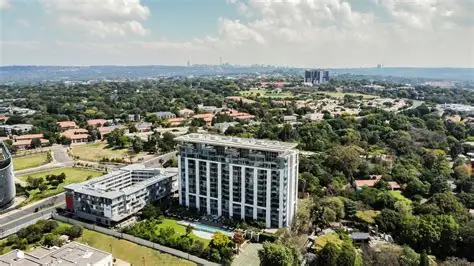
”South Africa’s commercial real estate sector is experiencing renewed confidence as the South African Reserve Bank holds interest rates steady, creating a predictable environment for investors and developers. Mid-market properties and urban hotspots are seeing increased activity, signaling resilience despite broader economic challenges.”
South Africa’s commercial real estate market has entered September 2026 with a sense of cautious optimism. The South African Reserve Bank’s (SARB) decision to maintain the repo rate at 7.00% and the prime lending rate at 10.50% has provided a stable financial backdrop for investors, developers, and buyers. This stability is crucial in a market that has endured years of volatility, inflationary pressures, and energy supply challenges.
Interest Rate Stability and Market Confidence
The SARB’s steady hand has reassured stakeholders across the property sector. For commercial investors, predictable borrowing costs mean more accurate financial planning and reduced risk exposure. Developers are now more willing to commit to long-term projects, while buyers are recalibrating affordability expectations. According to FNB economists, this consistent rate environment is “fostering a predictable landscape, crucial for property investment decisions.”
Price Movements and Regional Dynamics
National property price growth has averaged 3.8% year-on-year, with metropolitan areas showing stronger resilience. Johannesburg’s northern suburbs, such as Bryanston and Dainfern, have seen property values climb by 5.5%, driven by demand for lifestyle estates and secure family homes. Cape Town’s office and mixed-use developments continue to attract investors, particularly in areas with improved infrastructure and renewable energy integration.
Emerging Hotspots
- Gauteng: Northern Johannesburg remains a magnet for commercial and residential investors.
- Cape Town: The city’s focus on renewable energy projects is boosting confidence in office and retail developments.
- Durban: Logistics and industrial hubs are benefiting from port expansions and trade activity.
These hotspots highlight the interplay between infrastructure investment and property demand.
Role of Infrastructure and Energy Stability
South Africa’s ongoing battle with load shedding has long undermined investor confidence. However, recent improvements in grid stability, attributed to accelerated renewable energy deployment, are slowly changing sentiment. Infrastructure projects, including transport upgrades and municipal service improvements, are further supporting commercial property growth.
Buyer Activity and Market Segments
The mid-market segment (properties between R1.5 million and R3.5 million) is seeing the most activity, with average appreciation of 4–5%. This growth is fueled by middle-income households and semi-gration trends, where professionals relocate from larger metros to smaller towns with better amenities. Entry-level buyers continue to face affordability challenges, but government subsidies and transfer duty exemptions are providing some relief.
Challenges Ahead
Despite the optimism, risks remain:
- Affordability pressures due to high household debt (61.8% of disposable income).
- Energy reliability, while improving, is still fragile.
- Global economic uncertainty, which could impact foreign investment inflows.
Investor Outlook
Commercial investors are adopting a cautious but opportunistic stance. Stable interest rates allow for long-term planning, but many are focusing on mixed-use developments that combine retail, office, and residential spaces. This diversification mitigates risk and aligns with evolving consumer behavior.
Conclusion
South Africa’s commercial real estate market in September 2026 is defined by resilience, cautious optimism, and strategic growth. With interest rates stable, infrastructure improving, and hotspots emerging, the sector is well-positioned to attract both domestic and international investment. While challenges persist, the current environment rewards patience, research, and calculated risk-taking.



