




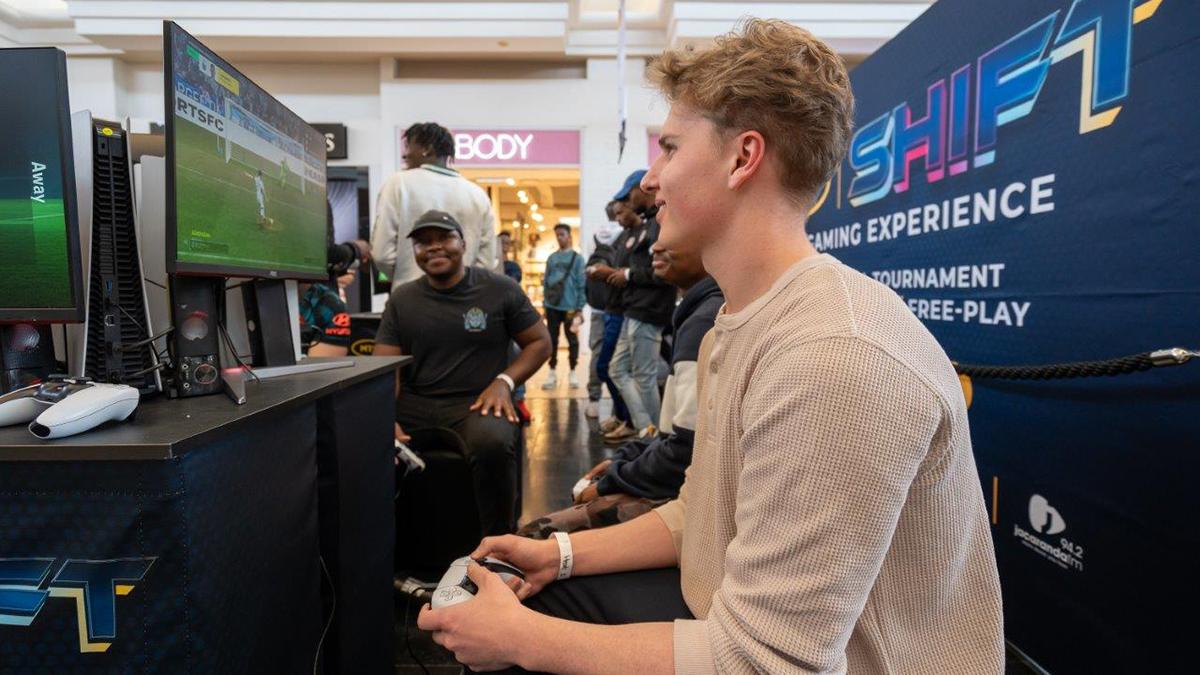
“South Africa’s SHIFT Gaming Experience concluded its 2026 tournament series at Canal Walk Shopping Centre, with champions crowned in EA SPORTS FC 26, Beat Saber and Brawlhalla after a reported 42,327 competitors and visitors participated across eight shopping centres. Meanwhile, local online competitions continue to provide players with opportunities to compete for cash prizes, demonstrating how accessible tournaments and organised gaming communities are helping strengthen the country’s esports ecosystem.”
South Africa’s Esports Scene Gains Momentum as SHIFT Gaming Crowns National Champions
South Africa’s competitive gaming industry continues to demonstrate its potential as an expanding sporting and entertainment sector, with the 2026 SHIFT Gaming Experience providing a prominent example of how organised tournaments can bring players, spectators, brands and gaming communities together. The national finals concluded at Canal Walk Shopping Centre in Cape Town, following a series of competitions staged across eight Hyprop shopping centres. The event highlighted the growing appeal of esports and interactive gaming beyond traditional gaming venues.
According to a report published by Hypress Live on 7 October 2026, the tournament series attracted 42,327 competitors and visitors. Organisers awarded R350,000 in prize money throughout the competition, which featured several gaming titles and offered participants opportunities to compete at regional venues before advancing towards the national finals. These figures indicate substantial public interest in the event, although participation and visitor totals should not be interpreted as a measurement of the entire South African esports market.
National champions emerge from a nationwide competition
The Canal Walk finals delivered winners across three featured titles. Ethan Luck, known by the gaming name Nova, won the Beat Saber competition, while Mogamat Zaid April claimed the EA SPORTS FC 26 football championship. Jayden Devlal secured victory in Brawlhalla.
The results demonstrated the variety of competitive gaming experiences available to South African audiences. EA SPORTS FC 26 appeals to football supporters familiar with professional teams and international competitions. Beat Saber combines rhythm, coordination and physical movement, while Brawlhalla offers a different competitive environment built around fighting mechanics, timing and tactical decision-making.
By bringing these titles together within one tournament series, SHIFT created opportunities for players with different interests to participate. The format also gave spectators an accessible introduction to competitive gaming, particularly those who might not regularly attend dedicated esports events.
The EA SPORTS FC 26 competition attracted 2,029 registered players, according to the published report. Twelve finalists eventually competed at Canal Walk. The football final carried a R50,000 prize pool shared among the top four finishers, creating a significant incentive for participants seeking recognition and financial rewards.
These results illustrate how a structured tournament can turn casual interest into a competitive pathway. Players can test their abilities, measure their progress against opponents and gain experience competing under pressure.
Shopping centres become competitive gaming venues
One of the most important features of the SHIFT Gaming Experience was its use of shopping centres as tournament venues. Instead of limiting competitions to specialist gaming arenas, organisers brought gaming activities into familiar public spaces.
This approach can help introduce esports to people who might not otherwise attend a tournament. Families, shoppers and friends visiting a participating centre can encounter live matches, watch competitors and learn about different games without necessarily making a separate trip to a gaming venue.
The model also creates opportunities for shopping centres to attract visitors through entertainment that encourages social participation. For sponsors and commercial partners, these events offer direct engagement with audiences interested in gaming, technology, sport and digital culture.
However, attendance alone does not guarantee long-term esports development. Sustainable growth also requires regular competitions, reliable technical infrastructure, transparent rules, effective player support and opportunities for talented competitors to progress into higher levels of competition.
SHIFT’s nationwide format offers a foundation for these developments by connecting local participation with a national championship. Its future impact will depend partly on whether the organisers can maintain interest between annual editions and expand opportunities for players outside the most established gaming communities.
Online competitions maintain opportunities for players
Alongside large public tournaments, South Africa’s esports ecosystem includes online competitions that allow participants to compete from home. Esports Central reported on 13 October that Mettlestate had scheduled a series of Cash Cups running from 12 to 18 October 2026.
The programme includes competitions in Marvel Rivals, eFootball, Call of Duty Mobile, Tekken 8 and Mobile Legends: Bang Bang. The listed events use different formats, including individual matches, team-based competition and battle royale play. According to the report, entry is free, with a base prize pool of R1,000 per event that can increase to R2,000 depending on participants’ premium membership status.
The Tekken 8 competition is scheduled for Thursday, 15 October, at 19:30 South African Standard Time. The Mobile Legends: Bang Bang event is listed for Saturday, 17 October, at 14:00. Players should consult the organiser’s current event information for registration requirements, check-in procedures and any changes to the published schedule.
Online tournaments provide a complementary route into competitive gaming. They can reduce the need to travel, allow players to practise against a wider range of opponents and create recurring opportunities to participate. Nevertheless, players still require suitable devices, stable internet connections, compatible game versions and sufficient time to practise.
Organisers must also manage disputes, cheating allegations, match scheduling and technical interruptions. Clear tournament rules and consistent enforcement are essential for maintaining confidence in online results.
The importance of developing young talent
South Africa’s esports development depends on more than championship events and prize money. Long-term progress requires pathways through which beginners can learn competitive skills, gain experience and eventually reach higher levels of play.
Local tournaments can help players develop strategic thinking, communication, concentration and emotional control. Team-based games require participants to coordinate decisions, share information and adapt when strategies fail. Individual competitions, meanwhile, can demand extensive practice, detailed knowledge of game mechanics and the ability to perform under pressure.
These skills should not be presented as automatic benefits of playing video games. Their development depends on how participants train, manage their time, respond to feedback and balance competition with other responsibilities.
Schools, universities, clubs and community organisations could contribute by establishing structured gaming activities with appropriate supervision. Such programmes can provide clear schedules, participation rules, fair-play standards and guidance on healthy screen habits.
University esports also represents an important part of this development. Varsity Esports lists EA SPORTS FC 26, Rocket League and Valorant among its featured competitive titles, with a programme involving universities across South Africa. Its published schedule identifies the Grand Finals for 27–29 November 2026 and a prize pool of R90,000.
The university model can connect gaming with student life while giving participants opportunities to represent their institutions. It may also help develop skills relevant to broadcasting, event management, marketing, coaching and tournament administration.
Commercial opportunities extend beyond players
The expansion of esports creates potential commercial opportunities for sponsors, event organisers, technology providers, broadcasters and gaming venues. Businesses can support competitions through prize funding, equipment, connectivity, venue access and promotional partnerships.
However, sponsorship becomes more sustainable when brands can identify measurable value. Relevant indicators may include registered competitors, verified attendance, livestream audiences, engagement rates, repeat participation and the effectiveness of promotional campaigns.
Organisers should distinguish between confirmed attendance figures and estimated online reach. They should also explain how participant information is collected and used, particularly when tournaments attract minors.
Gaming events can provide brands with an opportunity to reach audiences through experiences rather than conventional advertising alone. Live demonstrations, interactive activities and community competitions may encourage stronger participation. Even so, commercial partnerships should respect players and spectators instead of allowing advertising objectives to overwhelm the competitive experience.
There are practical challenges. Tournament equipment, venue preparation, technical support, internet access, staffing and prize administration all require funding. Rising costs can make it difficult for smaller organisers to offer consistent events.
A combination of sponsorship, reasonable operating budgets, community partnerships and carefully planned tournament schedules may help address these pressures. Transparent financial arrangements can further strengthen trust among players, sponsors and spectators.
Infrastructure and inclusion remain essential
Esports depends on technology, making reliable connectivity and access to appropriate equipment important considerations. Players without suitable devices or affordable internet may struggle to participate in competitions, even when registration is free.
Public gaming facilities, community clubs and university programmes could help reduce these barriers by providing shared equipment and supervised practice environments. Organisers should also consider accessible controls, inclusive seating, appropriate facilities and alternative ways for people with disabilities to participate.
Competitive fairness matters as well. Tournament rules should clearly explain eligibility, game settings, match formats, dispute procedures and penalties. Players should know how results are determined and how complaints can be raised.
Responsible event management must address age-appropriate participation, privacy, harassment and safeguarding. Young competitors need clear guidance about online communication, personal information and interactions with strangers. Families and institutions should understand the rules governing organised competitions before participants enter.
These safeguards do not diminish the excitement of esports. Instead, they help create environments in which competitors can focus on performance and communities can develop with confidence.
What comes next for South African esports?
The SHIFT Gaming Experience offers evidence that competitive gaming can attract substantial participation when organisers combine accessible venues, varied titles and a national tournament structure. Its reported 42,327 competitors and visitors, together with the R350,000 prize allocation, make the 2026 series a notable development in the local gaming calendar.
Nevertheless, a single successful event cannot establish the long-term size or financial health of the industry. Further evidence would be needed to assess year-on-year participation, professional player earnings, sponsorship growth and the number of competitors progressing to international events.
For players, the next steps include continued practice, participation in credible competitions and learning from experienced teammates and coaches. For organisers, priorities include consistent scheduling, reliable technology, fair administration and opportunities for newcomers. Sponsors and public institutions can contribute by supporting initiatives with clear objectives and measurable outcomes.
South Africa’s esports future will depend on whether interest can be converted into sustainable participation and professional opportunities. The combination of public tournaments, online Cash Cups and university competitions provides several routes for that development.
The conclusion of SHIFT’s 2026 series is therefore more than a list of champions. It illustrates how competitive gaming can bring communities together, create experiences for spectators and provide players with organised opportunities to test their abilities. Continued investment in accessibility, fair competition and talent development will determine how effectively South Africa builds on this momentum.



