




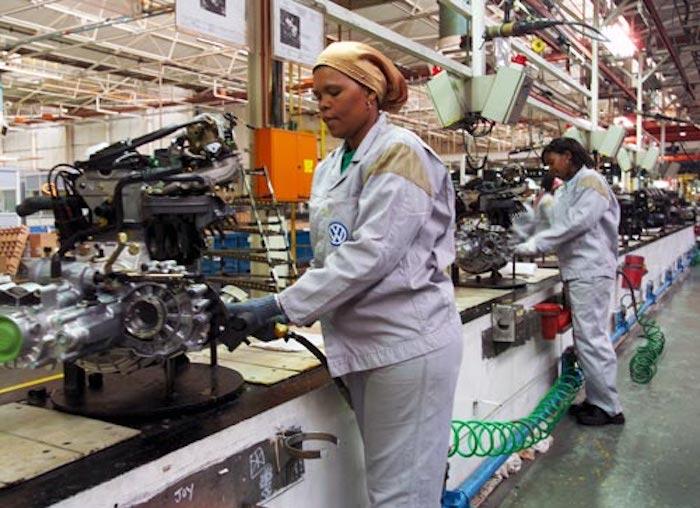
“South Africa’s manufacturing sector showed signs of improvement in September, with the seasonally adjusted Absa PMI rising to 50.7 points from 45.8 in August, moving back above the 50-point threshold separating expansion from contraction. However, persistent logistics problems, shipping delays at Durban harbour, elevated freight and fuel costs, and weak employment readings indicate that manufacturers continue to face significant constraints.”
South Africa’s Manufacturing Sector Shows Signs of Recovery After Three-Month Slump
South Africa’s manufacturing sector delivered a more encouraging signal for the economy in September, with business conditions improving after three consecutive months of contraction. The latest Absa Purchasing Managers’ Index (PMI), compiled by the Bureau for Economic Research (BER), increased by 4.9 points to 50.7 in September 2026, compared with 45.8 in August. The move above the neutral 50-point level indicates that manufacturing activity, measured through the survey, returned to expansion territory.
The September improvement is significant because it follows a period of weakness in the South African manufacturing industry. The PMI had remained below 50 for three consecutive months, reflecting deteriorating conditions during the winter period. The latest reading therefore provides evidence that some parts of industrial demand began recovering as September progressed.
At the same time, the data should not be interpreted as evidence that the manufacturing sector has fully recovered. Several important components of the survey remain weak. Employment, for example, deteriorated again in September, while manufacturers continued to report logistics problems and higher freight costs.
The PMI is particularly important for macroeconomic analysis because manufacturing is closely connected to trade, investment, employment, transportation, mining, retail and business confidence. A sustained improvement in factory activity could support broader economic growth, but continued logistical and cost pressures could limit the extent of the recovery.
New orders provide the strongest positive signal
One of the most notable developments in September was the sharp recovery in new sales orders. The new sales orders index increased to 50.8 from 40.3 in August, moving back above the neutral level. Business activity also improved, rising to 49.3 from 40.2.
The improvement in new orders is important because orders are an indicator of future production requirements. When manufacturers receive more orders, they may subsequently increase production, purchase additional inputs and, if the improvement is sustained, eventually increase investment and employment.
However, the September business activity index remained below 50. That distinction matters. Although the overall PMI returned to expansion territory, the actual business-activity component had not yet reached expansionary territory. This suggests that the improvement in demand had not translated fully into stronger production at the time of the survey.
The difference between new orders and current activity also illustrates why economists normally examine the individual components of a PMI rather than relying exclusively on the headline number.
The improvement in orders nonetheless represents a potentially important change after August’s sharp deterioration. Manufacturers entered September with weak demand indicators, and the recovery in orders suggests that domestic or external demand conditions improved during the month.
Manufacturing recovery comes against a difficult economic backdrop
The manufacturing improvement is taking place against a broader South African economic environment marked by weak growth and considerable external pressures.
The South African Reserve Bank’s September 2026 Quarterly Bulletin reported that real GDP contracted by 0.2% in the second quarter of 2026, following six successive quarters of expansion. Reuters reported that the second-quarter contraction was associated with weakness in sectors including mining, manufacturing and trade, while the Middle East conflict contributed to economic pressure during the period.
Against that background, the September manufacturing PMI improvement provides a more positive indicator for the third quarter. It does not, however, establish that the overall economy has returned to strong growth.
Manufacturing is only one component of GDP, and the PMI is a survey-based indicator rather than an official measure of national output. The data therefore need to be considered alongside production figures, retail sales, investment, employment, inflation, exports and other economic indicators.
Still, the movement from 45.8 to 50.7 is large enough to attract attention because it represents a substantial month-to-month improvement in manufacturers’ reported conditions.
Durban harbour remains a major constraint
One of the most important negative findings from the September survey concerns logistics.
Manufacturers reported shipping delays, problems clearing containers and sharply higher freight costs. Engineering News reported that delays at Durban harbour were a significant bottleneck and contributed to an unusually high supplier-deliveries reading.
The supplier-deliveries component of the PMI needs careful interpretation because the index is constructed differently from ordinary activity indicators. A higher reading can actually indicate slower deliveries rather than better supplier performance. The September results therefore reflected logistical delays rather than evidence that suppliers were effortlessly meeting stronger demand.
For manufacturers, these delays can have significant economic consequences. A factory depends on the timely arrival of imported components, raw materials, machinery and other inputs. Delays can interrupt production schedules and increase inventory requirements.
Higher freight costs create another problem. When transport becomes more expensive, manufacturers must decide whether to absorb the additional cost, reduce margins or pass some of the increase to customers. If higher costs spread through supply chains, they can contribute to broader inflationary pressure.
The logistics issue is therefore not simply a manufacturing-sector problem. It can affect prices, exports, investment and the competitiveness of South African companies.
Fuel prices add another layer of pressure
South African manufacturers are also dealing with higher energy and transportation costs.
BusinessDay reported on October 2 that petrol and diesel prices had increased significantly, with 95-grade petrol in Gauteng rising by R1.34 to R26.92 per litre, while wholesale diesel prices also increased.
Fuel costs matter to manufacturing because factories require transportation at almost every stage of the production process. Raw materials must be transported to factories, finished goods must reach distribution centres and products must ultimately reach consumers or export markets.
Higher diesel prices can therefore affect manufacturers directly through logistics and indirectly through suppliers.
For businesses already dealing with shipping delays and elevated freight charges, higher fuel prices can make the operating environment more difficult.
The interaction between fuel prices and manufacturing costs also has macroeconomic implications. If businesses pass higher transport and production costs on to consumers, inflation could become more persistent. If companies absorb the costs instead, profitability and investment capacity can come under pressure.
Employment remains a concern
Despite the improvement in overall PMI conditions, employment remains one of the weakest parts of the manufacturing picture.
Engineering News reported that the employment index declined to 43.1 points in September from 46.2 in August, reversing much of the improvement recorded during the previous month.
An index below 50 indicates contraction in the relevant activity. The employment reading therefore suggests that manufacturers remained cautious about hiring despite the improvement in orders.
This is particularly important for South Africa, where employment remains a major economic concern. Manufacturing can provide jobs directly in factories and indirectly through supply chains, transportation, maintenance, logistics and other supporting industries.
The September results suggest that manufacturers may want to see evidence of a sustained recovery before committing to additional workers.
Businesses generally face significant costs when expanding their workforce. If demand improves only temporarily, companies can be reluctant to make permanent hiring decisions.
The employment data therefore highlight an important distinction between an improvement in business sentiment and a broad-based economic recovery. Stronger orders are encouraging, but businesses may need several months of sustained demand before employment responds.
The rand and international markets remain important
South Africa’s manufacturing outlook is also affected by international financial conditions.
The rand weakened to around R16.61 to the US dollar on October 1, according to Moneyweb, as stronger global yields and a firmer US dollar put pressure on emerging-market currencies.
Currency movements have mixed consequences for manufacturers.
A weaker rand can increase the cost of imported machinery, components and raw materials. Companies that depend heavily on imports may therefore face higher production costs.
At the same time, a weaker domestic currency can improve the rand value of export revenues and potentially support the competitiveness of South African exporters.
The overall effect depends on how much a particular manufacturer imports and exports. Companies with substantial imported inputs may experience greater cost pressure, while exporters can potentially benefit from more favourable currency conversion.
Global interest rates also matter because they influence capital flows into emerging markets, borrowing costs and exchange rates. Consequently, South African manufacturers are affected not only by domestic demand but also by developments in major economies.
Vehicle sales provide another positive indicator
The September manufacturing data arrived alongside evidence of resilience in South Africa’s vehicle market.
BusinessTech reported that new vehicle sales increased by 12.7% year on year in September, compared with 11.4% growth in August, citing data from Naamsa.
Vehicle manufacturing is particularly significant to the South African economy because the industry connects local assembly plants with large networks of component suppliers, logistics companies and exporters.
Improving vehicle sales can therefore support manufacturing activity and demand across the wider automotive value chain.
However, vehicle sales and the PMI measure different aspects of the economy. Stronger vehicle sales do not automatically mean that all manufacturing industries are expanding. The broader manufacturing sector includes food, chemicals, metals, machinery, textiles and numerous other industries.
The vehicle data nevertheless provide another indication that some areas of South African domestic demand have remained relatively resilient despite higher borrowing costs and subdued economic growth.
What the September PMI means for the wider economy
The September PMI provides a mixed but important picture of South Africa’s economic conditions.
On the positive side, the headline PMI moved back above 50, new orders rebounded strongly and business activity recovered from its August decline.
On the negative side, employment remained in contraction, actual business activity was still below the neutral threshold, and manufacturers continued to face shipping delays and higher logistics costs.
The result is therefore better described as an improvement in conditions rather than confirmation of a complete manufacturing recovery.
For the broader economy, the key question will be whether the September improvement continues into October and subsequent months.
A single monthly PMI reading can change significantly because of temporary factors. A sustained period above 50 would provide stronger evidence that manufacturing activity is entering a more durable expansion.
The performance of new orders will be particularly important. If orders remain above 50, manufacturers may eventually increase production and reconsider hiring plans. If orders fall back below 50, the September improvement could prove temporary.
Outlook for South African manufacturers
The manufacturing sector enters the final quarter of 2026 with both opportunities and significant challenges.
The September PMI demonstrates that demand conditions can improve even in a difficult macroeconomic environment. The rebound in new orders is particularly relevant because it gives manufacturers a potential foundation for higher production.
However, the recovery faces constraints from logistics, fuel costs, freight expenses, global financial conditions and weak employment.
The South African economy also needs stronger and more consistent growth to create the conditions for businesses to expand investment and hiring.
For policymakers, the latest manufacturing figures underline the importance of infrastructure, ports, energy reliability, transport efficiency and measures that improve the cost of doing business.
For businesses, the data point to a market where demand may be improving but operating costs remain challenging.
The next several PMI releases will therefore be important in determining whether September represented the beginning of a sustained recovery or simply a temporary rebound after the weakness recorded during the previous three months.
Conclusion
South Africa’s manufacturing sector returned to expansion territory in September, with the Absa PMI rising to 50.7 from 45.8 and new sales orders recovering sharply.
The improvement offers a more positive signal for an economy that contracted in the second quarter. Nevertheless, the data also show why caution is necessary: employment remains weak, business activity has not fully recovered, and manufacturers continue to face serious logistics and cost pressures.
The immediate economic story is therefore one of improving manufacturing demand alongside persistent structural and cost constraints. Whether the improvement develops into broader economic growth will depend on the durability of new orders, production, investment and employment in the months ahead.



