




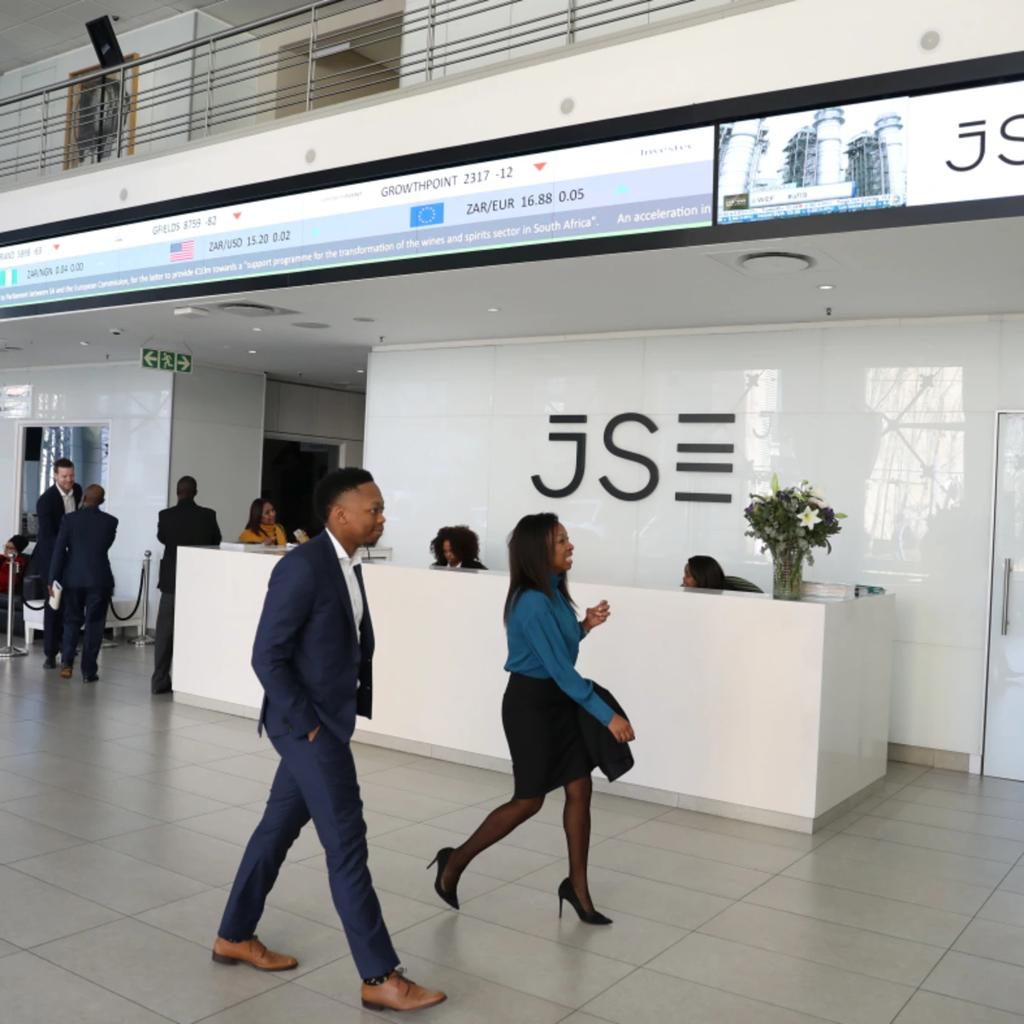
“South African financial markets entered October under pressure, with the JSE All Share Index falling 0.69% on October 1 while the rand weakened sharply against major currencies as higher oil prices and rising global bond yields affected risk sentiment. PSG Financial Services reported that the JSE’s decline was led by financial shares, while resources and mining stocks were comparatively firmer as Brent crude climbed above $102 a barrel.”
South African financial markets are beginning October against a complicated international backdrop, with higher oil prices, rising government bond yields and renewed geopolitical uncertainty influencing investor sentiment. The latest market assessment from PSG Financial Services shows that South African equities weakened on October 1, while the rand recorded significant losses against the US dollar, pound and euro. At the same time, international markets were also under pressure as investors considered the implications of elevated energy prices and changing expectations for interest rates.
The JSE All Share Index fell 0.69% during the October 1 session to 107,763.09 points, according to PSG Financial Services. Financial stocks were among the weakest parts of the domestic market, with the financial sector declining 2.02%. By contrast, the Resources 10 Index increased 0.21%, while the Metals and Mining Index gained 0.41%. The differing performance illustrates how commodity exposure is continuing to influence the behaviour of South African equities.
Currency markets also reflected the difficult environment. The rand weakened by 1.62% against the US dollar, 1.02% against the British pound and 0.64% against the euro at 18:58 South African Standard Time on October 1. The currency was trading at approximately R16.69 per dollar, R22.01 per pound and R18.72 per euro at that point.
The weakness in the rand occurred despite some encouraging domestic economic indicators. Reuters reported that the currency had already weakened on October 1 as investors considered improving manufacturing sentiment and stronger vehicle sales while simultaneously responding to a firmer US dollar. At one stage, the rand traded at R16.5750 to the dollar, approximately 0.8% weaker than its previous close.
Domestic economic data provided a mixed picture. South Africa’s manufacturing sentiment improved in September after three consecutive months of contraction. The Absa-sponsored purchasing managers’ index increased to 50.7 points from 45.8 in August, moving above the 50-point level that separates expansion from contraction. The improvement was supported by a substantial recovery in new sales orders, whose index increased to 50.8 from 40.3.
However, the manufacturing improvement did not eliminate concerns about the broader operating environment. Reuters noted that actual business activity remained just below the neutral level, employment weakened and order backlogs remained subdued. Manufacturers also continued to face logistical difficulties, including delays at Durban port, while input-cost pressures intensified.
The vehicle market offered another positive signal. New vehicle sales increased 12.7% year-on-year in September, accelerating from 11.4% growth in August, according to data from the National Association of Automobile Manufacturers of South Africa. The industry body described domestic vehicle demand as resilient despite higher borrowing costs, persistent inflationary pressures and subdued economic growth.
Nevertheless, investors remain focused on developments outside South Africa because the country’s financial markets are highly integrated with global capital flows. Changes in US Treasury yields, commodity prices, international risk appetite and the dollar can affect the rand, local bonds and JSE-listed companies even when domestic economic indicators are improving.
One of the most important international factors currently affecting markets is oil. Brent crude rose 4.38% to $102.32 a barrel on October 1, according to PSG Financial Services. Moneyweb, citing Bloomberg, reported on October 2 that Brent remained around $102 a barrel after gaining more than 6% during the previous two sessions. West Texas Intermediate was trading near $92 a barrel.
The renewed rise in oil prices is linked to continuing uncertainty surrounding the Middle East. Moneyweb reported that the United States had deployed an additional aircraft carrier and about 10,000 sailors and Marines to the region, increasing concerns that the conflict involving Iran could escalate and disrupt energy supplies.
For South Africa, elevated oil prices have several market implications. The country is a significant importer of refined petroleum products, meaning sustained increases in international crude prices can increase domestic fuel costs. Higher fuel costs can then feed into transportation, logistics, manufacturing and consumer prices. For financial markets, that creates a complicated environment because renewed inflationary pressure can influence expectations about interest rates.
The effect on individual JSE sectors can also differ. Higher commodity prices can support mining companies when the relevant commodities rise, while higher energy costs can increase expenses for businesses that depend heavily on fuel and transportation. PSG’s latest figures demonstrate this divergence, with resources and metals-and-mining shares gaining while financial stocks recorded substantially larger declines.
The global bond market is another important factor. PSG reported that the US 10-year Treasury yield briefly moved above 5.30%, its highest level since early 2002, before easing to 5.27%. Higher US Treasury yields can make dollar-denominated assets relatively more attractive and can place pressure on emerging-market currencies and bonds.
US monetary policy expectations are therefore being closely monitored. According to PSG, expectations of another Federal Reserve rate increase remained an important market issue, although the implied probability of an October increase had fallen to 34% from 70% a week earlier. This uncertainty can contribute to volatility because investors continually reassess the relative attractiveness of equities, bonds, currencies and commodities.
South African government bonds have also been affected by the changing global environment. Reuters reported that the yield on South Africa’s benchmark 2035 government bond increased by 2.5 basis points to 8.845% during October 1 trading. Rising yields generally correspond with falling bond prices and can affect government financing conditions as well as the valuations used by investors when comparing different asset classes.
The latest market movements come after a difficult September for South African equities. Moneyweb reported that the FTSE/JSE Africa All-Share Index declined 6.7% in September, while precious-metals miners fell more than 17% as gold and platinum prices weakened. The decline removed more than R1.61 trillion from the index’s market capitalisation, according to Bloomberg data cited by Moneyweb.
That background makes the current October trading environment particularly significant. Investors are assessing whether recent weakness represents a temporary reaction to international market conditions or part of a broader reassessment of South African assets. At the same time, domestic indicators such as improving manufacturing sentiment and stronger vehicle sales provide evidence that some areas of the economy are showing resilience.
The JSE therefore faces several competing forces. On one side are improved domestic economic readings, the potential benefits of stronger commodity prices for resources companies and continued interest in South African assets. On the other are higher oil prices, currency volatility, elevated global bond yields and geopolitical risks.
For businesses and investors, the next stage of market activity will depend heavily on how these factors develop. Oil prices will remain important because a sustained increase could affect inflation expectations and corporate costs. The rand will continue to respond to movements in the dollar and international risk appetite, while JSE sectors will respond differently depending on their exposure to commodities, interest rates, consumer demand and global economic growth.
South Africa’s latest market picture is therefore not defined by a single economic trend. Instead, investors are balancing improving domestic activity against challenging international conditions. The October 1 decline in the JSE and the rand’s weakness show that global developments remain powerful drivers of local asset prices, even as domestic economic data provides some signs of improvement.
For the immediate trading environment, oil, US Treasury yields, the dollar, geopolitical developments and incoming South African economic data are likely to remain key market variables. The combination of these factors will determine how investors assess equities, bonds and the rand as the fourth quarter develops.



