




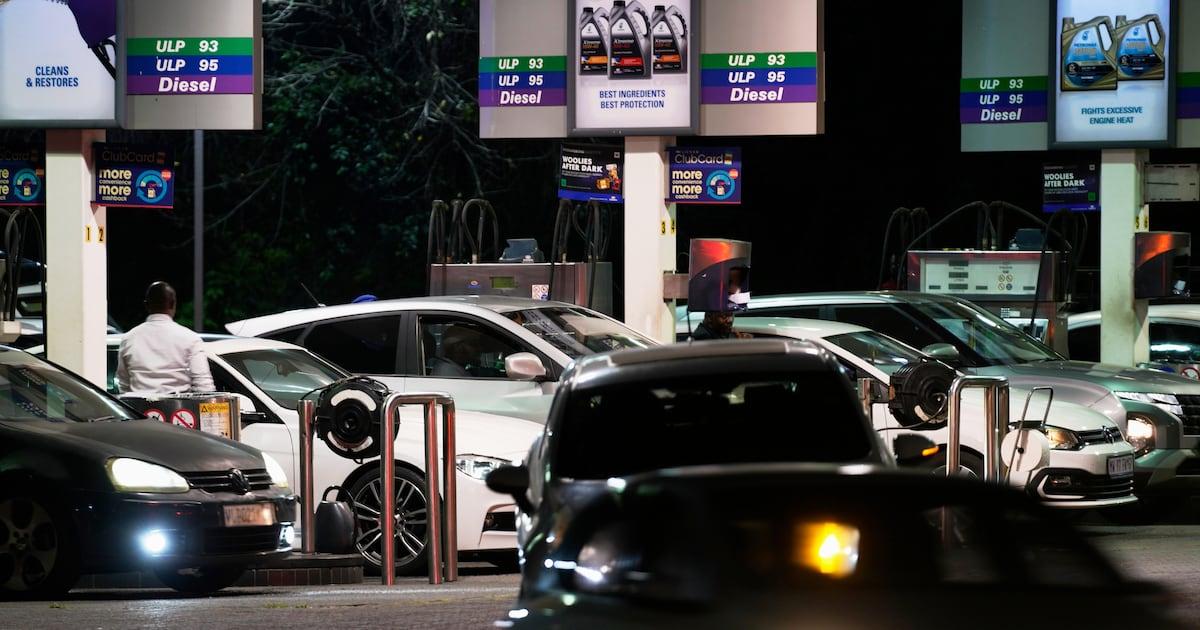
“South African motorists are facing a projected increase of about R3.21 per litre for 95-octane petrol, which would take the inland price from R26.92 to approximately R30.13 when the adjustment is implemented, according to the latest Central Energy Fund figures reported on 2 October. The increase has important microeconomic consequences because higher fuel costs can reduce households’ disposable income, alter consumer behaviour and increase transport and production costs for businesses.”
South Africa’s Fuel-Price Shock Puts Household Budgets Under Fresh Pressure
South African households are facing another significant cost-of-living challenge as petrol prices are projected to rise by more than R3 a litre next week. The development is particularly important from a microeconomic perspective because fuel is not simply another household purchase. It is an input into transportation, food distribution, commuting, logistics and many other everyday economic activities.
According to the latest Central Energy Fund figures reported on 2 October 2026, 95-octane petrol is projected to increase by R3.21 per litre, moving from R26.92 to about R30.13. Petrol 93 is projected to increase by approximately R3.01 a litre, while wholesale diesel prices are also expected to rise by between R2.76 and R3.15 a litre. The new prices are expected to take effect on 7 October, subject to the official adjustment.
The immediate effect is straightforward: motorists will need to spend more money to travel the same distance. However, the wider economic consequences are more complicated because households and businesses respond to price changes by changing how much they buy, what alternatives they use and how they allocate limited income.
Why the Fuel Increase Matters to Consumers
Microeconomics examines decisions made by individual consumers, households and businesses. Fuel prices provide a clear example of how changes in the price of an essential input can influence economic behaviour.
For many households, petrol is difficult to avoid completely. Workers need transportation to reach employment, children may need transportation to schools, and families need mobility to access shops, healthcare and other services.
This makes fuel demand relatively less responsive to price changes in the short term. A commuter who needs to travel 40 kilometres to work every day cannot immediately eliminate that journey simply because petrol becomes more expensive.
Nevertheless, households can adjust their behaviour over time. Some may reduce unnecessary journeys, combine errands, use public transportation, share rides or consider more fuel-efficient vehicles. Others may reduce spending on restaurants, entertainment, clothing and other discretionary products to compensate for higher transport costs.
The latest fuel-price projection therefore has implications extending well beyond petrol stations.
The Effect on Disposable Income
A household has a limited amount of income available for consumption and saving. When the price of an essential product increases, the household faces what economists describe as a reduction in real purchasing power.
For example, if a motorist uses 50 litres of petrol during a period, a R3.21-per-litre increase represents an additional R160.50 for that quantity of fuel. A household using 100 litres would face an additional R321 before considering any further indirect effects.
These figures are illustrations rather than estimates of every household’s actual expenditure, because fuel consumption differs substantially between households.
Nevertheless, the underlying microeconomic effect is important. Money directed towards fuel cannot simultaneously be spent on other goods and services. This creates a substitution effect within household budgets.
The latest development comes after South African households have already experienced elevated inflation and borrowing costs. Statistics South Africa reported headline consumer inflation of 4.4% in August 2026, with transport inflation at 8.8%. Fuel inflation was still 20.0% year on year in August, although it had eased from 20.6% in July.
Consequently, another large fuel-price movement could increase the pressure facing households even if prices of some other goods remain relatively stable.
Transport Costs and the Price of Other Goods
One of the most important microeconomic channels is the relationship between fuel and transportation.
Businesses use vehicles to move raw materials, employees and finished products. A retailer may rely on trucks to receive merchandise from distribution centres, while agricultural producers require fuel for machinery and transportation. Delivery companies, taxi operators and other transport-dependent businesses are also directly exposed to fuel prices.
When fuel becomes more expensive, businesses have several choices.
They can absorb the additional cost, reducing profit margins. They can attempt to improve efficiency by reducing fuel consumption. They can negotiate with suppliers. Or they can pass some or all of the additional cost to customers through higher prices.
The decision depends on competition, demand conditions, operating margins and the availability of substitutes.
If a business operates in a highly competitive market, it may struggle to raise prices without losing customers. In that situation, the company could absorb more of the fuel increase.
However, businesses with less pricing flexibility may have to accept lower margins or reduce other costs.
The South African Reserve Bank’s September 2026 Quarterly Bulletin highlights the broader relationship between energy costs and economic activity. The bank reported that higher fuel and transportation costs associated with the Middle East conflict had weighed on commerce-sector activity during the second quarter.
The Pressure on Small Businesses
Small businesses can be particularly sensitive to fuel-price increases because they often operate with narrower cash-flow margins.
A small retailer that depends on deliveries may face higher distribution expenses. A construction company may pay more for transporting materials and workers. A restaurant may experience increased delivery costs and higher supplier charges. A farmer may face additional expenses for machinery, irrigation, transportation and distribution.
These businesses cannot always pass the entire increase to customers.
If prices rise too quickly, consumers may reduce purchases. This creates a difficult trade-off between maintaining margins and maintaining demand.
The latest developments therefore illustrate an important microeconomic concept: price elasticity of demand.
Where customers have readily available alternatives, demand may respond strongly to higher prices. Where alternatives are limited, demand may remain comparatively stable.
Fuel is unusual because it is essential to many economic activities, particularly in a country where private vehicles and road freight play major roles.
Households May Change Their Consumption Patterns
Another consequence could be changes in consumer preferences.
A household that previously drove to shopping centres several times each week may consolidate shopping trips. Someone who regularly used a private vehicle for short journeys might consider walking, cycling or public transportation where those alternatives are practical.
Over a longer period, consumers may also reconsider vehicle purchases.
Higher fuel costs increase the lifetime operating cost of fuel-intensive vehicles. This can make smaller, hybrid or electric vehicles relatively more attractive to some consumers, although the initial purchase price, charging infrastructure and vehicle availability remain important considerations.
The Citizen reported that the projected fuel increase could encourage motorists with fuel-intensive vehicles to consider more fuel-efficient alternatives.
However, these behavioural changes cannot happen instantly. Existing vehicle ownership, housing locations, employment arrangements and public transport availability all influence how easily households can substitute away from petrol consumption.
The Interaction With Interest Rates
The fuel-price increase is also arriving against a higher interest-rate environment.
The South African Reserve Bank raised the policy rate by 25 basis points in September to 7.25%, citing renewed inflationary pressures, particularly from fuel. The bank said headline inflation was expected to remain above 5% later in 2026 and early in 2027 before gradually declining as the fuel shock fades.
For households with variable-rate debt or other borrowing obligations, higher interest rates can reduce disposable income at the same time that fuel prices are increasing.
This creates a double pressure on household budgets: more money may be required for transportation while more money may also be required for debt servicing.
The result can be weaker demand for discretionary goods and services.
What the Broader Data Shows
The latest Reserve Bank data provides an important context for understanding household behaviour.
Real household final consumption expenditure increased by 0.4% in the second quarter of 2026, following no change in the first quarter. Household expenditure on durable and non-durable goods and services increased, although spending on semi-durable goods declined.
At the same time, household debt increased more slowly, and the household-debt-to-nominal-disposable-income ratio declined to 61.3% in the second quarter.
This suggests that household spending conditions were not uniformly weak before the latest fuel shock. However, a sharp increase in transport costs could change spending decisions during the months ahead.
Food Prices Could Also Be Affected
Fuel is particularly important because it interacts with food markets.
Food has to be transported from farms and manufacturers to warehouses, retailers and consumers. Therefore, increased fuel costs can raise distribution expenses even when the underlying production cost of a food item has not changed.
South Africa’s food inflation picture has recently been comparatively moderate. Stats SA reported food and non-alcoholic beverage inflation of 1.1% in August, although this was an increase from 0.9% in July and represented the first acceleration in the category in nine months.
The Reserve Bank similarly noted that food inflation had remained relatively favourable, supported by strong harvests and more stable meat prices.
The potential fuel increase therefore does not automatically mean that food prices will rise by the same amount. The eventual impact will depend on transportation requirements, supplier contracts, competition and other input costs.
What Businesses and Consumers May Watch Next
The key issue now is whether the projected fuel-price increase becomes the final adjustment.
The Central Energy Fund figures reported on 2 October represent the latest projected movements, while the Department of Mineral and Petroleum Resources is expected to confirm the official adjustment before the new prices take effect.
Consumers will also watch international crude oil prices and the rand-dollar exchange rate. The latest projection has been linked to a rise in Brent crude and a weaker rand during September.
From a microeconomic standpoint, these external variables eventually become household and business decisions at the local level.
A global oil-price movement becomes a higher price at a filling station. The higher filling-station price becomes a larger household transport bill. That larger bill can then influence how much a consumer spends elsewhere.
For businesses, the same shock can become a higher delivery bill, increased operating costs and potentially higher prices for customers.
Conclusion
South Africa’s projected October fuel-price increase represents more than another adjustment at petrol stations. It illustrates how a change in the price of one essential input can move through household budgets, consumer demand, business costs and the prices of other goods and services.
The immediate effect will vary considerably between households. Motorists with high fuel consumption will face larger direct increases than households using less petrol, while people who rely heavily on public transport may experience the shock indirectly through transport fares and the prices of goods moved by road.
The broader significance lies in how consumers and businesses respond.
Some households may reduce discretionary spending, consolidate journeys or seek alternatives. Businesses may absorb higher costs, improve efficiency or adjust prices. The eventual outcome will depend on the duration of the fuel shock, global oil prices, the exchange rate, interest rates and domestic demand conditions.
For now, the projected move of 95-octane petrol above R30 a litre is a significant development for South African consumers and businesses. It comes at a time when households are already managing elevated transport inflation and higher borrowing costs, making the interaction between fuel prices, disposable income and consumer demand an important microeconomic story to watch.



