




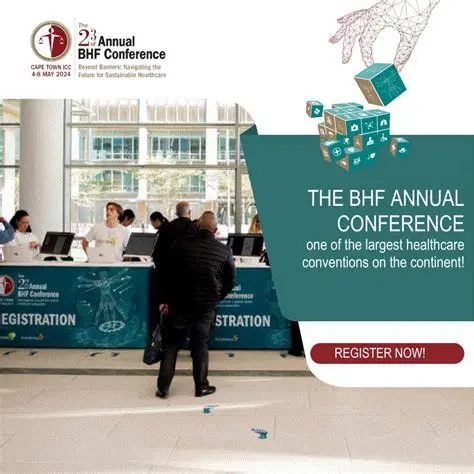
“At the 25th Annual BHF Conference in Cape Town, healthcare leaders revealed that 8 million South Africans rely on private healthcare without medical aid, creating a dangerous gap in access and affordability. Policymakers warned that without urgent reforms, both public and private systems risk collapse under rising costs, workforce shortages, and inequities.”
South Africa’s healthcare system is at a crossroads. At the 25th Annual Board of Healthcare Funders (BHF) Conference, held at the Cape Town International Convention Centre on July 6, 2026, policymakers, clinicians, and regulators sounded the alarm: the country’s healthcare financing model is failing millions. The conference theme, “Facing Headwinds: Thriving in the Unknown”, captured the urgency of the moment.
The “Missing Middle” Crisis
One of the most striking revelations was the plight of the 8 million South Africans who access private healthcare without belonging to a medical scheme. These individuals, often from the “missing middle” income group, pay out-of-pocket for services. This group has grown steadily due to stagnant medical scheme membership, which has failed to keep pace with population growth.
- Annual out-of-pocket costs: R35.1 billion
- Shortfall in medical scheme membership: 1.2 million lives
- Youth unemployment: Nearly 60% among 15–24-year-olds, exacerbating affordability challenges
This situation undermines the very reforms introduced since 1998 to close coverage gaps. Without minimum regulatory standards, the risk is that inequities will deepen, leaving millions vulnerable.
Systemic Pressures
Speakers emphasized that rising costs, ageing populations, chronic disease burdens, and workforce shortages are converging to strain the system. Professor Annie Temane of the University of Johannesburg argued that social determinants of health — poverty, unemployment, and housing — can no longer be treated as peripheral concerns.
Dr. Paula Armstrong of FTI Consulting highlighted the perverse incentives created by fee-for-service reimbursement models, which encourage over-servicing rather than patient-centered care.
National Health Insurance (NHI) Debate
The conference also revisited South Africa’s National Health Insurance (NHI) reforms, a policy initiative designed to provide universal coverage. While the NHI promises equity, critics argue that financing alone will not deliver fair outcomes unless upstream drivers of ill health are addressed.
Delegates urged policymakers to move beyond litigation and towards collaboration, emphasizing that public-private partnerships must be strengthened to ensure sustainability.
Policy Implications
The findings have profound implications for healthcare policy:
- Equity Gap: The missing middle highlights the need for regulatory frameworks that protect out-of-pocket payers.
- Financing Reform: Sustainable models must balance affordability with quality care.
- Workforce Strategy: Addressing shortages in doctors and nurses is critical.
- Technology Integration: Rapid digital health adoption must be harnessed to improve efficiency.
Civil Society Concerns
Civil society organizations echoed these warnings, noting that undocumented migrants are increasingly avoiding clinics due to fear of deportation, further straining the system.
Conclusion
The BHF Conference has made clear that South Africa’s healthcare system is at a tipping point. Without urgent reforms, millions will remain excluded from equitable care. The challenge now is for policymakers to translate these warnings into action, ensuring that healthcare financing, regulation, and delivery align with the principles of universal health coverage.



