




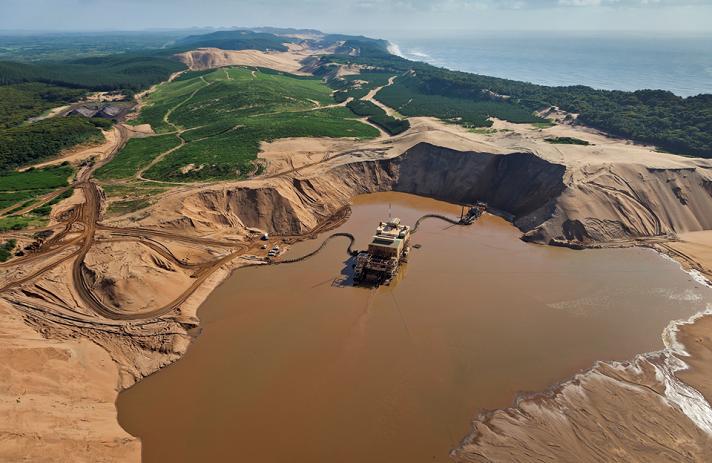
“South Africa’s international relations agenda is placing growing emphasis on critical minerals, scientific cooperation, knowledge production and BRICS engagement as the country navigates an increasingly fragmented global trading environment. A DIRCO-led student discussion at the University of Zululand on 12 October provides a platform for considering how diplomacy, education and mineral resources can contribute to South Africa’s international competitiveness and long-term development.”
South Africa seeks to connect critical minerals with global diplomatic opportunities
South Africa’s international relations strategy faces an important question: how can the country translate its natural resources, scientific expertise and diplomatic partnerships into sustainable economic development? This question is particularly relevant as governments worldwide compete to secure access to minerals essential to manufacturing, renewable energy, electric vehicles and advanced technologies.
On 12 October 2026, Deputy Minister of International Relations and Cooperation Alvin Botes was scheduled to address a student-led discussion at the University of Zululand’s KwaDlangezwa Campus in Richards Bay. According to DIRCO’s announcement, the discussion, titled Securing South Africa’s Future – From Critical Minerals to Critical Knowledge, would examine South Africa’s position in a fragmented global trading environment, with particular attention to critical minerals, knowledge production, science diplomacy and BRICS cooperation.
Although the announcement does not establish what participants ultimately discussed or concluded, the event highlights issues central to South Africa’s foreign policy and economic future. The relationship between mineral resources, technological capability and international partnerships is increasingly important as countries reconsider their supply chains and strategic dependencies.
For South Africa, the challenge extends beyond extracting minerals and exporting them to international markets. The country must also consider how diplomatic engagement can support domestic processing, industrial development, research, skills training and access to new markets.
Critical minerals become a foreign policy priority
Critical minerals are increasingly important to the global economy because they support technologies used in energy generation, transportation, electronics and industrial production. Their strategic value means that decisions about supply, processing, investment and trade frequently involve diplomatic negotiations as well as commercial agreements.
South Africa possesses significant mineral resources and an established mining industry. These advantages provide opportunities to strengthen international partnerships, attract investment and develop industries that create employment beyond the extraction stage.
However, natural resources alone do not guarantee economic prosperity. The benefits depend on infrastructure, electricity availability, transport capacity, technical skills, investment conditions and the ability to process materials competitively.
International relations can help address some of these challenges by establishing frameworks for cooperation with foreign governments, universities, research institutions and private companies. Such partnerships may facilitate technology transfers, research funding, training opportunities and access to international markets.
Nevertheless, agreements must deliver measurable benefits to South African communities. Investment that concentrates value creation overseas while leaving limited opportunities for local workers and businesses may fail to achieve the broader development objectives associated with mineral wealth.
South Africa therefore needs a balanced diplomatic approach that welcomes investment while safeguarding national interests, environmental standards and economic development priorities.
Global trade fragmentation creates opportunities and risks
The international trading environment has become increasingly shaped by strategic competition, industrial policies and concerns about supply-chain security. Governments are paying closer attention to where essential materials originate, how they are processed and whether supplies could be disrupted by geopolitical tensions.
For South Africa, these changes create both opportunities and risks.
Demand for strategically important minerals may attract new investment and expand export opportunities. At the same time, countries competing for investment may offer incentives, develop alternative suppliers or impose trade measures that change the commercial environment.
South Africa must therefore avoid excessive dependence on a narrow group of export destinations or investment partners. A diversified network of relationships can improve resilience and provide additional opportunities for domestic businesses.
Diplomacy can support this diversification through bilateral agreements, regional cooperation, multilateral institutions and participation in international economic forums. However, diplomatic announcements must ultimately translate into commercially viable projects, improved infrastructure and opportunities for local industry.
The government must also ensure that trade partnerships remain consistent with South Africa’s constitutional framework and development objectives. Maintaining constructive relations with countries that have different political systems and strategic interests requires negotiation, pragmatism and clear communication.
BRICS cooperation and South Africa’s international position
BRICS cooperation forms part of the wider context identified in DIRCO’s announcement. South Africa’s participation in the grouping provides a platform for engagement with major emerging economies on economic development, international governance and cooperation among developing countries.
For Pretoria, such engagement can create opportunities to discuss investment, infrastructure, scientific collaboration and trade diversification. It can also provide channels for raising concerns about the representation of developing economies in international institutions.
Nevertheless, participation in BRICS should be assessed according to practical outcomes rather than diplomatic symbolism. South African businesses and workers benefit when international relationships help generate investment, expand markets, improve productive capacity and support technology development.
BRICS is also not a substitute for South Africa’s relationships with other trading partners. Maintaining broad international engagement is important because the country’s economic interests extend across multiple regions and political groupings.
A pragmatic foreign policy would therefore seek cooperation wherever mutually beneficial opportunities exist, while retaining the freedom to make independent decisions on international issues.
This approach requires diplomatic consistency. South Africa must communicate its priorities clearly, negotiate constructively and demonstrate that partnerships contribute to sustainable development at home.
Science diplomacy and the importance of knowledge
The planned university discussion also places science diplomacy and knowledge production within the international relations debate. This is significant because economic competitiveness increasingly depends on research, technical expertise and the ability to apply scientific discoveries commercially.
Science diplomacy involves using international relationships to support scientific cooperation, address shared challenges and strengthen connections between research institutions. It can include joint research projects, academic exchanges, technology partnerships and collaboration on environmental or industrial problems.
For South Africa, stronger scientific cooperation could support mineral processing, advanced manufacturing, renewable energy technologies and environmental management. Universities can contribute by preparing graduates with the skills required by emerging industries and by conducting research relevant to national development.
However, international cooperation must be supported by domestic investment in education, laboratories, research infrastructure and professional development. Partnerships will have limited impact if institutions lack the resources to maintain projects or translate research into practical applications.
Knowledge production also raises questions about ownership and the distribution of benefits. South African researchers and businesses should have meaningful opportunities to participate in collaborative projects, develop intellectual property and build local technical capacity.
The objective should not simply be to import expertise. It should be to develop the capacity to create, adapt and commercialise knowledge within South Africa.
Universities and young people in foreign policy
Holding a discussion at the University of Zululand provides an opportunity to connect international relations with the experiences and aspirations of students.
Foreign policy can sometimes appear distant from everyday concerns. Yet international agreements influence investment, employment, educational exchanges, technology access and the economic opportunities available to young people.
Students studying science, engineering, economics, international relations and business can contribute valuable perspectives to discussions about the country’s future.
Universities can also help identify skills gaps and develop partnerships with industries seeking to expand their operations. Stronger connections between education and economic planning could improve graduates’ employment prospects while helping businesses find appropriately trained workers.
Public participation is most valuable when it creates meaningful opportunities for questions, debate and follow-up. Students should be able to understand how international agreements are negotiated, how government evaluates their benefits and how citizens can assess their results.
DIRCO’s announcement confirms the planned discussion and its central themes, but it does not provide a detailed record of participants’ contributions or the event’s final recommendations. Those outcomes should therefore be confirmed through subsequent reporting before being presented as established facts.
Turning diplomatic relationships into domestic development
South Africa’s international engagement must ultimately produce tangible benefits. These may include investment in mineral processing, expanded scientific collaboration, improved access to export markets and stronger technical training.
Achieving these outcomes requires coordination across government departments. DIRCO can develop diplomatic relationships, but industrial policy, education, infrastructure, energy provision and investment facilitation also determine whether opportunities become successful projects.
Clear objectives are essential. Government should be able to explain what each major partnership is expected to deliver, which institutions are responsible for implementation and how progress will be measured.
Transparency is equally important. Public reporting on agreements, investment commitments and project delivery can help citizens distinguish between diplomatic promises and concrete achievements.
Environmental considerations must remain part of the process. Mineral development can create employment and export revenue, but poorly managed operations can damage ecosystems, place pressure on water resources and affect nearby communities.
International partnerships should encourage responsible extraction, cleaner technologies and stronger environmental safeguards. Economic growth is more sustainable when local communities share its benefits and environmental costs are properly managed.
Conclusion: a strategic test for South African diplomacy
The DIRCO-announced discussion at the University of Zululand brings together several important dimensions of South Africa’s international relations: critical minerals, global trade, scientific cooperation, knowledge production and BRICS engagement. Its scheduled focus reflects the need to connect foreign policy with the country’s longer-term economic and technological ambitions.
South Africa has opportunities to use its mineral resources and diplomatic relationships to strengthen its industrial base. Realising that potential will require diversified partnerships, effective infrastructure, investment in research, improved skills development and policies that encourage local value creation.
BRICS cooperation and other international relationships can support these goals, but neither diplomatic participation nor resource wealth guarantees success. Results will depend on implementation, institutional coordination and the ability to convert agreements into practical economic opportunities.
Universities and young people also have an important role in this process. By linking education and research with international cooperation, South Africa can strengthen its ability to compete in industries shaped by technological change.
The broader lesson is that effective international relations should serve clearly defined national development objectives while preserving constructive relationships across the international community.



