




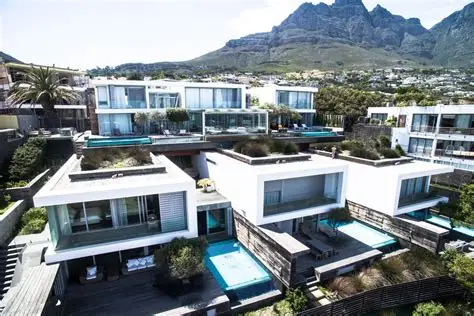
“South Africa’s luxury property sector is regaining momentum in 2026, supported by stable lending rates and affluent expatriates returning to invest in premium estates. Key regions such as Cape Town, Johannesburg, and Durban are experiencing renewed demand, reshaping the country’s high-end real estate landscape.”
South Africa’s luxury real estate market, long considered a barometer of economic confidence and lifestyle trends, is experiencing a remarkable resurgence in 2026. After years of volatility marked by fluctuating interest rates, political uncertainty, and global economic headwinds, the sector is now buoyed by stable lending conditions, demographic shifts, and reverse emigration. Affluent expatriates are returning to their homeland, injecting capital into premium estates and reshaping demand patterns across the country’s most desirable regions.
Interest Rate Stability and Market Confidence
The South African Reserve Bank (SARB) has maintained the repo rate at 7.00% and the prime lending rate at 10.50%, creating a predictable environment for buyers and sellers. This stability has instilled confidence among investors, particularly in the luxury segment where long-term planning is crucial. Banks such as Absa, Nedbank, and FNB have tightened affordability assessments, ensuring resilience in the market while excluding marginal buyers.
For luxury buyers, this environment is ideal. Unlike speculative investors, these buyers are focused on quality, security, and lifestyle amenities, making them less sensitive to short-term fluctuations and more attuned to long-term value.
Regional Hotspots
- Cape Town (Camps Bay, Bloubergstrand, Durbanville): Demand is driven by families and investors seeking short-term rental potential. Camps Bay, with its panoramic ocean views and proximity to cultural hubs, remains the crown jewel of South Africa’s luxury market.
- Garden Route (George, Knysna): Appreciating in value due to semigration trends, where urban dwellers relocate to scenic coastal towns for lifestyle benefits.
- Johannesburg (Sandton, Waterfall Estate): Strong demand for lifestyle estates offering secure living, community amenities, and proximity to financial hubs.
- Durban (Dolphin Coast): Rising interest from affluent buyers seeking coastal luxury, particularly in gated communities with direct beach access.
Reverse Emigration and Demographic Shifts
A unique phenomenon driving this resurgence is reverse emigration. South African expatriates, many of whom built wealth abroad, are returning to reinvest in their homeland. This trend is particularly visible in high-demand areas such as Camps Bay, Sandton, and Dolphin Coast, where scenic views, modern amenities, and proximity to cultural hubs make properties highly desirable.
Unlike previous decades dominated by younger professionals, today’s luxury buyers are often older, financially secure individuals. They prioritize lifestyle amenities, established neighborhoods, and long-term value. Banking data shows increased mortgage activity in higher price bands, underscoring confidence among this demographic.
Structural Realignment and Global Demand
The luxury property market is not driven by speculation but by discerning, well-capitalized buyers focused on quality and security. Global demand intersects with domestic fundamentals, creating a balanced environment. International buyers, particularly from Europe and Asia, are also showing renewed interest in South Africa’s premium estates, attracted by favorable exchange rates and the country’s unique blend of natural beauty and modern infrastructure.
Challenges and Risks
Despite the optimism, challenges remain. Affordability constraints exclude marginal buyers, limiting access to the luxury segment. Additionally, global economic tensions could cloud outlooks, particularly if interest rates shift or political instability resurfaces. However, the resilience of South Africa’s luxury market lies in its ability to attract well-capitalized buyers who are less vulnerable to short-term shocks.
Conclusion
South Africa’s luxury real estate market in 2026 is undergoing a structural transformation. Stable interest rates, reverse emigration, and demographic shifts are fueling demand in key regions, reinforcing the country’s position as a hub for premium property investment. For affluent buyers, the message is clear: South Africa offers not just homes, but lifestyle estates that combine security, amenities, and long-term value.



