




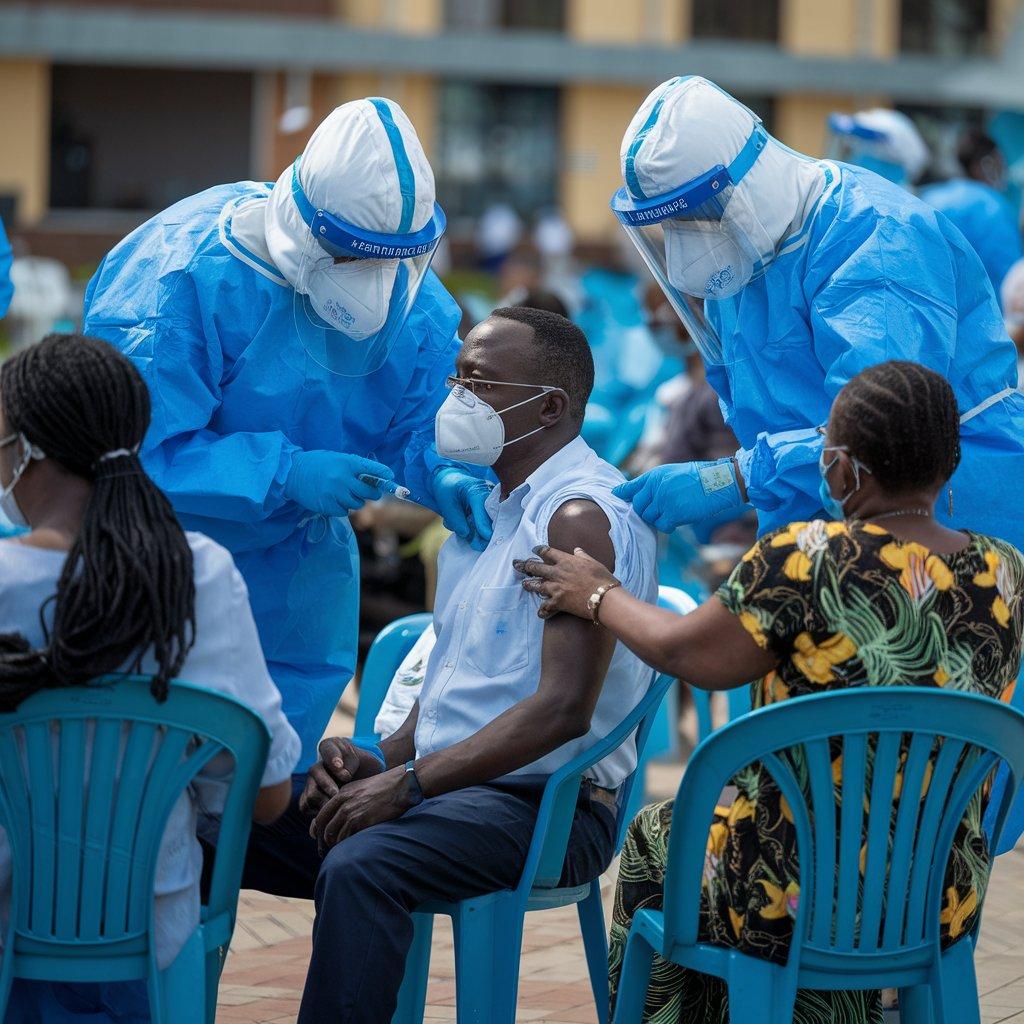
“South Africa’s confirmed Mpox cases increased from 18 to 22, with the Western Cape accounting for 18 infections and additional cases reported in Gauteng and KwaZulu-Natal. Health authorities are strengthening contact tracing and surveillance while urging people who develop symptoms after close contact with a confirmed case to seek medical attention promptly.”
South Africa’s public-health authorities are intensifying surveillance and response measures after the country’s confirmed Mpox cases rose to 22, highlighting the continuing need for early detection, contact tracing and public awareness. The Department of Health announced on 23 September that four additional laboratory-confirmed infections had been added to the national tally, taking the number from 18 to 22.
The latest figures show that the Western Cape remains the main centre of reported infections. Eighteen of the 22 confirmed cases are in the province, while Gauteng has recorded three and KwaZulu-Natal one. The department said all but one of the confirmed patients are male, with cases involving people between 23 and 50 years old.
Among the newly confirmed infections is a 47-year-old man from Cape Town who had travelled to Spain earlier in September. He had initially been classified as a probable case while South African authorities awaited laboratory results from Spanish health authorities. After confirmation of a positive result, the case was formally included in South Africa’s confirmed national total.
Three other recent cases include two imported infections involving a German and a Norwegian citizen. Although imported infections form part of the latest increase, health officials are also monitoring transmission clusters within the country, particularly in the Western Cape. The geographic spread across three provinces means that public-health surveillance cannot be limited to a single area.
The Department of Health, working with the National Institute for Communicable Diseases, the World Health Organization and provincial health authorities, is continuing contact tracing and enhanced surveillance. These measures are intended to identify infections quickly, establish possible exposure networks and reduce opportunities for further transmission.
Mpox is a viral disease caused by the mpox virus, which belongs to the Orthopoxvirus family. It can cause a range of symptoms, including fever, headache, muscle aches, back pain, tiredness, swollen lymph nodes and a rash or skin lesions. According to current South African health guidance, lesions can occur on the face, hands, feet, genitals and other areas of the body.
The illness does not necessarily look identical in every patient. Skin lesions may develop through several stages, beginning as spots and progressing to raised bumps, fluid-filled blisters and other lesions before eventually crusting and healing. Because other illnesses can produce similar symptoms, health professionals may need laboratory testing to confirm an infection rather than relying on the appearance of a rash alone.
Health authorities are particularly encouraging people to pay attention to symptoms following close contact with someone who has confirmed or suspected Mpox. The Department of Health has advised anyone who has had close contact with a confirmed case within the previous 21 days and subsequently develops symptoms to seek medical attention promptly and tell healthcare workers about the possible exposure.
Transmission primarily occurs through close physical contact with an infected person. This may include direct contact with lesions, close face-to-face interaction and sexual contact. The virus can also spread through contaminated personal items such as clothing, bedding and towels. The available evidence and public-health guidance therefore emphasise reducing close contact with an infected person and avoiding contact with their lesions or contaminated belongings.
Importantly, Mpox should not be treated as a disease affecting only one particular group. Health authorities have stressed the importance of avoiding stigma because anyone who has an exposure risk can potentially become infected. Fear or discrimination can discourage people from seeking medical assistance, reporting symptoms or cooperating with contact-tracing teams, which can make outbreak control more difficult.
Most people with Mpox recover, although some patients can develop more serious illness. Groups at greater risk of complications include young children, pregnant people, individuals with weakened immune systems and people with advanced or uncontrolled HIV. These risk factors make early medical assessment particularly important when symptoms occur following a possible exposure.
Treatment generally focuses on managing symptoms and preventing complications. For people with mild disease, care may involve managing pain and fever, maintaining skin hygiene and preventing secondary infections. South Africa has also secured limited supplies of Tecovirimat, an antiviral medicine that can be used as part of the outbreak response. Its availability and use are determined by health authorities and it is not a routine treatment for every person with Mpox.
Vaccination is another component of the public-health response. Reports indicate that South Africa has secured limited supplies of MVA-BN Mpox vaccine. Gauteng, for example, reported that hundreds of doses were available in provincial stock, while outbreak-response teams continued monitoring the situation. Vaccine deployment is determined by health authorities according to outbreak-response priorities rather than being presented as a general vaccination programme for the entire population.
The current outbreak also demonstrates why surveillance remains central to infectious-disease control. Earlier in September, the Department of Health reported 18 confirmed cases and one probable case, with most infections concentrated in the Western Cape. The rapid addition of confirmed cases over the following days prompted continued calls for vigilance and cooperation.
For communities, the public-health message is straightforward: people should remain aware of symptoms, avoid unnecessary close contact with someone who may have Mpox, practise good hand hygiene and avoid sharing personal items with an infected person. Anyone who develops a suspicious rash or other symptoms after a possible exposure should contact a healthcare professional rather than attempting to self-diagnose.
The rise to 22 confirmed infections does not by itself establish how widely the virus may spread in the coming weeks. However, the presence of cases in three provinces and the identification of transmission clusters make continued surveillance important. Public cooperation with healthcare workers, accurate reporting of symptoms and timely medical assessment can help authorities identify infections earlier and respond to new cases more effectively.
For South Africa’s health system, the Mpox situation is another reminder that outbreak preparedness depends on several measures working together. Laboratory confirmation, contact tracing, clinical care, vaccination where appropriate, public communication and disease surveillance all contribute to limiting transmission. The Department of Health has indicated that it will continue monitoring the situation and provide further updates as new information becomes available.
As the country approaches the end of September, Mpox remains an active public-health issue requiring attention rather than panic. The latest confirmed total of 22 cases, concentrated mainly in the Western Cape but present in Gauteng and KwaZulu-Natal, provides a clear reason for continued vigilance. For the public, recognising symptoms and seeking appropriate care after possible exposure remain among the most important steps in supporting South Africa’s broader outbreak response.



