




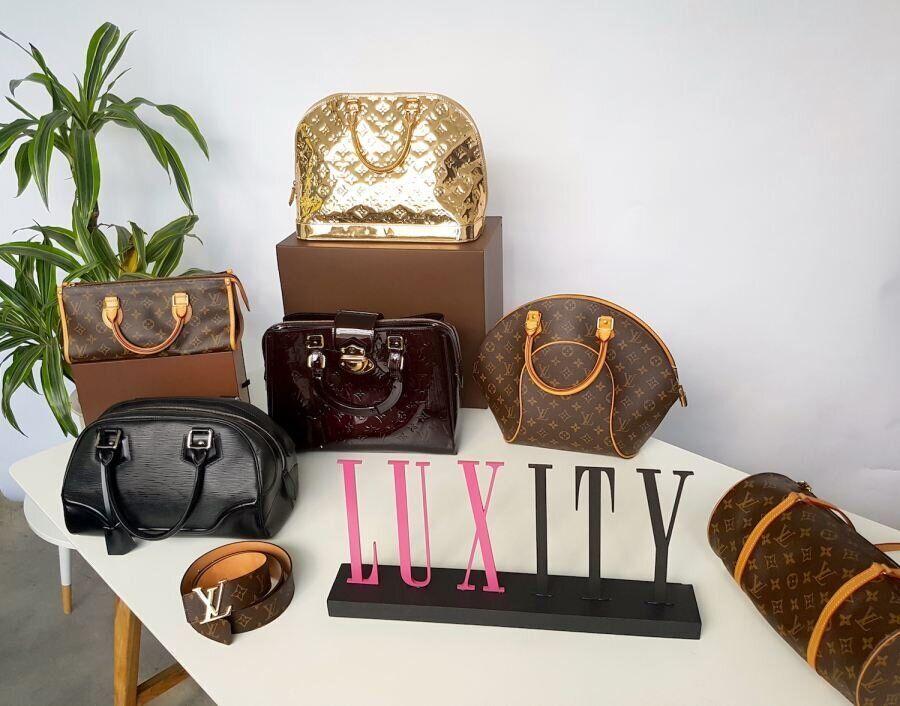
“South African consumers are increasingly looking beyond simply owning a designer label, with demand for specific collections, colours, production years and authenticated pre-owned luxury accessories growing. A new report on Luxity’s decade in the resale market shows rising average prices for pre-owned handbags, stronger demand for brands such as Louis Vuitton and Gucci, and a broader appetite for watches, shoes, clothing and other luxury accessories.”
South Africans Are Changing the Way They Buy Luxury Accessories
South Africa’s luxury fashion accessories market is undergoing a noticeable shift, with pre-owned designer handbags, watches, shoes and other premium products becoming increasingly important to consumers. A report published on 26 September 2026, based on insights from Luxity co-founder Michael Zahariev, highlights how the country’s luxury-resale market has changed over the past decade. The story, published by City Press and reproduced by a news aggregator, focuses on the changing preferences of South African luxury shoppers and the growing sophistication of the pre-owned market.
The development is significant for the wider Accessories under Fashion category because handbags, watches, shoes, sunglasses and jewellery are no longer simply considered finishing touches to an outfit. They are increasingly being treated as important fashion purchases in their own right, with consumers paying attention to provenance, authenticity, condition, collection, colour and production year.
According to the report, the South African luxury consumer has become considerably more informed. In the past, shoppers searching for pre-owned Louis Vuitton, Gucci or Chanel items could find themselves browsing classified websites and relying heavily on sellers’ claims about authenticity. Today, the questions are reportedly more specific. Buyers may already know the collection they want, the colour they prefer and even the approximate production year of a particular piece.
That change points to an important development in fashion retail: knowledge is becoming part of the luxury-shopping experience.
Handbags Remain Central to the Accessories Market
Designer handbags remain one of the strongest categories within the South African luxury-resale market. However, the data highlighted by Luxity suggests that the category has changed significantly in value.
The report states that prices for new classic designer handbags have increased by between 50% and 70% since 2019, according to Luxity. At the same time, the average price of a pre-owned handbag sold by the company has increased from R12,599 a decade ago to R28,238 today.
The figures illustrate how luxury accessories have become more expensive while simultaneously creating greater interest in resale. For shoppers who want established designer names but face rising prices for new products, the pre-owned market provides another route into the category.
However, the growth of resale does not necessarily mean that shoppers are abandoning new luxury products. Instead, the market appears to be becoming more diverse. Consumers can consider new collections, vintage pieces, limited editions and authenticated pre-owned products depending on their preferences, budgets and collecting interests.
The growing attention to individual collections is also important. A buyer searching for a particular Louis Vuitton or Gucci item may not simply want any product carrying the brand name. They may be interested in a specific design associated with a particular period or creative direction.
That makes the accessories market increasingly dependent on product knowledge.
Louis Vuitton and Gucci Continue to Attract Strong Demand
The report identifies Louis Vuitton and Gucci as major drivers of Luxity’s sales. Zahariev says the two brands together account for approximately one-third of sales. Gucci’s share has increased over the years, while Louis Vuitton continues to account for more than one-fifth of sales at the reseller.
The development reflects the continued influence of globally recognised luxury houses in South Africa. These brands have extensive international recognition, distinctive visual identities and large communities of consumers who understand their products.
Gucci’s development is particularly notable. According to the figures cited in the report, Gucci accounted for approximately one in seven sales in 2017 but now represents about one in five sales. The report connects part of that rise with the period when Alessandro Michele’s maximalist creative direction brought strong attention to the brand.
The resale market can therefore provide a record of changing fashion preferences. Items that were highly popular during a particular fashion period can later become collectible, while other designs may lose attention.
This makes accessories different from many ordinary consumer products. A luxury handbag can remain desirable long after its original retail season, particularly when its design becomes associated with a specific fashion era.
Hermès, Watches and Ultra-Luxury Accessories
At the upper end of the market, the report points to strong interest in exceptionally expensive accessories, including Hermès handbags and luxury watches.
Some Hermès bags available through Luxity are priced above R600,000, according to Zahariev. Meanwhile, luxury watches have become a new category for the company since 2017, with the report putting their average price at R49,999.
The development illustrates how the definition of fashion accessories is expanding. Luxury accessories now include not only handbags and jewellery but also high-end timepieces, footwear, sunglasses and other products that can carry substantial financial value.
The growth of watches within the resale market also demonstrates the relationship between fashion and collecting. A luxury watch can function as part of an outfit, but it can also be associated with craftsmanship, heritage and personal collecting.
Similarly, high-end handbags can occupy a space between fashion and collectible goods. Certain designs can become desirable because of scarcity, history, craftsmanship or cultural relevance.
The Accessories Market Is Becoming More Diverse
Perhaps one of the most significant findings is that South African consumers are buying a wider range of pre-owned luxury goods.
The report notes that handbags accounted for roughly two-thirds of purchases a decade ago. Today, the market includes a much broader selection of products. Shoes now represent nearly one-third of sales, while apparel has also grown since being introduced by Luxity in 2021. The company has even expanded into designer homeware.
For the accessories sector, this diversification matters.
A consumer who initially enters the luxury market through a handbag may later become interested in shoes, sunglasses, jewellery or watches. The resale model can therefore create a broader luxury ecosystem rather than focusing on one product category.
Luxity’s current product offering reflects that expansion, listing categories including bags, watches, jewellery, shoes, clothing and accessories. The company operates stores in Johannesburg, Cape Town, Pretoria and Durban, as well as selling online.
The expansion also mirrors a broader movement towards circular fashion, where products remain in use for longer rather than moving directly from first ownership to disposal.
Authentication Becomes Increasingly Important
As demand for luxury accessories increases, authenticity remains one of the central concerns in the resale market.
The latest report describes a consumer who is more knowledgeable about the details that distinguish genuine luxury products from counterfeit items. That change places greater pressure on resellers to establish trust and provide transparent authentication processes.
Luxity says its business is built around authenticated pre-owned luxury and offers an authenticity guarantee. Its current catalogue includes major fashion and jewellery houses such as Chanel, Gucci, Louis Vuitton, Hermès, Cartier, Tiffany & Co., Dior and Prada.
The issue is particularly important for expensive accessories. When an item costs tens or hundreds of thousands of rand, consumers need confidence that the product is genuine and that its condition and history have been represented accurately.
Consequently, authentication has become part of the value proposition of the resale industry.
A New Understanding of Luxury
The report also suggests that South African consumers are developing a more nuanced understanding of luxury itself.
Rather than luxury being defined solely by a famous logo, Zahariev describes different motivations. Some consumers may want a visibly recognisable product, while others may prefer something whose value is understood only by people familiar with the brand or design.
This creates room for different forms of luxury expression.
A large monogrammed handbag can communicate immediately through its branding, while a less obvious piece may appeal to someone interested in craftsmanship, rarity or design history. Both can occupy the same luxury market while serving different consumer preferences.
The distinction is particularly relevant in accessories because smaller products can transform an entire outfit. A handbag, watch, pair of shoes or piece of jewellery can communicate personal style without requiring an entire designer wardrobe.
What the Shift Means for South African Fashion
The changing accessories market has implications beyond individual purchases. It suggests that South Africa’s fashion ecosystem is becoming more sophisticated, with consumers increasingly familiar with international luxury houses and the characteristics of individual products.
It also creates opportunities for businesses operating in resale, authentication, consignment and luxury retail.
The market’s expansion into shoes, watches, apparel and other categories indicates that resale is no longer limited to second-hand handbags. Instead, it is becoming a broader part of fashion consumption.
Luxity’s decade-long experience provides one example of this transition. The company says it wants to build a larger community connecting buyers and sellers rather than focusing solely on individual transactions.
Looking ahead, Zahariev predicts that at least one in 10 luxury items purchased in Africa could be pre-owned by 2027. That is a forecast from the company rather than an independently verified market projection, but it demonstrates the scale of opportunity that luxury-resale businesses see in the region.
For South African fashion, the development means accessories are becoming more than seasonal styling pieces. They are increasingly connected to resale, collecting, craftsmanship, authentication, personal identity and circular consumption.
The latest figures therefore offer a snapshot of a market in transition: handbags remain central, but consumers are moving across categories and becoming more selective about what they buy. As luxury prices continue to evolve, the pre-owned accessories market is positioned as an increasingly visible part of South Africa’s fashion landscape.



