




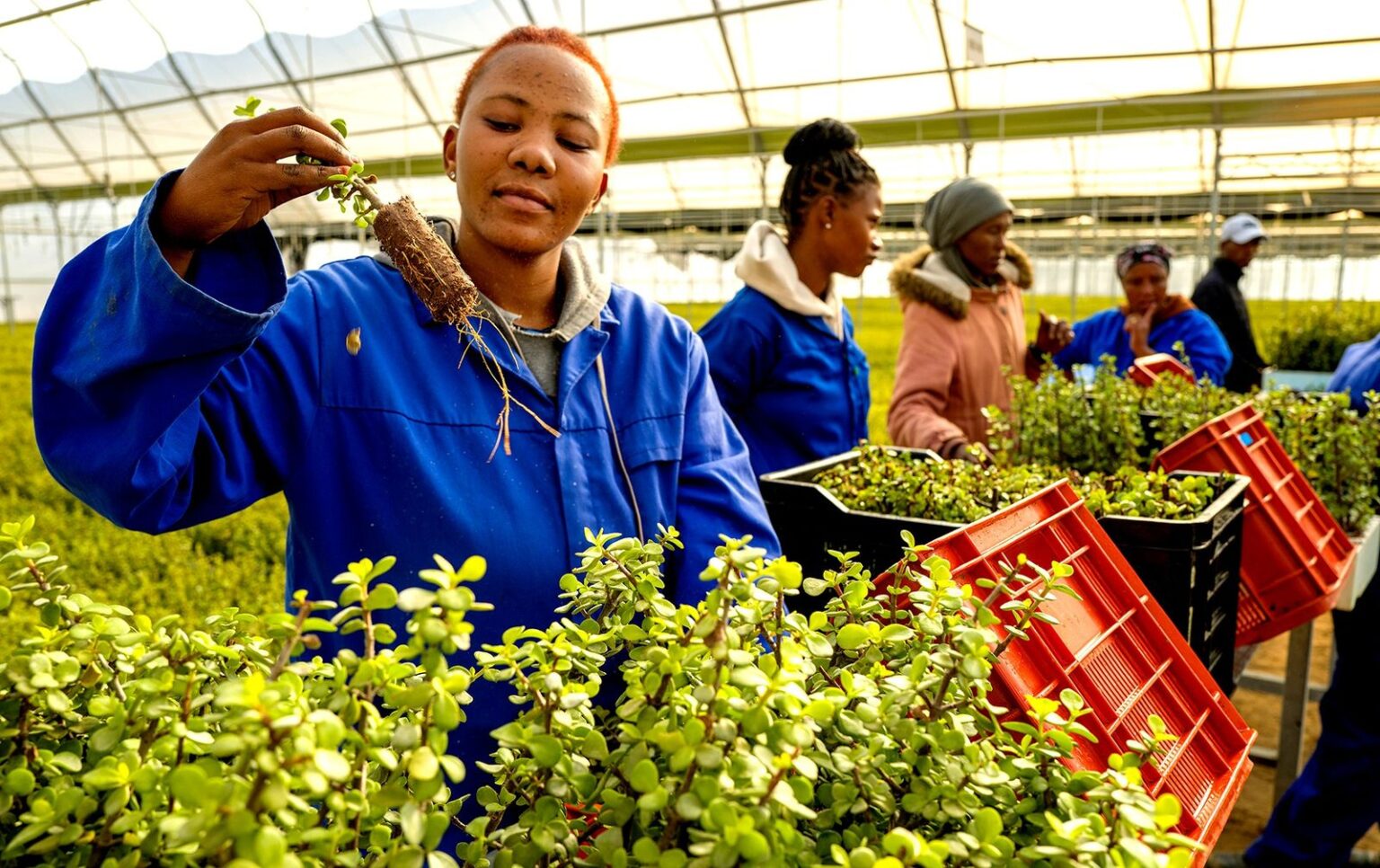
“South Africa’s ambitious spekboom restoration projects, hailed as nature-based carbon sinks, are attracting billions in global investment and corporate interest. Yet, investigations reveal a sector dominated by international corporations with opaque promises, raising questions about ecological integrity and equitable benefits for local communities.”
South Africa is witnessing what many are calling a “new gold rush” — but instead of precious metals, the treasure lies in carbon credits. At the heart of this movement is the humble spekboom (Portulacaria afra), a drought-resistant succulent native to the Eastern Cape. Once overlooked as a simple shrub, spekboom has now become the centerpiece of a multi-million-dollar environmental and technological experiment, promising to restore degraded lands, capture carbon, and generate financial returns through global carbon markets.
The Rise of Spekboom as a Climate Solution
Spekboom’s unique ability to thrive in arid conditions and sequester carbon has made it a poster child for nature-based climate solutions. The World Bank recently structured a $120 million outcome-based bond around spekboom restoration, signaling international confidence in its potential. Amazon, among other tech giants, has pledged to purchase carbon credits from these projects, effectively positioning itself as a key player in South Africa’s environmental future.
The Promise of Carbon Markets
Carbon markets allow companies to offset emissions by investing in projects that remove or reduce greenhouse gases. For South Africa, this represents both an environmental opportunity and an economic lifeline. With unemployment high and farmland degraded, spekboom restoration offers jobs, ecological recovery, and a chance to participate in the global green economy.
Challenges on the Ground
Despite the optimism, the reality on the ground is far more complex. Investigations reveal that many projects are heavily browsed by livestock, poorly managed, or inadequately monitored. Transparency is a major issue: international corporations dominate the sector, but their investment promises are difficult to scrutinize. Local farmers and communities often find themselves sidelined, raising concerns about whether the benefits will truly reach those most affected by climate change.
Technology Meets Ecology
The involvement of tech giants like Amazon highlights the intersection of environment and science-technology. Advanced monitoring systems, satellite imagery, and AI-driven ecological assessments are being deployed to track carbon sequestration. Yet, technology alone cannot solve the challenges of degraded land, community engagement, and ecological resilience.
Case Study: Eastern Cape Restoration
In Gqeberha, Eastern Cape, restoration projects like “Return to Thicket” are attempting to replant spekboom across exhausted farmland. Farmers describe decades of overgrazing and soil erosion, but they see hope in spekboom’s resilience. However, survival rates of planted shrubs remain uncertain, and the long-term success of these projects depends on consistent monitoring and adaptive land management.
Global Implications
South Africa’s spekboom experiment is not just a local story — it is a test case for global carbon markets. If successful, it could set a precedent for other countries seeking to leverage nature-based solutions. If it fails, it risks undermining confidence in carbon credits and leaving communities worse off.
Ethical and Social Dimensions
Critics argue that carbon markets commodify nature, turning ecosystems into financial assets controlled by corporations. While investors reap returns, local communities may bear the risks of failed projects. Ensuring equitable participation and transparent governance is essential if spekboom restoration is to deliver both ecological and social justice.
Conclusion
South Africa’s spekboom-led carbon frontier embodies both promise and peril. It represents a bold attempt to merge environmental restoration with technological innovation and global finance. Yet, without transparency, accountability, and community involvement, the “new gold rush” risks becoming another cautionary tale of exploitation masked as sustainability.



