




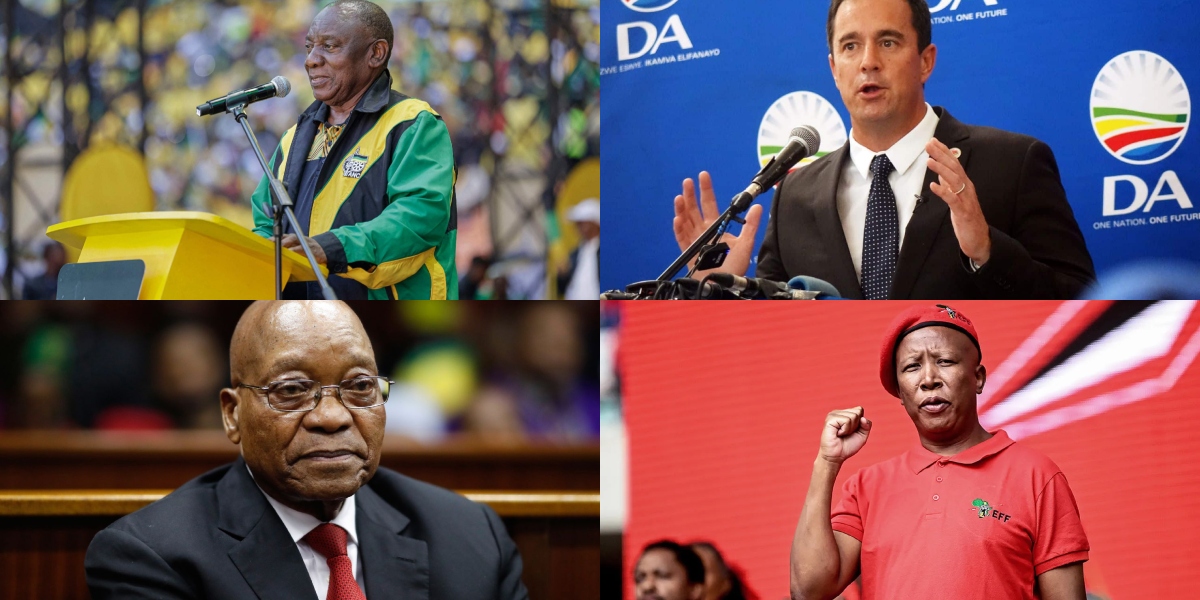
“South Africa’s political parties are preparing for the November 2026 local government elections, where coalition-building will be crucial after the ANC lost its national majority in 2024. With over 470 registered parties, the contest is expected to reshape municipal governance and test the durability of the Government of National Unity.”
South Africa’s political parties are entering a decisive phase as the country prepares for the November 4, 2026 local government elections. These elections will determine who governs municipalities, controls budgets, and delivers essential services such as water, electricity, and infrastructure maintenance. Unlike national elections, local polls are deeply tied to everyday governance, making them a critical test of party strength and coalition strategies.
The ANC’s Declining Dominance
The African National Congress (ANC), once the dominant force in South African politics, lost its outright majority in the 2024 national elections, securing just over 40% of the vote. This marked the first time since 1994 that the ANC could not govern alone. To maintain power, the ANC formed a Government of National Unity (GNU), bringing together ten parties in a broad coalition.
While this arrangement stabilized national governance, local elections present a different challenge. Municipal councils are negotiated town by town, and coalition-building will be essential. The ANC’s ability to retain influence at the municipal level will depend on its capacity to forge alliances with smaller parties.
The Rise of Opposition Parties
The Democratic Alliance (DA), uMkhonto weSizwe (MK), and the Economic Freedom Fighters (EFF) have emerged as significant challengers. In 2024, the DA secured 21.8%, MK gained 14.6%, and the EFF captured 9.5% of the vote. These parties are now positioning themselves to expand their influence in local councils, where proportional representation allows smaller parties to play kingmaker roles.
The Inkatha Freedom Party (IFP), Patriotic Alliance (PA), and ActionSA are also expected to play pivotal roles in coalition negotiations. Their localized support bases give them leverage in municipal councils, particularly in provinces such as KwaZulu-Natal and Gauteng.
Explosion of New Parties
The Independent Electoral Commission (IEC) has confirmed that South Africa now has 472 registered political parties, with 13 new parties added in the past month alone. This surge reflects growing political fragmentation and citizen dissatisfaction with traditional parties.
While many of these new entrants may not secure significant national representation, their presence in local elections could disrupt established power dynamics. Smaller parties often focus on single issues or local grievances, making them attractive to voters frustrated with service delivery failures.
Coalition Politics at the Local Level
Local elections operate differently from national polls. Voters cast ward votes and proportional party votes, ensuring councils reflect both direct representation and party strength. This system means no party needs an outright majority to govern; instead, coalitions can form with just over half the seats.
This dynamic has already played out in metros such as Johannesburg and Tshwane, where coalition governments have struggled with instability. The 2026 elections are expected to intensify these challenges, as more parties enter the fray and negotiations become increasingly complex.
Funding and Regulation
President Cyril Ramaphosa recently revised political party funding regulations, increasing the threshold for declared donations to R200,000 and raising the annual cap to R30 million. These changes aim to improve transparency while allowing parties greater flexibility in fundraising.
However, critics argue that the new limits could favor larger parties with established donor networks, potentially disadvantaging smaller entrants. Funding will be a decisive factor in determining which parties can mount effective campaigns in 2026.
Voter Engagement and Challenges
South Africa’s political parties face the challenge of mobilizing voters amid widespread disillusionment. Service delivery failures, corruption scandals, and economic stagnation have eroded trust in political institutions. The IEC has emphasized the importance of voter registration drives, warning that citizens cannot influence leadership if they are not on the voters’ roll.
Conclusion
The 2026 local government elections represent a turning point in South Africa’s political trajectory. With the ANC weakened, opposition parties emboldened, and new entrants flooding the political space, coalition politics will define the future of municipal governance. The outcome will not only shape local councils but also signal the direction of national politics as South Africa continues to navigate its post-majority era.



