




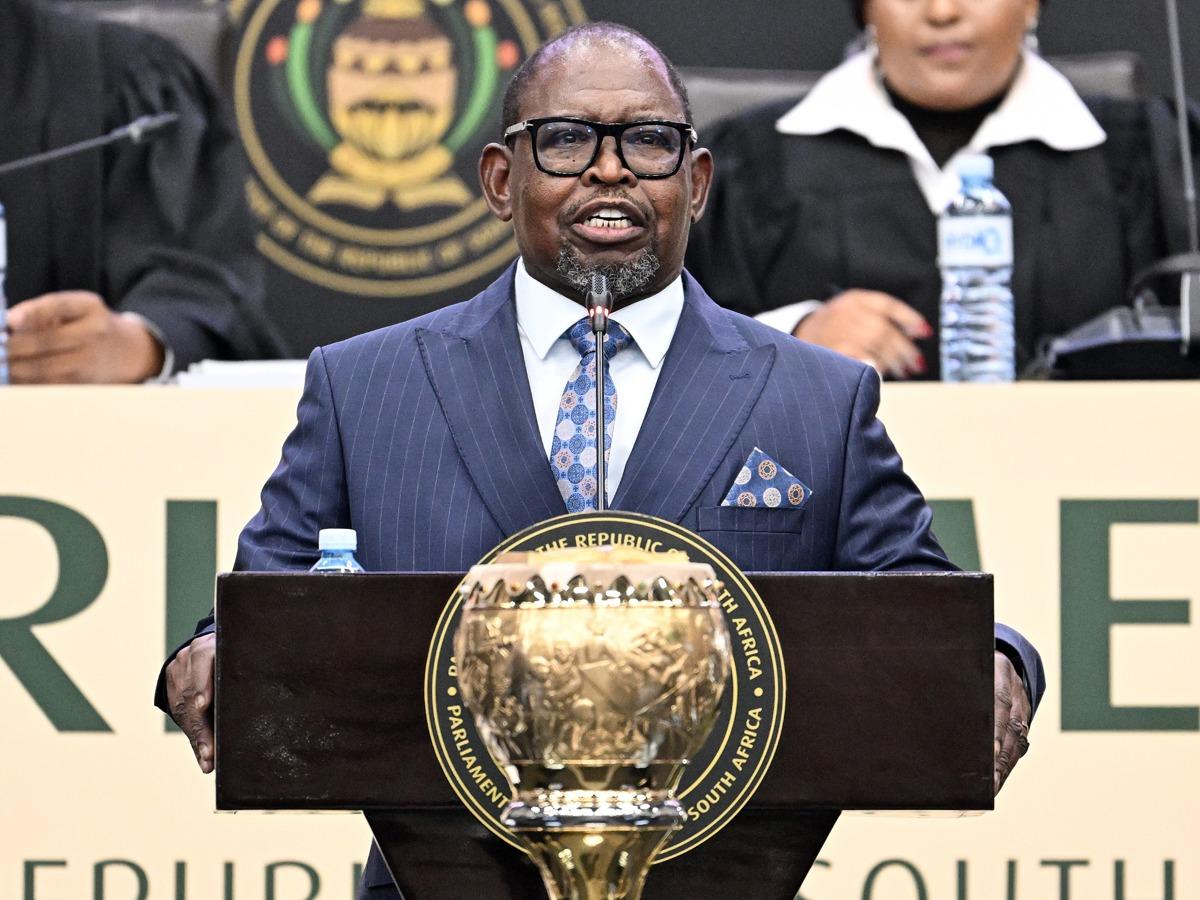
“South Africa could benefit from stronger-than-expected tax revenue, lower government borrowing pressures and improving debt indicators, raising hopes of further sovereign credit-rating upgrades as Finance Minister Enoch Godongwana prepares to present the Medium-Term Budget Policy Statement on 21 October. Analysts cited in the report expect the improved fiscal position to support a narrower budget deficit, although weak economic growth, high debt-servicing costs and continued global uncertainty remain significant risks.”
South Africa’s public finances are attracting renewed attention as stronger tax collections, improving debt indicators and more manageable government financing requirements raise expectations of further sovereign credit-rating upgrades. The latest assessment comes ahead of Finance Minister Enoch Godongwana’s Medium-Term Budget Policy Statement (MTBPS), scheduled for 21 October, when investors and businesses will look for evidence that the government can sustain fiscal improvements despite a difficult economic environment.
The report, published by Business Times and carried by TimesLIVE on 17 October, highlights a potentially favourable shift in the country’s budget outlook. However, the improvement does not mean South Africa has overcome its underlying economic challenges. Instead, it presents an opportunity for the government to demonstrate that better revenue performance can translate into a more sustainable debt trajectory, stronger investor confidence and greater capacity to support long-term economic development.
Stronger tax collections improve the budget outlook
One of the central developments is the possibility that government revenue for the 2026/27 financial year could exceed earlier budget assumptions.
According to estimates from Bank of America economists cited in the report, revenue could surpass the original projections by approximately R70 billion. The anticipated increase is attributed largely to stronger corporate tax collections from the gold and precious-metals sectors.
Higher revenue can improve the government’s financial position without requiring an equivalent increase in tax rates. When businesses generate stronger taxable profits, the South African Revenue Service may collect more corporate income tax, helping to finance public services and reduce the amount government needs to borrow.
Nevertheless, the source of the additional revenue matters. If stronger collections are driven partly by elevated commodity prices, the gains may not continue indefinitely. Gold and other precious metals are exposed to international price movements, global demand and changing investor expectations.
Consequently, the Treasury will need to distinguish between sustainable improvements in the tax base and temporary gains linked to favourable market conditions. Building long-term expenditure commitments around revenue that may later disappear could recreate the fiscal pressures the country has been attempting to contain.
The report also notes that government expenditure growth is running above Treasury projections. Analysts nevertheless believe the anticipated revenue increase could more than offset the additional spending, helping narrow the projected budget deficit.
This is an important distinction: stronger revenue improves fiscal flexibility, but disciplined spending remains necessary if the improvement is to last.
A narrower budget deficit could strengthen fiscal credibility
The budget deficit measures the difference between government expenditure and revenue over a particular period. When expenditure exceeds income, the state generally needs to borrow to cover the shortfall.
Bank of America’s forecast, as reported by TimesLIVE, places South Africa’s 2026/27 deficit at approximately 3.5% of gross domestic product (GDP), compared with the government’s target of 3.7%.
The report also describes a more optimistic scenario in which the deficit could fall to approximately 3% of GDP if spending remains contained. These figures are analyst estimates, not confirmed final outcomes, and their achievement will depend on actual revenue collections and expenditure trends.
A narrower deficit can reduce the government’s additional borrowing needs. Over time, it can also help stabilise the debt burden relative to the size of the economy, provided economic growth and other fiscal conditions remain supportive.
For investors, the significance extends beyond a single annual budget. A government that consistently meets its fiscal targets may become more credible in the eyes of lenders and financial markets. Conversely, repeated shortfalls can raise concerns about whether public finances are moving along a sustainable path.
South Africa therefore faces an important test: it must show that stronger tax receipts are being used to improve the budget position rather than simply financing additional spending without a lasting economic return.
Debt pressures and borrowing requirements
The report points to improving government debt indicators as another reason for cautious optimism.
Bank of America’s analysis suggests that South Africa’s debt-to-GDP ratio could decline to around 77% in the current financial year, compared with approximately 79% in the previous year. The figures represent the analysts’ estimates cited in the article rather than a final audited outcome.
The government’s financing position has also reportedly improved. Treasury had secured approximately 60% of its financing requirement for the 2026/27 financial year after five months, while its external funding programme was described as effectively completed.
Securing financing early can reduce uncertainty about whether the government will be able to meet its borrowing needs. It may also limit the pressure to seek funds at unfavourable times in international markets.
However, a falling debt ratio does not automatically mean the government has enough money available for new programmes. Debt servicing remains a major claim on public revenue. Interest payments compete with expenditure on transport infrastructure, electricity networks, education, healthcare and other essential services.
That is why the quality of fiscal improvement matters as much as the headline debt figure. A sustainable recovery requires the government to manage borrowing costs, control spending pressures and support an economy capable of generating more employment and taxable income.
Credit-rating upgrades move into focus
South Africa’s improving fiscal indicators have increased attention on the next assessments by international credit-rating agencies.
According to the report, Moody’s and S&P are expected to issue sovereign rating updates in late November, while Fitch is expected to provide its assessment in December. Bank of America analysts see Moody’s as a possible candidate for an upgrade, potentially to Ba1, while an upgrade by S&P is considered less certain.
Credit-rating agencies assess a government’s ability and willingness to repay its debt. Their evaluations consider factors including public debt, economic growth, revenue collection, political and institutional stability, and the government’s capacity to manage financial shocks.
An improved rating can strengthen investor confidence and potentially reduce the premium investors demand to lend money to the country. Lower borrowing costs would be particularly valuable for South Africa because substantial amounts of public revenue are already committed to servicing existing debt.
However, an upgrade is not guaranteed. Rating agencies assess the sustainability of improvements over time rather than relying exclusively on one favourable budget announcement.
The report notes that Fitch upgraded South Africa to BB in June 2026 and assigned a stable outlook. A further improvement could depend on stronger primary budget surpluses and continued moderation in debt-servicing costs.
An important distinction is that a potential improvement in the local-currency rating would not necessarily restore investment-grade status for foreign-currency debt. Different rating categories reflect different assessments of repayment risks.
For South Africa, the broader objective is to establish a sustained record of fiscal discipline, improving growth prospects and reliable public financial management.
Why the primary budget balance matters
The primary budget balance measures the difference between government revenue and expenditure before interest payments on existing debt.
A primary surplus means the government collects more revenue than it spends on non-interest expenditure. Such a surplus can help stabilise debt because it reduces the need to borrow to finance ordinary government operations, although the overall debt outcome also depends on interest rates, economic growth and other adjustments.
PSG chief economist Johann Els, cited in the report, expects the tax overrun could reach R50 billion or more. He also anticipates a deficit of around 3.5% of GDP, compared with the 4% projected in the February budget, and a primary surplus of approximately 1.9%, against the earlier 1.4% projection.
These estimates suggest a potentially stronger fiscal position than initially anticipated. Nevertheless, the figures remain forecasts and may change as additional financial information becomes available.
The Treasury must also consider whether the revenue increase is temporary or likely to persist. A conservative approach could prevent the government from using a short-lived windfall to justify spending commitments that become difficult to sustain when revenue falls.
Global uncertainty remains a major risk
South Africa’s fiscal prospects cannot be separated from international economic developments.
The report highlights cost-of-living pressures and uncertainty associated with the US-Iran war. Geopolitical tensions can affect oil prices, shipping costs, inflation expectations and international financial markets.
Higher energy prices may increase transport and production costs for South African businesses. Households can also face pressure from fuel, food and other essential expenses, reducing the money available for discretionary spending.
For government, rising inflationary pressures can complicate decisions about economic support, public expenditure and debt management. If global uncertainty weakens economic activity, tax collections could eventually disappoint even after a strong period of commodity-related revenue.
Currency movements are another consideration. Changes in investor appetite for emerging-market assets can affect the rand and the cost of international financing. A more stable currency may help cushion imported inflation, but it cannot eliminate the effects of expensive energy or weak domestic demand.
These risks reinforce the need for careful fiscal planning. South Africa must preserve the gains from stronger revenue while maintaining enough flexibility to respond to unforeseen economic shocks.
Infrastructure investment remains a central challenge
Despite the improved fiscal outlook, South Africa still needs substantial investment to strengthen its productive capacity.
The report highlights electricity transmission as an example of the scale of the challenge. The national transmission expansion plan calls for approximately 14,500 kilometres of new power lines by 2034, with an estimated cost of around R440 billion.
Infrastructure projects of this scale are essential for connecting new electricity generation to the grid, improving reliability and supporting future industrial development.
However, the government cannot easily finance every required project from its own budget while also servicing existing debt and funding essential public services.
Private investment may help bridge this financing gap. South Africa’s experience with privately funded renewable energy projects offers one example of how public policy and private capital can work together to expand infrastructure.
Successful partnerships require clear rules, credible procurement processes, predictable regulation and transparent allocation of risk. Investors need confidence that contracts will be respected and that projects can generate sufficient returns without placing unreasonable burdens on consumers or taxpayers.
If structured effectively, private participation can accelerate infrastructure development while limiting the immediate pressure on government borrowing. Yet private finance is not free money: projects still require repayment mechanisms, appropriate risk management and oversight to protect the public interest.
What the budget means for households and businesses
The MTBPS will be closely watched by businesses, financial institutions and households seeking clarity on the government’s economic priorities.
For companies, stronger fiscal credibility could support a more predictable environment for investment and financing. If government borrowing costs decline over time, there may be opportunities for improved access to capital, although lower sovereign risk does not automatically translate into cheaper loans for every business.
Small and medium-sized enterprises may benefit indirectly from improved economic confidence, infrastructure investment and a more stable financial environment. However, their immediate prospects will continue to depend on consumer demand, operating costs, access to credit and the reliability of essential services.
Households will be concerned about the implications for employment, inflation, public services and the cost of living. Better public finances can help reduce long-term financial risks, but the benefits are unlikely to be immediate or evenly distributed.
The government must therefore balance fiscal consolidation with policies that support economic growth and protect essential services. Excessive spending can worsen debt pressures, while poorly designed reductions in expenditure can undermine the services and infrastructure needed to expand the economy.
The most effective approach would combine responsible budgeting with measures that increase productivity, encourage investment and broaden the tax base through sustainable economic activity.
Outlook: cautious optimism ahead of 21 October
South Africa enters the upcoming budget review with several encouraging indicators: stronger anticipated tax collections, improving debt projections and a potentially narrower deficit.
Nevertheless, the country’s fiscal position remains vulnerable to weak growth, elevated debt-servicing costs and global economic shocks. Credit-rating improvements will depend on whether the government can turn favourable short-term developments into lasting improvements in public finances.
Investors will pay particular attention to the assumptions underpinning the updated revenue forecasts, the spending outlook, the projected debt trajectory and the government’s ability to meet its fiscal targets.
A credible statement could reinforce confidence that South Africa is gradually improving its financial position. A more cautious assessment may also be appropriate if policymakers believe some of the recent revenue gains are temporary.
Ultimately, the central challenge is not simply to achieve a better credit rating. It is to create public finances that can support sustainable economic growth, improve infrastructure, strengthen employment prospects and maintain essential services without allowing debt to rise uncontrollably.
The 21 October statement will provide an important indication of whether the government believes recent gains are durable and how it intends to preserve them. For now, the prospect of further credit-rating upgrades offers a reason for cautious optimism, rather than evidence that South Africa’s financial challenges have been resolved.



