




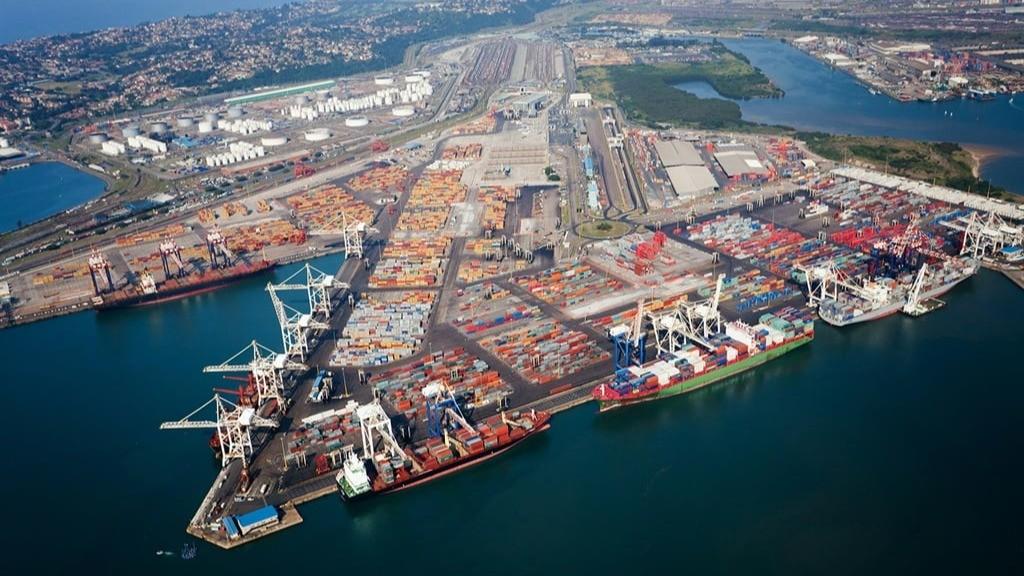
“South Africa’s trade with China has increased following Beijing’s introduction in May 2026 of a zero-tariff scheme for qualifying African exports, with South African exports to China rising by nearly 25% year on year between May and August, according to Chinese ambassador Wu Peng. However, imports from China also increased by 23% over the same period, leaving South Africa with the challenge of converting improved market access into more balanced trade, stronger domestic production and sustainable job creation.”
South Africa’s growing trade with China offers export opportunities amid global uncertainty
South Africa’s expanding trade relationship with China is emerging as an important development for the country’s economy, offering exporters new opportunities while raising questions about the trade imbalance between the two countries. The increase follows China’s introduction of a zero-tariff scheme for qualifying African exports in May 2026, a policy that could help South African producers reach one of the world’s largest consumer markets.
The development comes at a critical time for South Africa. The country is working to expand its international commercial relationships, reduce dependence on traditional export destinations and protect domestic industries against growing global competition. At the same time, uncertainty over its future access to the United States market has increased the urgency of finding alternative destinations for South African goods.
China’s zero-tariff initiative creates new opportunities
According to Reuters reporting published on 22 October, South African exports to China increased by nearly 25% year on year between May and August 2026. Imports from China also rose by 23% during the same period, highlighting the growing scale of commercial activity between the two economies.
The zero-tariff scheme is significant because customs duties can affect the final price of imported goods and the competitiveness of foreign suppliers. Where qualifying South African products receive preferential access, exporters may be able to offer more competitive prices, improve their margins or expand sales, depending on their production and distribution costs.
However, the benefits depend on the products covered by the scheme, the applicable rules of origin and any remaining regulatory or logistical requirements. Businesses should therefore confirm product eligibility rather than assume that every South African export can enter China without customs duties.
Agricultural products, minerals and manufactured goods are among South Africa’s established export categories to China. Improved access could help existing exporters expand sales while creating opportunities for producers capable of meeting Chinese market requirements.
For businesses considering entry into China, tariff treatment is only one part of the commercial equation. Product quality, packaging, certification, transport costs, reliable supply and relationships with local distributors can all influence whether preferential access translates into higher sales.
A major trading relationship with an imbalance
China is South Africa’s largest trading partner, making developments in the relationship particularly important for local businesses and economic policymakers.
South Africa exported approximately R222 billion worth of goods to China in 2025 and imported nearly twice that amount, according to figures cited by Trade Minister Parks Tau in the Reuters report. The difference illustrates the challenge of increasing exports quickly enough to narrow the bilateral trade gap.
A trade deficit is not automatically evidence of an unhealthy economic relationship. Imports can provide businesses with machinery, production equipment, components and other inputs that support investment and economic activity. Consumers can also benefit from access to a wider range of products at different price points.
The concern arises when imported finished products displace local production without a corresponding expansion in exports, investment or productive capacity. In that situation, domestic manufacturers may struggle to grow, while the country remains dependent on overseas suppliers for an increasing share of manufactured goods.
South Africa’s policy challenge is therefore more complex than simply increasing the value of bilateral trade. The country needs to expand its capacity to produce and export goods that generate employment, retain more value locally and support the development of domestic suppliers.
From raw materials to higher-value exports
One of the most important opportunities is to increase the value South Africa earns from its existing resources.
The country has an established mining industry and agricultural sector, but long-term export growth can be constrained when sales are concentrated in raw commodities. Processing, packaging, manufacturing and other value-adding activities can create additional economic opportunities before goods reach international buyers.
For example, agricultural exporters may investigate opportunities to expand sales of processed foods and other products that meet Chinese market requirements. Mineral producers and manufacturers may also explore ways to supply processed materials or specialised industrial products where they have the necessary capacity and competitive advantage.
Such a transition requires investment. Producers need suitable equipment, reliable electricity, transport infrastructure, technical skills and access to financing. They also need to understand the demand for their products and comply with destination-market regulations.
The tariff initiative can improve the conditions for market entry, but it cannot replace these fundamentals. Businesses that use the opportunity to improve productivity, develop new products and establish reliable export channels are more likely to benefit over the longer term.
The challenge of rising Chinese imports
The growth in South Africa’s imports from China presents a second dimension of the story.
Chinese manufacturers supply a wide range of products to international markets, including machinery, electronics, components and finished consumer goods. These products can reduce costs for South African businesses and give consumers more choice. Nevertheless, local manufacturers can face intense competition when imported products are priced below the costs domestic firms can sustainably achieve.
A separate report published by BusinessTech on 18 October, drawing on Bloomberg reporting, highlighted the rapid increase in Chinese shipments to South Africa. It reported that Chinese exports to South Africa rose by almost R165 billion in the first eight months of 2026 compared with the same period six years earlier, while shipments increased 29% year on year during the first eight months of 2026.
These figures illustrate why the expansion of trade must be considered alongside industrial policy. Greater imports can support productivity where local businesses use imported machinery and intermediate goods to manufacture competitive products. However, persistent pressure from finished imports can make it harder for domestic producers to invest, retain skilled workers and expand output.
South Africa’s trade authorities have tools to address specific cases of unfair trade, including investigations into alleged dumping and the application of trade remedies where legal requirements are met. Such measures must be based on evidence and applicable trade rules rather than an assumption that imports are inherently harmful.
The objective should be to maintain access to useful, competitively priced inputs while ensuring that local producers have a fair opportunity to compete.
AGOA uncertainty makes market diversification more urgent
The expanding relationship with China is also taking place against uncertainty about South Africa’s access to the US market through the African Growth and Opportunity Act.
AGOA provides eligible African countries with preferential, duty-free access to the United States for thousands of products. South Africa has benefited from the programme for years, but strained relations between Washington and Pretoria have raised concerns about whether the country will continue to qualify.
President Cyril Ramaphosa has said South Africa must prepare for the possibility of losing those benefits. The government has been exploring alternative markets, with China among the destinations receiving increased attention. Trade Minister Parks Tau has expressed cautious optimism while awaiting further clarity on South Africa’s position.
The stakes extend beyond diplomatic relations. If South African exporters face higher costs when selling into the United States, businesses that depend heavily on that market may have to reconsider their pricing, supply chains and investment plans.
Exporters cannot always redirect products to another destination immediately. Different markets have different technical standards, consumer preferences, distribution networks and certification requirements. Companies may also have existing contracts that limit how quickly they can change their sales strategies.
Consequently, diversifying export destinations requires sustained planning rather than a last-minute response to political uncertainty. China can offer opportunities, but South Africa will benefit most from developing a broad range of dependable trading partners instead of replacing one form of market dependence with another.
What the development means for South African businesses
For exporters, the immediate priority is to identify products that qualify for preferential access and assess whether Chinese demand can support profitable expansion.
Agricultural producers should investigate relevant import protocols and food-safety requirements. Manufacturers should calculate landed costs, identify reliable buyers and assess whether they can supply consistent volumes. Smaller businesses may benefit from export-support programmes, industry associations and partnerships with established distributors.
Financial institutions and logistics companies also have a role to play. Export growth requires access to trade finance, insurance, shipping services and dependable payment arrangements. Without these supporting services, smaller producers may find it difficult to convert market opportunities into actual transactions.
Government agencies can help by improving access to market information, supporting exporters through regulatory procedures and addressing infrastructure bottlenecks. Efficient ports, predictable customs processes and reliable freight services are particularly important because delays and additional transport costs can erode the benefits of lower tariffs.
Businesses should also monitor exchange-rate movements. A favourable exchange rate can improve the competitiveness of exports, but currency fluctuations can affect imported inputs, financing costs and profit margins. The commercial benefits of preferential tariffs must therefore be assessed alongside the full cost of doing business.
The outlook for South Africa–China trade
The latest increase in bilateral trade provides a positive indication that commercial opportunities are expanding. Nevertheless, the simultaneous growth in exports and imports shows why headline trade figures do not tell the whole story.
The more important test will be whether South Africa can use improved access to China to expand productive capacity, increase higher-value exports, create jobs and develop competitive domestic industries. Progress will depend on investment, skills, infrastructure and the ability of businesses to meet international standards.
China’s zero-tariff initiative creates an opportunity, but its long-term value will depend on how effectively South African companies respond. Preferential access alone cannot guarantee stronger exports or a narrower trade deficit.
For policymakers, the priority should be to combine market diversification with industrial development, fair competition and support for export-oriented businesses. For companies, the priority is to identify realistic opportunities, confirm the applicable trade rules and invest in products that international buyers want.
South Africa’s growing trade with China is therefore more than a story about rising shipment values. It is a test of whether the country can turn changing global trade conditions into sustained economic growth. If exporters can expand their presence in China while strengthening domestic production and pursuing other international markets, the relationship could become an important contributor to the country’s longer-term trade ambitions.



