




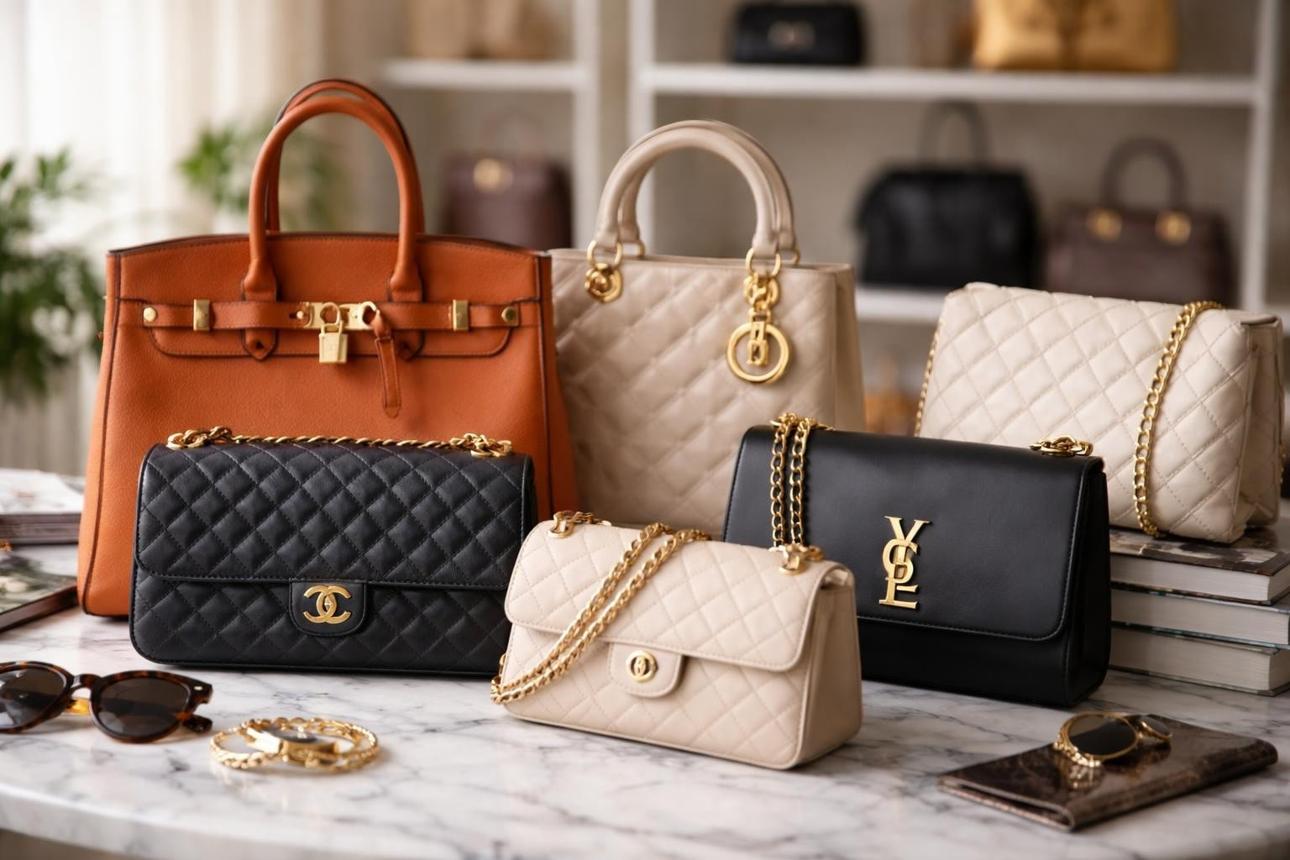
“South Africa’s authenticated pre-owned luxury market has reportedly expanded by more than 594% since 2019, as consumers increasingly purchase designer handbags, watches, jewellery and fashion accessories through resale channels. The shift reflects changing purchasing priorities, economic pressures and growing interest in luxury products that retain their value over time.”
South Africa’s luxury resale market surges as designer fashion becomes an investment
South Africa’s luxury fashion industry is experiencing a significant transformation as consumers reconsider how they purchase premium designer products. Rather than relying exclusively on traditional luxury boutiques, an increasing number of shoppers are turning to authenticated pre-owned fashion, creating new opportunities for established brands, independent retailers and luxury resale businesses.
The development highlights a changing relationship between consumers and luxury. Designer handbags, watches, jewellery and fashion accessories remain desirable, but buyers are increasingly concerned about affordability, authenticity, durability and resale value.
A report published by The National on 8 November 2026, titled The Luxury Paradox: Inside SA’s 594% Resale Boom, examines this development and describes the rapid expansion of South Africa’s authenticated second-hand luxury market. According to the report, the resale segment has grown by more than 594% since 2019, demonstrating how significantly purchasing behaviour has evolved.
Luxury consumption changes amid economic pressure
For years, luxury fashion was closely associated with exclusive boutiques, expensive shopping destinations and prestigious international brands. However, economic challenges have encouraged consumers to become more selective about discretionary spending.
South Africans who continue to purchase luxury products increasingly consider whether an item provides lasting value beyond its immediate appearance.
This has strengthened demand for pre-owned designer products, which allow consumers to access internationally recognised brands at prices that may be lower than those of comparable new items.
The development is particularly important in a country where income inequality and household financial pressures influence consumer behaviour.
According to the report, Luxity, a South African pre-owned luxury retailer, recorded a median purchase value of approximately R8,000. It also reported that 57.7% of transactions were below R10,000.
These figures suggest that authenticated resale is helping some consumers access premium fashion through smaller purchases rather than expensive new collections.
Designer handbags remain important luxury purchases
Handbags continue to occupy an important position in the luxury resale market.
Products from brands such as Louis Vuitton, Chanel and Hermès attract attention because they combine distinctive design, brand recognition and practical functionality.
However, consumers are increasingly evaluating individual models instead of assuming that every product from a prestigious label will automatically retain its value.
The National’s report indicates that smaller luxury purchases have also gained momentum. Wallet purchases increased their share by 32.5%, while jewellery purchases increased by 17.4%.
The figures demonstrate how luxury consumption is becoming more accessible through smaller accessories.
For many buyers, purchasing a designer wallet or jewellery item represents an introduction to luxury without requiring the financial commitment associated with a premium handbag or watch.
Authenticity becomes a major competitive advantage
The expansion of resale has increased the importance of product authentication.
Consumers purchasing second-hand designer goods face the risk of counterfeit products, misleading descriptions and questionable seller credentials.
Consequently, authentication has become one of the most important services offered by established luxury resale companies.
Retailers that can demonstrate product provenance, condition and authenticity may enjoy stronger consumer confidence than informal sellers operating without transparent verification procedures.
This creates opportunities for professional resale platforms to differentiate themselves through inspection processes, customer service and reliable product information.
Authentication is especially important for luxury handbags and watches, where counterfeit products can imitate original designs, logos, materials and packaging.
The growth of resale therefore creates not only commercial opportunities but also a greater responsibility to protect consumers.
International luxury brands continue to attract attention
Despite the expansion of pre-owned shopping, internationally recognised luxury houses remain important to South African consumers.
Louis Vuitton continues to attract considerable attention in the resale market, while Gucci, Chanel, Hermès and other designer labels compete for consumer interest.
However, changing search patterns suggest that shoppers are becoming more adventurous in their preferences.
The National’s report indicates that Loewe’s share of searches on Luxity’s website more than doubled, while Hermès increased its share by almost half. Chanel also improved its position among the platform’s most searched brands.
These developments suggest that luxury consumers are increasingly interested in a wider selection of fashion houses rather than concentrating exclusively on traditional market leaders.
South African luxury brands gain visibility
The resale market is also creating opportunities for local luxury brands.
Johannesburg-founded jeweller Browns is highlighted in the report as an example of a South African brand gaining traction.
According to Luxity’s reported figures, Browns’ share of brand searches increased by 77%, while its jewellery achieved a resale value equivalent to approximately 61.7% of its original retail price.
This performance is significant because it demonstrates that local brands can compete within the premium resale environment.
South African consumers may increasingly recognise the value of products associated with domestic craftsmanship, distinctive design and locally relevant brand identities.
Local luxury businesses can potentially benefit from this development by investing in product quality, customer relationships and transparent information about materials and production.
Luxury increasingly depends on craftsmanship and identity
The changing market also reflects a broader transformation in how luxury is understood.
Consumers are increasingly interested in the origins of products, the quality of materials and the stories behind designers.
South African designers such as Thebe Magugu and Laduma Ngxokolo, founder of Maxhosa Africa, have helped strengthen international interest in African fashion and creative identity.
Their work demonstrates how cultural storytelling, craftsmanship and distinctive design can become valuable elements of premium fashion.
Luxury is therefore not necessarily defined by the price of an item or the prominence of its logo.
Instead, its appeal can also come from originality, emotional significance and the experience associated with owning a particular product.
Investment considerations and resale realities
Although luxury products can retain value, consumers should not automatically treat designer fashion as a guaranteed investment.
Resale prices depend on several factors, including product condition, demand, authenticity, model popularity, scarcity and currency movements.
A highly desirable handbag may perform differently from another product produced by the same fashion house.
Similarly, purchasing a luxury item at a high retail price does not guarantee that it will later sell for the same amount.
The National report highlights the importance of examining actual second-hand market prices before making purchasing decisions.
Consumers are also encouraged to preserve original packaging, documentation and product condition where possible.
These considerations matter particularly for buyers who purchase luxury fashion with the expectation of selling it later.
Retailers respond to changing consumer expectations
Traditional luxury retailers face an increasingly competitive environment as consumers compare boutique purchases with resale alternatives.
The growth of authenticated pre-owned fashion may encourage retailers to reconsider their customer engagement strategies.
Potential opportunities include stronger after-sales services, product care programmes, personalised shopping experiences and transparent information about product quality.
Retailers may also explore partnerships with resale businesses or introduce circular-fashion initiatives that support longer product lifecycles.
However, luxury brands must balance accessibility with their established positioning.
Maintaining exclusivity, quality and customer experience remains important even as purchasing channels diversify.
The future of South African luxury fashion
South Africa’s luxury resale expansion illustrates how economic circumstances can influence consumer behaviour without eliminating demand for premium products.
Instead of abandoning luxury, many consumers are approaching it differently.
They are comparing prices, evaluating authenticity, exploring smaller accessories and considering resale value.
For local designers, the shift presents an opportunity to compete through craftsmanship, cultural relevance and distinctive creative identities.
For established international brands, it demonstrates that consumer loyalty increasingly depends on the quality and desirability of individual products rather than reputation alone.
Ultimately, South Africa’s luxury market is becoming more sophisticated and diverse.
The growing importance of authenticated resale suggests that luxury fashion will increasingly be shaped by affordability, sustainability, authenticity and the ability of products to remain desirable beyond their first purchase.



