




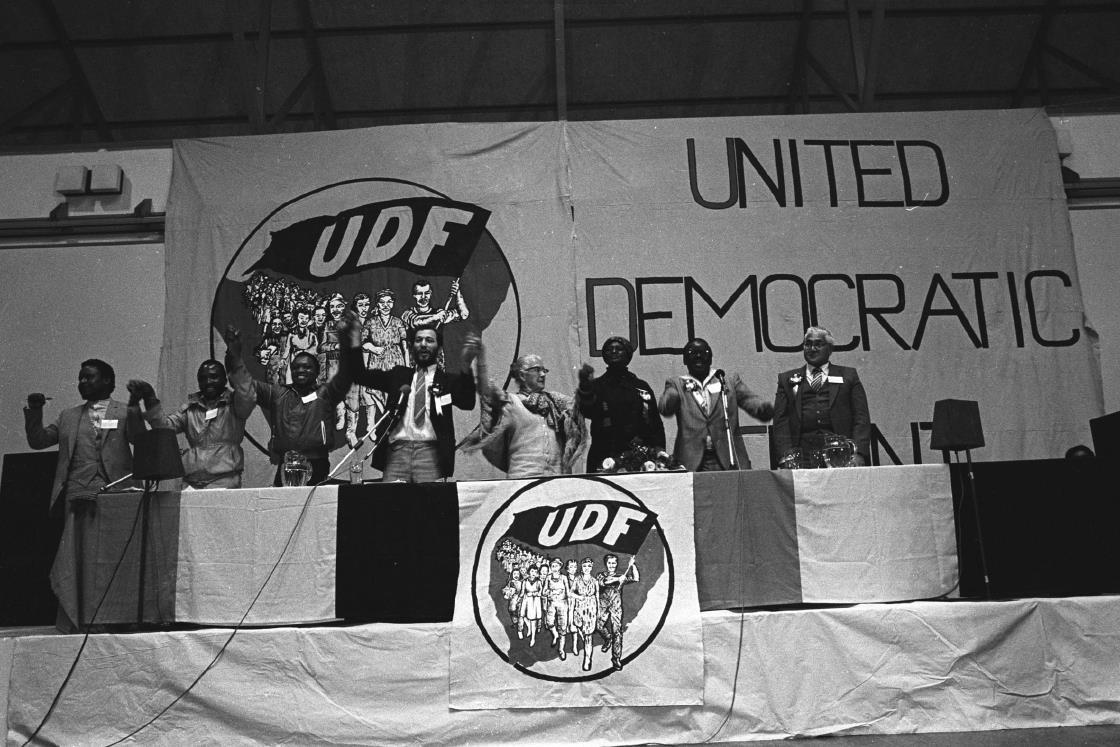
“The revived United Democratic Front (UDF) has called for changes to South Africa’s Electoral Act and proposed a national referendum on coalition governments, arguing that post-election negotiations between political parties can leave voters with limited influence over the eventual governing arrangements. The proposal comes amid coalition negotiations following the 4 November 2026 municipal elections, which produced hung councils in several major metropolitan municipalities.”
UDF Calls for Electoral Act Overhaul as South Africa Faces Growing Debate Over Coalition Governments
Introduction: Electoral reform moves into the national political debate
South Africa’s changing political landscape has renewed debate about how citizens exercise their democratic rights and how governments are established following elections. On 25 November 2026, the revived United Democratic Front (UDF) called for an overhaul of the Electoral Act, arguing that the country’s existing electoral arrangements require closer examination, particularly where election results produce coalition governments.
The organisation has also proposed a national referendum to establish whether South Africans believe coalition negotiations adequately reflect the choices expressed through their votes. Its intervention comes after the 4 November 2026 local government elections produced fragmented municipal councils, requiring political parties to negotiate governing arrangements in numerous municipalities.
The issue has attracted attention because coalition negotiations can determine who becomes mayor, speaker and member of municipal executive structures, even where the party receiving the largest number of votes does not ultimately lead the administration. The UDF argues that these decisions should receive greater public scrutiny and that voters should have a meaningful opportunity to express their views about the process.
UDF challenges post-election coalition negotiations
According to The Citizen’s report by political editor Eric Mthobeli Naki, the UDF believes that negotiations conducted privately between political parties can transfer important decisions about municipal leadership from voters to party representatives.
The movement describes these arrangements as corridor coalitions. Its concern is that voters participate in elections without necessarily knowing which parties will eventually cooperate to form municipal governments.
In the UDF’s view, this creates questions about democratic accountability. Citizens vote for political parties and candidates based on their public commitments, election manifestos and promises. However, when no party secures an outright majority, negotiations after election day can produce governing partnerships that were not explicitly presented to voters during the campaign.
UDF interim national convener Jo Mboweni has argued that this process raises constitutional concerns, particularly in relation to political rights and the principles underpinning South Africa’s democratic system.
The organisation is therefore calling for changes to the Electoral Act that would address the coalition formation process. Its proposal is not simply about changing individual political agreements. It seeks a broader discussion about the relationship between electoral representation, public participation and the authority of political parties after elections.
Constitutional questions surrounding coalition governments
The UDF has referred to Sections 1, 2 and 19 of the South African Constitution, together with the Bill of Rights, in explaining its position.
Section 1 establishes the foundational values of the Republic, including human dignity, equality, human rights, constitutional supremacy and multiparty democracy. Section 2 establishes the supremacy of the Constitution and the obligation for all conduct and laws to comply with it. Section 19 protects political rights, including citizens’ rights to participate in political activity and elections.
The UDF argues that these constitutional principles should inform how political parties negotiate governing arrangements after elections.
Its position raises an important question: how should democratic representation operate when voters elect a council in which no single political party has a majority?
There is, however, an important distinction between the UDF’s constitutional argument and an established legal finding. The organisation has expressed its interpretation of voters’ rights, but its claims should not be treated as a court judgment declaring all coalition agreements unconstitutional.
South Africa’s multiparty democratic framework allows political parties to compete independently and cooperate when circumstances require it. Coalition arrangements can therefore form part of representative government. The debate concerns how those arrangements should be negotiated, communicated, regulated and made accountable to the public.
The 2026 municipal elections create new coalition challenges
The background to the UDF’s intervention is the outcome of the November municipal elections.
The elections produced a significant number of councils in which no political party secured an outright majority. This has increased the importance of negotiations between parties seeking enough council support to elect mayors and establish functioning administrations.
The Department of Cooperative Governance and Traditional Affairs reported on 11 November that approximately 138 metropolitan and local municipalities, representing about 65% of councils, had not produced an outright majority for one political party.
This situation means that coalition governments, minority administrations and other cooperative political arrangements will play an important role in local government.
The elections have also demonstrated that securing the largest share of votes does not automatically guarantee control of a municipal council. Parties must obtain sufficient support among elected councillors to establish political leadership and pass decisions.
Consequently, smaller parties can become important negotiating partners. Their council seats may determine whether a proposed coalition can secure a majority.
This is one of the issues underlying the UDF’s criticism. It believes that the influence exercised by party negotiators should be examined in relation to the democratic choices made by voters.
Johannesburg highlights the complexity of coalition politics
Johannesburg has become a prominent example in the national discussion because its election results created a situation in which several political parties needed to negotiate to establish a governing majority.
The Democratic Alliance emerged as the largest party in the city, followed by the African National Congress and ActionSA. However, the DA did not secure enough seats to govern independently.
ActionSA subsequently entered negotiations with the ANC and other parties over possible governing arrangements in Johannesburg and other Gauteng municipalities.
These negotiations illustrate how the final political leadership of a municipality can depend on agreements between parties rather than simply the order in which they finished in the election.
The situation has generated questions about electoral mandates, political cooperation and the expectations of supporters.
For example, voters who supported a particular party may have preferred that party to cooperate with certain political formations rather than others. Yet, under coalition negotiations, elected parties must consider the available council numbers and their ability to establish a functioning administration.
The UDF’s argument is that such arrangements require greater public accountability.
However, the fact that the largest party does not necessarily govern is not, by itself, evidence that an election was improperly conducted. The central question is whether the rules governing representation and coalition formation provide adequate transparency and accountability.
UDF proposes a national referendum
One of the most significant elements of the UDF’s announcement is its proposal for a national referendum on coalition governments.
A referendum would provide an opportunity to ask citizens directly whether they believe the existing arrangements adequately protect their democratic choices.
The organisation wants the public to consider whether political parties should retain broad discretion over post-election governing negotiations or whether additional rules should be introduced to make the process more transparent.
According to The Citizen, the UDF is considering a petition campaign targeting one million signatures by March 2027 if its demands are not addressed by the end of January.
National spokesperson Juliet Dingiswayo-Diratsagae indicated that the proposed petition would form part of the movement’s efforts to build public support for electoral reform.
The proposed referendum could generate discussion about the advantages and disadvantages of coalition government, the role of smaller parties, the transparency of negotiations and the relationship between party representation and municipal leadership.
Importantly, a petition campaign and a referendum are different processes. Collecting signatures can demonstrate public interest in an issue, but it does not automatically result in a referendum or amend the Electoral Act. Any formal electoral reform would still need to follow the relevant constitutional and legislative procedures.
Government’s coalition guidelines provide another perspective
The UDF’s demands are emerging alongside government efforts to strengthen coalition governance.
On 11 November 2026, Cooperative Governance and Traditional Affairs Minister Velenkosini Hlabisa issued Guidelines for Stable Coalitions in Local Government.
The guidelines are intended to help municipalities manage coalition arrangements, maintain administrative stability and protect service delivery during political transitions.
They encourage parties to establish written coalition agreements outlining shared policy priorities, the allocation of political responsibilities, decision-making processes and procedures for resolving disagreements.
They also emphasise the distinction between political leadership and professional municipal administration.
For instance, coalition agreements should not interfere with decisions that legislation assigns to municipal councils, authorised office-bearers or municipal administrators. Procurement, tender awards and administrative appointments must remain with the legally authorised decision-makers.
The government’s approach therefore focuses on improving the management of coalition arrangements, while the UDF is calling for a broader examination of the electoral and democratic framework through which these arrangements emerge.
Both developments demonstrate that coalition governance has become an important national policy issue following the 2026 elections.
The stalled Municipal Coalitions Bill
Another important part of the discussion is the proposed Municipal Coalitions Bill, formally known as the Local Government: Municipal Structures Amendment Bill of 2026.
Parliament’s Portfolio Committee on Cooperative Governance and Traditional Affairs received a substantive briefing on the proposed legislation in August 2026.
Among its proposals are requirements for written coalition agreements, greater transparency through publication of those agreements and an extension of the period for constituting municipal governance structures from 14 to 30 days.
The proposed changes are intended to create a clearer framework for the establishment and operation of municipal coalitions.
However, the proposed legislation had not become the governing framework for the November 2026 coalition negotiations, according to reporting by The Citizen earlier in the month.
This creates an important legislative challenge. Municipalities must establish political leadership and continue delivering essential services while parliament considers reforms intended to regulate coalition government more comprehensively.
The UDF’s latest demands add another dimension to the debate by questioning whether coalition transparency alone is sufficient or whether citizens should have a more direct role in determining the principles governing coalition formation.
Implications for smaller political parties
The debate also has implications for smaller political organisations.
Under proportional representation, smaller parties can obtain representation even when they do not receive enough votes to become the largest political formation in a municipality.
Their elected representatives can contribute to council decisions, debate municipal policies and participate in coalition negotiations.
This is an important feature of multiparty democracy because it allows different communities and political viewpoints to receive representation.
Nevertheless, coalition negotiations can create complicated situations when several parties have different priorities and expectations.
A small party with only a limited number of councillors may become an important partner where larger parties cannot independently achieve a majority.
The UDF’s argument raises questions about how this negotiating influence should be exercised and whether agreements should be published before important governing decisions are implemented.
On the other hand, supporters of coalition flexibility can argue that elected representatives need room to negotiate practical governing arrangements after voters have determined the composition of their councils.
Any reform will therefore need to consider both transparency and the ability of elected representatives to cooperate.
Consequences for municipal service delivery
Ultimately, the coalition debate is not limited to political positions and mayoral appointments.
Municipal governments are responsible for services that directly affect residents, including water provision, sanitation, electricity distribution where applicable, refuse removal, local roads, public infrastructure and municipal planning.
When coalition negotiations become prolonged or governing partnerships repeatedly collapse, municipalities may experience delays in decision-making and difficulties maintaining consistent political direction.
The government has acknowledged these risks in its coalition guidelines, which emphasise administrative continuity and service delivery.
Stable governing arrangements can help municipalities adopt budgets, implement development plans and maintain oversight of public resources.
However, stability alone does not guarantee good governance. Coalition partners must also maintain transparency, financial accountability and effective public participation.
This is why the UDF’s call for reform has relevance beyond the political parties involved. Residents have an interest in understanding how their elected representatives reach governing agreements and how those agreements affect municipal priorities.
What happens next?
The next stage will depend on how the government, parliament, the Electoral Commission of South Africa and other relevant institutions respond to the UDF’s demands.
The movement has indicated that it expects its concerns to receive attention by the end of January 2027. If they are not addressed, it intends to pursue a petition campaign targeting one million signatures by March.
The proposal for a referendum may also generate further debate among political parties, civic organisations, constitutional experts and members of the public.
For parliament, the Municipal Coalitions Bill remains an important part of the wider discussion about how municipal coalition arrangements should operate.
For municipalities, the immediate priority remains establishing functioning councils and ensuring that political disagreements do not interfere with essential public services.
The debate will also test how South Africa balances the rights of voters, the independence of political parties and the practical requirements of representative government.
Conclusion: Electoral accountability remains central to the debate
The UDF’s call for an overhaul of the Electoral Act has placed coalition negotiations and democratic accountability firmly within South Africa’s election debate on 25 November 2026.
Its proposal for a national referendum seeks to establish whether citizens believe existing coalition arrangements adequately reflect their electoral choices.
The issue has become particularly relevant following the 2026 municipal elections, which left numerous councils dependent on cooperation between political parties.
While coalition government is a recognised feature of multiparty democracy, questions about transparency, accountability, legislative safeguards and public participation remain important.
The government’s coalition guidelines and parliament’s proposed Municipal Coalitions Bill represent efforts to address some of these challenges. The UDF, meanwhile, is seeking a broader public discussion about the electoral framework itself.
Ultimately, any changes will need to respect constitutional principles, protect democratic representation and allow municipalities to function effectively.
The central question facing South Africa is how to ensure that the political agreements reached after elections remain accountable to the citizens whose votes determine the composition of government.



