




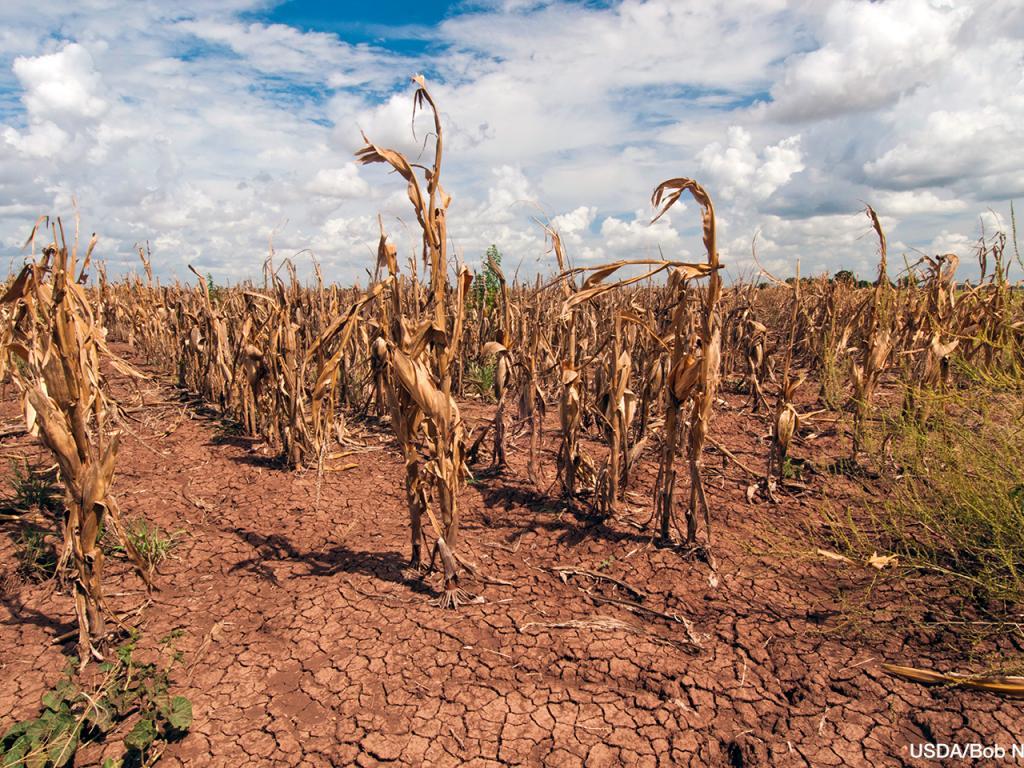
“South Africa’s maize market faces heightened uncertainty as a potentially strong El Niño weather pattern threatens rainfall and agricultural production across southern Africa, raising concerns about future grain supply and prices. However, relatively strong existing maize stocks could help cushion the domestic market, although import costs, exchange-rate movements and international futures prices remain important risks.”
South Africa’s maize market faces fresh uncertainty as El Niño threatens supply and prices
Weather risks place agricultural markets in focus
South Africa’s agricultural markets are facing renewed uncertainty as forecasts of a potentially powerful El Niño weather pattern raise concerns about rainfall, crop production and the future direction of maize prices. The issue extends beyond farming because maize is a staple food, a key animal-feed ingredient and an important commodity traded in domestic and international markets.
A report published by Moneyweb on 10 October 2026 examines how the developing weather risk could affect maize prices in South Africa. The report, written by agricultural economists Anmar Pretorius and Mariëtte Geyser, highlights the relationship between international grain prices, local production conditions, exchange rates and the availability of domestic stocks.
The potential market impact is significant because South Africa’s maize prices are not determined exclusively by the size of the domestic harvest. Global futures markets, the rand’s value, transport costs and traders’ expectations also influence local prices. Consequently, prices can respond to anticipated shortages before farmers have completed planting or harvesting.
The central question is whether South Africa’s available maize reserves will be sufficient to absorb a difficult growing season without substantial price increases. Although existing stocks offer some protection, uncertainty surrounding rainfall and future supply means consumers, farmers, traders and food manufacturers will need to monitor developments closely.
Understanding the El Niño threat
El Niño occurs when sea-surface temperatures in parts of the tropical Pacific Ocean become unusually warm, influencing atmospheric circulation, wind patterns and rainfall across distant regions.
In southern Africa, El Niño is commonly associated with below-average summer rainfall and an increased risk of drought. These conditions can affect planting decisions, crop development and final harvest volumes, particularly when dry weather persists during critical stages of the growing season.
The expected strength and duration of the developing event have therefore become important considerations for agricultural markets. According to the Moneyweb report, the event could reach very strong intensity towards the end of 2026 and persist through at least February 2027.
Nevertheless, a forecast does not establish exactly how much rain each farming region will receive or how much maize South Africa will ultimately produce. Rainfall distribution, soil moisture, planting dates and local farming conditions will all influence the outcome.
For market participants, the uncertainty itself matters. Commodity traders routinely assess expected supply months before grain reaches storage facilities. If forecasts suggest a poor harvest, buyers may seek to secure supplies earlier, while sellers may adjust their asking prices to reflect the possibility of tighter availability.
This can produce price movements even before a physical shortage emerges. If subsequent rainfall improves and crop prospects recover, some of those increases may reverse. Conversely, worsening drought conditions can reinforce concerns about supply and sustain upward pressure.
Why international markets influence local prices
South Africa participates in an interconnected agricultural trading system. Maize futures traded locally on the Johannesburg Stock Exchange provide an important mechanism for price discovery, while international benchmarks influence traders’ expectations and the economics of importing or exporting grain.
The Moneyweb report explains that South African maize prices generally follow US maize prices over the longer term. However, local conditions can cause the relationship to weaken, particularly during El Niño-related droughts.
When international prices rise, South African buyers may face higher replacement costs. This is especially relevant if domestic production declines and the country needs additional grain from overseas suppliers.
The exchange rate can amplify or reduce this effect. A weaker rand makes imported maize more expensive in local currency, while a stronger rand can reduce the domestic cost of purchasing grain abroad, all else being equal.
Import parity is therefore an important reference point for the domestic market. It reflects the cost of obtaining imported grain after accounting for international prices, currency conversion, freight and other associated expenses.
If local supply becomes tight, prices may move towards import parity even before imports arrive. If domestic stocks are plentiful, however, local prices may remain below the full cost of imported supplies.
For investors and commodity businesses, this relationship demonstrates why following only international maize prices may provide an incomplete picture. Currency movements and South African supply conditions can materially change the domestic outlook.
Historical droughts show the potential consequences
Previous El Niño episodes illustrate how severe weather can affect agricultural production and market behaviour.
The Moneyweb report identifies the 2015/16 season as a particularly difficult period, when South African production fell to approximately 3.3 million tonnes of white maize and 4.3 million tonnes of yellow maize. These figures illustrate how sharply output can deteriorate under adverse conditions.
White maize is particularly important for human consumption in South Africa and other African countries, while yellow maize is widely used in animal feed. A disruption can therefore affect several interconnected markets.
Lower white-maize availability can put pressure on the cost of producing maize meal. Meanwhile, expensive yellow maize can raise feed costs for livestock and poultry producers, potentially influencing the prices of meat, eggs and other food products.
The economic consequences can extend further. Farmers may face lower yields and reduced revenue, while grain traders and processors must manage uncertainty about procurement costs and delivery volumes.
However, historical experience should not be treated as a precise forecast for the current season. Weather events differ in intensity, duration and geographical impact. Agricultural technology, planting decisions, available stocks and international supply conditions can also change the outcome.
Existing maize stocks provide a measure of protection
One of the more reassuring elements in the report is that South Africa entered the developing weather-risk period with larger maize carryover stocks than were available at the beginning of two previous El Niño episodes discussed by the authors.
The report estimates that current stocks are between one-third and one-fifth higher than those earlier starting levels. Based on expected stock levels and domestic consumption, the authors indicate that South Africa should still have sufficient maize available at the end of the marketing season in April 2027, even if harvest conditions deteriorate.
This provides an important distinction between the risk of a poor harvest and the risk of an immediate national shortage. A smaller crop does not automatically mean that domestic demand cannot be met, particularly when reserves are available.
Stocks can help stabilise supply by allowing grain to be released into the market when production falls short. They also give buyers and processors more time to adjust procurement plans.
Nevertheless, stock estimates are not guarantees. Actual availability will depend on final production, consumption, exports, imports and the timing of grain deliveries. If drought proves more severe than anticipated, reserves could be drawn down faster than expected.
The composition of those reserves also matters. White and yellow maize serve different markets and cannot always be substituted freely without considering processing requirements and consumer preferences.
Consequently, market participants will need to track not only the total quantity of maize available but also the balance between varieties, expected demand and the pace at which stocks are used.
White maize could face particular price pressure
White maize deserves particular attention because international trade in this variety is more limited than trade in yellow maize.
According to the Moneyweb report, imported white maize can be more expensive than yellow maize. If domestic white-maize supplies become insufficient, the cost of sourcing additional grain could place significant upward pressure on local prices.
The implications extend directly to household food budgets. Maize meal is a staple for many South African households, particularly those with limited disposable income. A sustained increase in its price would leave consumers with less money available for other essential expenses.
Food manufacturers could also face higher input costs. Depending on competitive conditions and consumers’ ability to absorb increases, businesses may pass some of those costs on through retail prices.
However, the extent of any price increase will depend on how the season develops. Strong stocks, favourable rainfall in key production areas, competitive imports or a recovery in international supply could all limit pressure.
It is therefore too early to conclude that a severe increase in maize-meal prices is inevitable. The appropriate interpretation is that the weather forecast introduces a risk that must be evaluated alongside current inventories and changing market conditions.
What the outlook means for farmers and agribusinesses
For producers, uncertainty surrounding rainfall makes risk management especially important. Farmers may need to assess planting schedules, crop choices, input expenditure and the financial consequences of a potentially lower yield.
Access to timely and reliable weather information can improve those decisions. Producers who understand the likelihood of adverse conditions may be better positioned to adjust operations before losses become unavoidable.
Agricultural insurance can also help reduce exposure to certain weather-related losses, although the protection available depends on policy terms, coverage limits and the specific risks insured.
Grain traders, storage operators and processors face a different challenge: maintaining dependable supplies while avoiding excessive purchasing costs. Buying too early at elevated prices can be expensive if conditions improve, but delaying purchases can expose businesses to further increases if shortages develop.
Risk-management instruments, including suitable futures and hedging arrangements, may help businesses manage price exposure. Such instruments do not eliminate risk, and they require an understanding of contract specifications, market liquidity, margin requirements and the possibility that local prices will diverge from international benchmarks.
Feed manufacturers and livestock producers should also monitor yellow-maize availability. If feed costs increase, businesses may need to reassess budgets and procurement strategies. Ultimately, the effect on retail food prices will depend on the interaction between feed expenses, production costs, demand and competition.
Policy priorities include early warnings and market transparency
The report emphasises the importance of strengthening early-warning systems so that farmers, traders and food processors receive timely information about rainfall, crop conditions and potential supply disruptions.
Better information can help market participants respond gradually rather than making abrupt decisions after a shortage becomes evident.
Government agencies, agricultural researchers, industry bodies and commercial participants all have a role in improving the availability and usefulness of such information. Regular updates on planting progress, crop estimates, stock levels and expected demand can make supply risks easier to assess.
Transparent information is also important for consumers and policymakers. If food prices begin rising, decision-makers need to distinguish between temporary movements, international price changes, currency effects and genuine domestic supply constraints.
Policy responses should be based on evidence about the cause of the increase. Measures that improve logistics, information access and agricultural resilience may help address underlying vulnerabilities more effectively than interventions that fail to account for the economics of grain production and trade.
For farmers, investment in resilient production practices can support long-term adaptation. However, such investments need to be evaluated against local soil conditions, water availability, financing constraints and expected returns.
What investors and market watchers should monitor
The maize outlook offers several indicators worth following over the coming months.
First, rainfall forecasts and actual precipitation will help establish whether the expected weather threat is translating into deteriorating crop conditions. Forecasts should be reassessed regularly as new meteorological information becomes available.
Second, official crop estimates and planting reports will provide evidence about likely production. These indicators are more informative when compared with previous forecasts, historical averages and expected domestic consumption.
Third, domestic maize futures prices should be evaluated alongside international benchmarks and the rand exchange rate. A rise in local prices that outpaces international markets may indicate that domestic supply conditions are becoming more restrictive.
Fourth, stock levels and export or import flows will help reveal whether South Africa retains sufficient flexibility to meet demand. Changes in the availability of white maize could be particularly important for the consumer food market.
Finally, investors should avoid assuming that weather risk automatically produces profitable opportunities in agricultural shares or commodity contracts. Prices may already reflect expected drought conditions, and financial markets can react sharply when forecasts change.
Conclusion: Stocks offer reassurance, but uncertainty remains
South Africa’s maize market enters the developing El Niño period with a mixture of protection and risk. Larger carryover stocks provide a buffer against weaker production, yet drought could still affect local prices through tighter supply, international commodity movements, exchange-rate changes and higher import costs.
The key issue is not simply whether El Niño occurs, but how severe its effects become, where rainfall deficits develop and how those conditions interact with existing grain reserves and market demand.
For households, the central concern is food affordability. For farmers and agribusinesses, it is the management of production and price risk. For investors and policymakers, the challenge is to distinguish temporary market volatility from a sustained deterioration in the balance between supply and demand.
As the 2026/27 season progresses, reliable weather forecasts, transparent crop information and disciplined risk management will be essential. South Africa’s existing stocks provide a reason for cautious reassurance, but continued monitoring will be necessary to understand whether that protection remains sufficient.



