




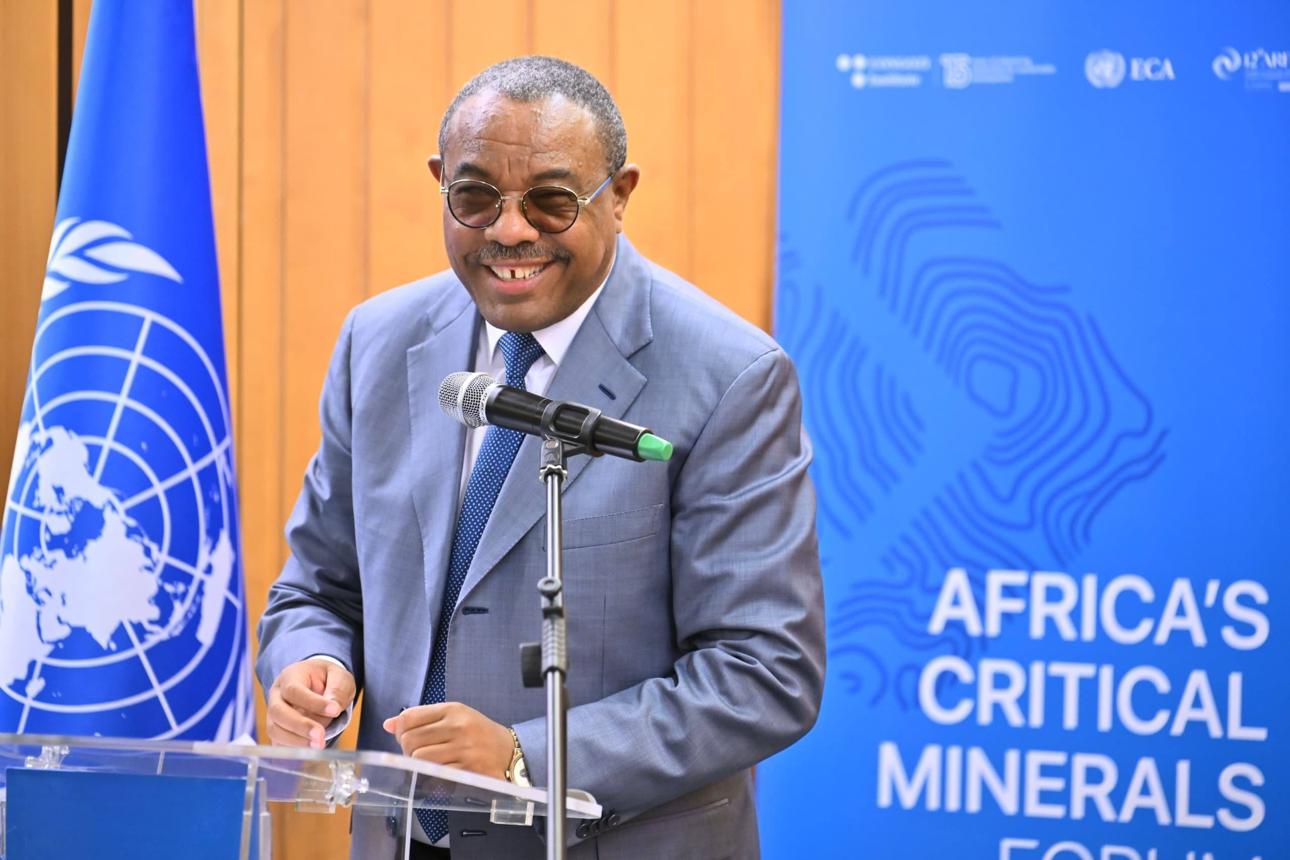
“African governments are increasingly using their mineral and energy resources as strategic leverage in international negotiations, with South Africa seeking to attract investment while strengthening its position in critical-mineral supply chains. South Africa’s proposal for a critical-minerals investment platform and a South Africa–US working group illustrates how the country is attempting to move beyond exporting raw materials towards processing, manufacturing and higher-value international trade.”
South Africa Seeks Greater Trade Power Through Critical Minerals
South Africa’s position in global trade is increasingly being shaped by the growing strategic importance of critical minerals, as governments and major economies compete to secure reliable supplies for energy, manufacturing, technology and industrial production. A Business Day analysis published on 8 October 2026 highlights how African states are using the United Nations General Assembly and other international platforms to strengthen their bargaining position, with critical minerals and energy resources providing an increasingly important source of leverage.
For South Africa, the development is particularly significant because the country is attempting to turn its mineral resources into a broader industrial and trade advantage. Rather than relying primarily on the export of unprocessed or minimally processed commodities, the country is seeking investment that can support processing, manufacturing, infrastructure and participation in international value chains.
The issue has become more urgent as countries around the world compete for supplies of minerals required for electric vehicles, renewable-energy technologies, batteries, advanced manufacturing and digital infrastructure. Critical minerals are therefore no longer simply a mining-sector issue. They have become an important component of international trade policy, industrial policy and geopolitical strategy.
According to the Business Day analysis, South Africa used a critical-minerals roundtable on the margins of the United Nations General Assembly to propose a critical-minerals investment platform and a South Africa–US critical-minerals working group. The proposal is designed to connect South African projects with American finance, technology, industrial demand and long-term buyers.
This approach is important because access to global markets alone does not necessarily guarantee that mineral-rich countries will capture substantial economic value. If raw materials are exported and processed elsewhere, much of the higher-value economic activity can remain outside the producing country.
South Africa is consequently trying to position itself further up the value chain.
From Mineral Exports to Value Addition
For decades, mineral exports have played a major role in South Africa’s economy. Mining has generated export revenue, supported employment and supplied raw materials to industries both domestically and internationally. However, the traditional model of exporting commodities also exposes the country to global price cycles and limits the amount of value that can be captured locally.
The critical-minerals debate provides an opportunity to reconsider that model.
UN Trade and Development has warned that developing countries with critical mineral resources have an opportunity to create jobs, diversify their economies and increase government revenues, but only if they develop local processing and higher-value industries. Otherwise, the mineral boom can reinforce commodity dependence rather than reduce it.
For South Africa, this means that trade policy needs to extend beyond questions of export volumes.
The country must also consider what happens before minerals leave the country and what industrial activities can be developed around them. Processing, refining, component manufacturing, logistics, engineering, financial services and technology can all contribute to a larger domestic economic impact.
This is one reason the government’s critical-minerals strategy has placed emphasis on beneficiation and industrialisation. Deputy President Paul Mashatile has previously said that South Africa needs to move away from raw mineral exports and develop local smelting, refining and advanced manufacturing capacity.
The strategy is particularly relevant to platinum-group metals, manganese, vanadium and other resources that could play an important role in clean-energy and advanced-technology supply chains.
US Trade Relations Add Another Dimension
South Africa’s attempt to strengthen its critical-minerals position is taking place against a difficult trade relationship with the United States.
The Business Day report notes that the US imposed a 12.5% import tariff on South African goods in July, citing concerns relating to imports produced using forced labour.
That tariff environment makes the proposed critical-minerals partnership especially significant.
Instead of treating trade disagreements and mineral cooperation as completely separate issues, Pretoria appears to be exploring whether strategic economic interests can create room for deeper cooperation.
South Africa has resources that US companies and policymakers increasingly regard as strategically important. At the same time, South Africa needs investment, technology, infrastructure and access to major markets to develop its mineral industries.
That creates the possibility of a mutually beneficial relationship.
The government therefore wants to connect South African mineral projects with American capital, industrial demand and technology. Trade in this context becomes more than the simple movement of goods across borders. It becomes part of a wider industrial partnership.
Minister of Trade, Industry and Competition Parks Tau made a similar argument at the September critical-minerals roundtable, saying South Africa could contribute processing capabilities, logistics, financial services, industrial infrastructure and access to the wider African market through the African Continental Free Trade Area.
That broader approach could potentially make South Africa more attractive to international investors.
The African Continental Market
South Africa’s trade ambitions cannot be separated from developments across the African continent.
The African Continental Free Trade Area provides a potential platform for developing regional value chains in which minerals extracted in one country can be processed or transformed in another African country before being incorporated into finished products.
This is particularly important because individual African economies often lack all the infrastructure, skills, capital and industrial capacity required to develop complete value chains independently.
Regional cooperation can therefore allow countries to specialise while still retaining more economic value within Africa.
For example, mineral extraction could take place in one country, initial processing in another, component production in another and final manufacturing in another. Better regional infrastructure and trade facilitation could make these arrangements commercially viable.
The long-term objective would be to transform Africa from primarily a supplier of raw materials into a participant in the manufacturing and technology industries that depend on those materials.
Research presented by UN institutions has similarly emphasised the importance of regional value chains and local processing if Africa is to benefit fully from its mineral resources.
Infrastructure Remains a Major Challenge
However, mineral wealth alone will not automatically translate into stronger trade performance.
South Africa and other African countries still face substantial infrastructure challenges. Reliable electricity, rail capacity, ports, roads, water supply and digital infrastructure are essential for competitive mineral processing and manufacturing.
The Business Day analysis also warns that African countries face limitations because they compete against one another and other mineral-producing regions for international investors. Processing and beneficiation require electricity, infrastructure and skills that many countries still need to strengthen.
This means South Africa will need to demonstrate that its investment environment can support long-term industrial projects.
Investors considering mineral-processing facilities will look not only at the quality and quantity of mineral deposits but also at electricity reliability, transport costs, regulatory certainty, taxation, labour skills, access to ports and the availability of industrial land.
Consequently, trade policy and industrial policy must work together.
Global Demand Is Changing the Trade Landscape
The global energy transition is fundamentally changing the importance of minerals.
Copper, lithium, nickel, cobalt, graphite, manganese, platinum-group metals and rare earth elements are increasingly connected to electric vehicles, batteries, renewable-energy systems, electronics and other technologies. UN Trade and Development says demand for critical minerals is rising rapidly and that developing countries have an opportunity to use this demand to diversify their economies.
South Africa is particularly well positioned in some parts of this market because of its mineral endowment and established mining expertise.
However, the country faces competition from other resource-rich economies.
This means the opportunity should not be viewed simply as an opportunity to sell more minerals. South Africa needs to establish itself as a reliable supplier while simultaneously building the capabilities required to process and manufacture higher-value products.
That would provide greater resilience if commodity prices decline.
Trade Policy and Industrial Policy Must Work Together
The latest development also highlights an important question for South Africa: how should trade policy support industrial development?
Import tariffs, export rules, investment incentives and trade agreements can influence where companies choose to establish processing and manufacturing facilities.
If policy is designed effectively, international demand for South African minerals could encourage companies to invest locally rather than simply purchasing raw materials.
However, protectionist measures also carry risks. Excessively high tariffs can increase input costs for domestic manufacturers, while restrictions on exports can discourage investment if companies believe they will not have reliable access to international markets.
The challenge is therefore to create policies that attract investment while encouraging local value addition.
This is particularly important as global trade becomes more fragmented.
A Changing Global Trade System
The Business Day analysis places the mineral issue within a wider transformation of the international system. African governments are increasingly questioning whether global institutions adequately reflect the economic and political realities of developing countries. At the same time, they continue using institutions such as the UN General Assembly to negotiate partnerships and pursue investment.
For South Africa, this creates an opportunity to pursue a more strategic trade diplomacy.
Rather than depending on one major trading partner, the country can seek relationships with multiple markets while strengthening regional trade through the AfCFTA.
Such diversification could reduce vulnerability to unilateral tariffs, geopolitical tensions and disruptions affecting individual markets.
The strategy is particularly important in an era when major powers are increasingly using trade, investment and access to strategic resources as instruments of economic policy.
What It Means for South African Trade
The critical-minerals opportunity could have significant implications for South African exports.
If more investment flows into processing and manufacturing, the country could eventually export higher-value products rather than predominantly raw or semi-processed commodities.
That could improve export earnings, create industrial jobs and increase demand for engineering, logistics, financial and professional services.
It could also strengthen South Africa’s role in African supply chains.
However, achieving these outcomes will require consistent implementation. Investment announcements must translate into actual projects, production facilities, infrastructure and export contracts.
South Africa will also need to improve the efficiency of its ports, railways and energy systems while maintaining predictable regulations.
Conclusion
The most important trade development highlighted in South African coverage today is the growing strategic importance of critical minerals and the country’s attempt to convert mineral wealth into greater international economic influence.
South Africa’s proposal for a critical-minerals investment platform and a South Africa–US working group demonstrates a shift from viewing minerals simply as commodities towards treating them as strategic assets within global value chains.
The opportunity is substantial. Global demand for minerals required for energy transition, advanced manufacturing and technology is increasing, while major economies are searching for secure and diversified supply chains.
Yet South Africa will only capture the full benefit if it can move beyond extraction.
The country needs to process more minerals domestically, attract manufacturing investment, strengthen infrastructure, develop skills and build stronger regional value chains. It must also balance relationships with the United States, China, Europe and other major trading partners while expanding intra-African commerce.
Ultimately, the mineral opportunity is not simply about how much South Africa can export. It is about what South Africa can produce, where that production takes place, how much value remains in the country and how effectively those industries connect to global and African markets.
If Pretoria can successfully combine mineral resources with industrial policy, investment, infrastructure and trade diplomacy, critical minerals could become an important foundation for a more diversified South African export economy. If it fails to build those capabilities, the country risks repeating the traditional pattern of exporting valuable resources while importing many of the higher-value products created from them.
The global competition for critical minerals is therefore also a competition for industrial capacity. For South Africa, the challenge is to ensure that the next mineral boom produces not only higher exports, but also stronger domestic manufacturing, investment, employment and long-term economic transformation.



