




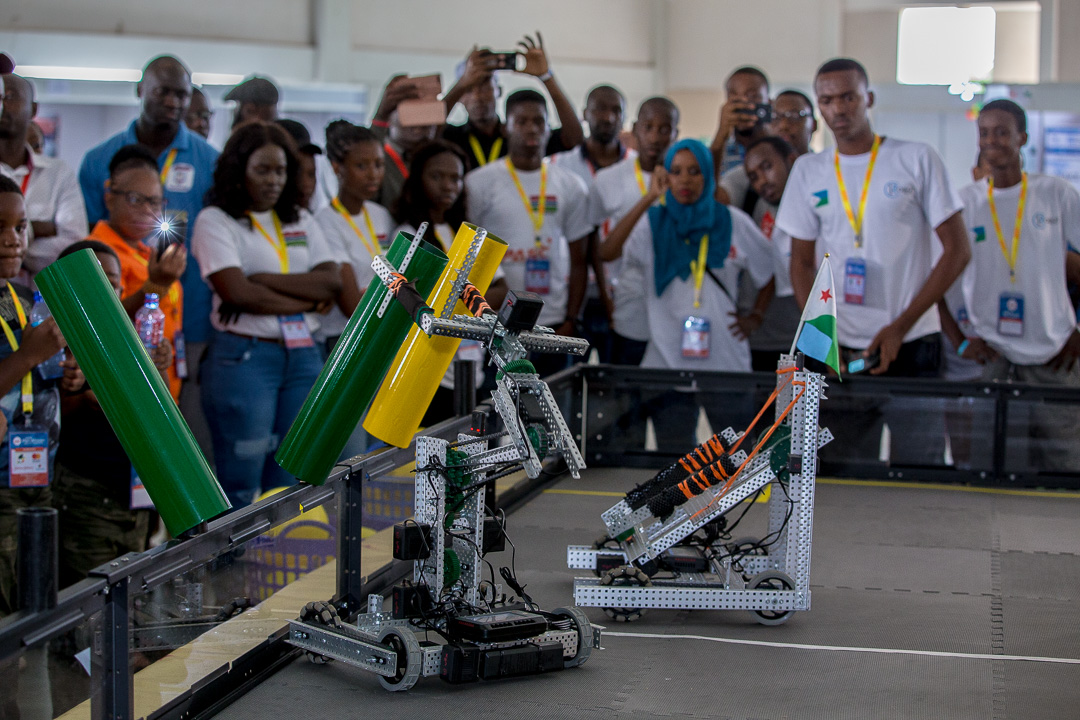
“At SANSA’s Hartebeesthoek facility, 120 young innovators from South Africa, Kenya, and Zimbabwe tested self-built Mars rover prototypes in the Cars4Mars African Rover Challenge. The competition provided hands-on experience in robotics, AI, and engineering, marking a significant step in advancing Africa’s robotics education beyond classroom theory.”
South Africa has once again positioned itself at the forefront of African robotics innovation. On September 27, 2026, the South African National Space Agency (SANSA) hosted the Cars4Mars African Rover Challenge at its Hartebeesthoek facility. The event brought together 120 young innovators from South Africa, Kenya, and Zimbabwe, who showcased their engineering prowess by testing self-built Mars rover prototypes in a specially constructed Mars-like terrain. This initiative is more than a competition—it is a transformative educational experience that bridges theory and practice in robotics, artificial intelligence, and space technology.
The Event
The Cars4Mars African Rover Challenge is designed to simulate the challenges of planetary exploration. SANSA constructed a Mars Yard using over 40 tonnes of red sand, sponsored by AFRIMAT, to replicate the rugged terrain of Mars. Teams were tasked with navigating their rovers across uneven surfaces, completing missions that required integration of mechanical design, electronics, sensors, and AI-driven decision-making.
Participants
- 120 innovators from South Africa, Kenya, and Zimbabwe
- 18 finalist teams selected from an initial pool of 100 teams across 11 African countries
- Participants included university students and high school learners, highlighting the broad appeal of robotics education.
Significance
This competition represents a paradigm shift in African robotics education:
- Beyond theory: Students moved from classroom programming to real-world engineering challenges.
- Hands-on learning: Teams designed, built, and tested functioning robotic systems.
- Multidisciplinary approach: Robotics, AI, computer vision, electronics, and software engineering were all integrated.
Technical Challenges
The Mars Yard presented unique engineering problems:
- Mobility: Rovers had to traverse loose sand and uneven terrain.
- Control systems: Remote operation required precision and adaptability.
- Sensors and cameras: Teams relied on AI to interpret visual data.
- Hardware-software integration: Machines that worked in labs often faltered in real-world conditions, teaching resilience and adaptability.
Broader Impact
The competition has implications beyond robotics:
- STEM education: Inspires young Africans to pursue careers in science and engineering.
- Innovation ecosystem: Strengthens Africa’s capacity for technological development.
- Space exploration readiness: Prepares African engineers for future planetary missions.
Voices from the Event
SANSA officials emphasized that the challenge is not just about winning but about learning through failure and iteration. Participants echoed this sentiment, noting how their rovers behaved differently in the Mars Yard compared to controlled lab environments, underscoring the importance of adaptability in engineering.
Future Outlook
The Cars4Mars Challenge is expected to expand in coming years, potentially including more African countries and integrating advanced AI modules. SANSA aims to make the Mars Yard a permanent fixture for robotics training, positioning South Africa as a continental hub for robotics and space technology.
Conclusion
The Cars4Mars African Rover Challenge at SANSA is more than a competition—it is a milestone in Africa’s journey toward technological self-reliance. By empowering young innovators with practical experience, South Africa is cultivating the next generation of robotics engineers who will not only contribute to space exploration but also drive industrial automation, AI development, and engineering innovation across the continent.



