




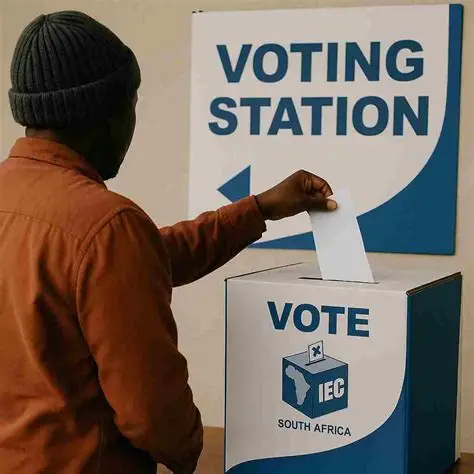
“South Africa’s 2026 elections ended the ANC’s majority rule, forcing the party into a coalition under a Government of National Unity led by the DA. This watershed moment signals a new era of negotiation, accountability, and citizen-centered governance.”
The 2026 South African general elections have ushered in a political transformation unseen since the dawn of democracy in 1994. The African National Congress (ANC), long the dominant force in national politics, has lost its majority, securing only a plurality of votes. The Democratic Alliance (DA), buoyed by urban middle-class support and disillusioned ANC voters, has stepped into a leadership role within a Government of National Unity (GNU). This coalition represents a fundamental reconfiguration of South Africa’s governance model, emphasizing negotiation, accountability, and citizen-centered politics.
Historical Context
Since Nelson Mandela’s presidency, the ANC enjoyed majority control, translating into near-total influence over state institutions, policymaking, and procurement. For three decades, the ANC set the national agenda with little need for compromise. However, years of corruption scandals, service delivery failures, and economic stagnation eroded public trust. By 2026, voter fatigue and frustration culminated in a dramatic electoral shift. The Independent Electoral Commission (IEC) confirmed that the ANC fell below the 50% threshold, securing only a plurality of votes.
Election Results
The DA emerged as the second-largest party but strategically positioned itself to lead the GNU. Smaller parties, including the Economic Freedom Fighters (EFF) and regional movements, now hold critical leverage in coalition negotiations. The GNU was formed to stabilize governance in a fragmented political environment. DA leader Geordin Hill-Lewis emphasized that the coalition is not merely tactical but a philosophical commitment to citizen-centered governance, declaring: “The state does not belong to the ANC, nor to any single party—it belongs to citizens.”
Implications for Governance
Coalition politics introduces new dynamics:
- Negotiation and compromise become essential in policymaking.
- Transparency and accountability are emphasized, with the DA pledging to publicly challenge ANC decisions that prioritize party interests.
- Resource distribution is subject to multi-party oversight, reducing risks of unilateral misuse.
This arrangement could strengthen democratic institutions by forcing parties to collaborate, but it also risks instability if coalition partners fail to align on key issues.
Challenges Ahead
While the GNU promises inclusivity, it faces significant challenges:
- Policy coherence: Divergent party ideologies may slow decision-making.
- Economic recovery: South Africa’s stagnant economy requires urgent reforms.
- Public trust: Citizens demand visible improvements in service delivery and anti-corruption measures.
The ANC must adapt to sharing power, a reality that challenges its historical dominance. The DA, meanwhile, must prove its governance capacity in a coalition setting.
Broader Political Impact
This election marks the end of ANC’s unilateral control and the beginning of a new era defined by negotiation, compromise, and citizen-centered governance. The GNU reframes governance from party-centered politics to citizen-centered politics, a generational shift that could redefine South Africa’s democratic trajectory.
📊 Key Takeaways
- ANC lost majority for the first time since 1994.
- DA leads Government of National Unity.
- Coalition politics introduces negotiation, transparency, and accountability.
- Risks include instability and policy incoherence.
- Potential exists for stronger democratic institutions.



