




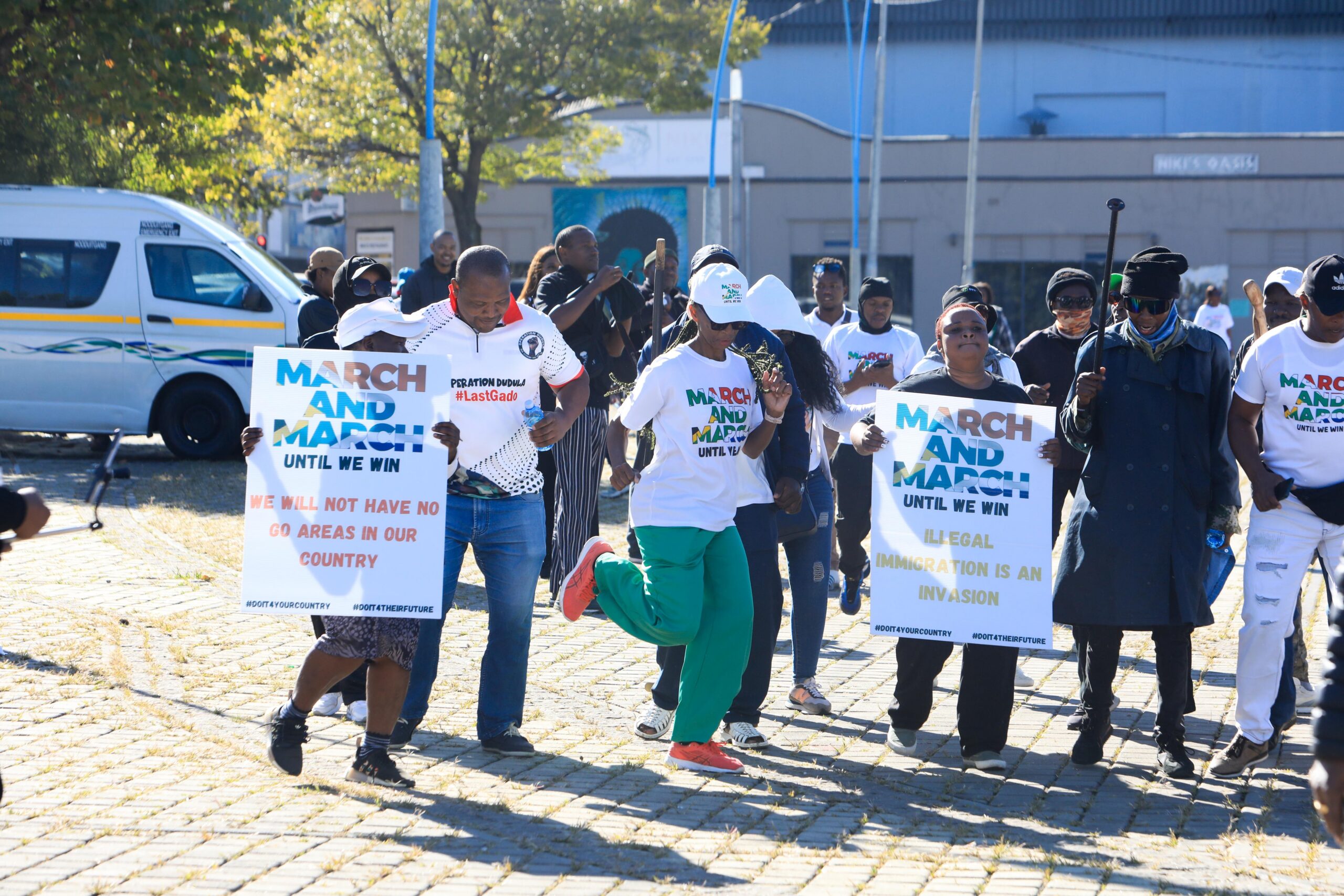
“South Africa’s anti-foreigner movement has intensified its confrontation with government ahead of the 4 November 2026 local government elections, with disputes over demonstrations, immigration enforcement and the deployment of soldiers in KwaZulu-Natal becoming prominent political issues. The developments have renewed national debate about constitutional protest rights, public safety, xenophobic mobilisation, political accountability and the protection of foreign nationals.”
Anti-Foreigner Activism Intensifies Political Confrontation Ahead of South Africa’s Local Elections
South Africa’s political environment has entered an increasingly tense period as anti-foreigner activism, government security interventions and electoral campaigning converge ahead of the country’s 4 November 2026 local government elections. A growing confrontation between immigration-focused protest movements and state authorities has placed questions about constitutional freedoms, public security and political accountability at the centre of national discussion.
A major development highlighted by Daily Maverick on 2 November is the increasing confrontation between the anti-foreigner movement and government institutions. The report examines how March and March, associated political figures and online networks have intensified their criticism of the state, while government officials have taken legal and security measures to manage demonstrations and protect public institutions.
The controversy illustrates how activism has become intertwined with electoral politics. Immigration, unemployment, crime, public services and the responsibility of government have emerged as important subjects in political campaigning. However, the mobilisation also raises concerns about the safety of foreign nationals and the potential consequences of inflammatory political rhetoric.
Immigration Protests Become a National Political Issue
March and March has been among the most visible movements associated with protests against undocumented immigration in South Africa. Its activities have attracted attention through demonstrations, public statements, social media campaigns and confrontations with government authorities.
Supporters of immigration-focused activism frequently argue that undocumented migration contributes to competition for employment, pressure on public services and difficulties confronting communities affected by poverty. These concerns have become particularly influential in areas experiencing unemployment, inadequate housing and strained municipal infrastructure.
Nevertheless, immigration-related grievances cannot automatically be attributed to foreign nationals collectively. South Africa’s economic and service-delivery challenges have multiple structural causes, including unemployment, infrastructure weaknesses, administrative problems and historical inequality.
The distinction between lawful political criticism and xenophobic mobilisation remains important. Citizens have a right to raise concerns about immigration administration, border management and public services. However, targeting people because of nationality, encouraging discrimination or participating in violence against foreign nationals undermines constitutional protections and social stability.
The current political debate therefore involves competing demands: communities want responsive government, movements seek public recognition, and authorities must protect the rights and safety of everyone within the country.
Government Intervention and the Legal Dispute over Demonstrations
Government intervention has become another major dimension of the activism story.
Authorities have sought to restrict certain demonstrations in Durban following concerns about potential violence, intimidation and disruption. The dispute involving acting Police Minister Firoz Cachalia and March and March has resulted in court proceedings concerning the conditions under which the movement may demonstrate.
According to Associated Press reporting published on 30 October, the KwaZulu-Natal High Court permitted anti-illegal immigration groups to march in Durban subject to strict conditions. These included designated routes, restrictions on carrying sticks or concealing faces, and limits on demonstration times.
The legal developments demonstrate that South Africa’s constitutional framework protects peaceful assembly while allowing reasonable restrictions where necessary to protect public safety and the rights of others.
The government has maintained that its interventions are intended to prevent unlawful conduct rather than eliminate legitimate protest.
However, protest organisers have argued that restrictions interfere with their ability to communicate grievances and mobilise supporters. This disagreement has become a political issue in its own right, with activists portraying government intervention as an attempt to silence public dissatisfaction.
The challenge for authorities is to demonstrate that restrictions are lawful, proportionate and consistently applied.
Security Forces Prepare for Election-Related Tensions
Security concerns have increased as the country approaches voting day.
The National Joint Operational and Intelligence Structure has warned that demonstrations and marches must conclude before election day. Lieutenant-General Tebello Mosikili stated that protests would not be permitted on Wednesday, 4 November, and warned that unlawful demonstrations or attempts to obstruct voting could trigger law-enforcement action.
Authorities have identified several potential risks, including political tensions, service-delivery protests, labour disputes and anti-foreigner sentiment.
These concerns are particularly significant in KwaZulu-Natal, where immigration-related demonstrations and violence have generated considerable attention.
President Cyril Ramaphosa previously authorised the deployment of 510 soldiers to support police operations in the province. The deployment was intended to assist authorities in managing unrest and maintaining public order.
The military deployment has itself become controversial. Critics have questioned the expense and effectiveness of using soldiers in domestic security operations, while supporters argue that additional personnel may help police respond to serious threats.
The central question remains whether security interventions can protect communities without unnecessarily restricting legitimate political participation.
Political Activism and the Battle for Public Attention
The confrontation has also become a struggle over political narratives.
Daily Maverick’s analysis of online political conversations between 23 and 29 October identified a substantial increase in activity associated with anti-foreigner political communities. The report described how criticism of government, immigration debates and allegations concerning public expenditure featured prominently in online discussions.
It also examined how political influencers, public personalities and organised accounts contributed to the circulation of political messages. The publication cautioned that patterns of amplification do not, by themselves, establish whether activity is coordinated artificially or represents genuine political engagement.
This distinction is important because digital activism can serve both democratic participation and political manipulation.
Online platforms allow activists to communicate rapidly, organise demonstrations and share information that might otherwise receive limited attention. They can also enable misinformation, harassment and the circulation of unverified allegations.
For political movements, social media has become a powerful tool for establishing narratives before traditional institutions respond. For journalists and researchers, this creates an additional responsibility to verify claims and distinguish authentic public sentiment from misleading or manipulated information.
Electoral Politics and the Growing Importance of Activism
The timing of these developments is particularly significant because South Africa is approaching local government elections.
Municipal elections directly affect the everyday experiences of citizens. Local councils are responsible for important functions involving water, sanitation, electricity distribution, housing administration and municipal infrastructure.
Consequently, dissatisfaction with municipal performance frequently becomes a catalyst for community activism.
Reuters reported on 2 November that water shortages, unemployment, crime and housing affordability were among the major issues shaping voters’ concerns ahead of the elections.
These conditions help explain why protest movements can attract attention during electoral campaigns.
Activists often argue that political parties become more responsive when communities organise collectively. Demonstrations, petitions and public campaigns can force politicians to address issues that might otherwise receive insufficient attention.
However, the effectiveness of activism depends partly on whether demands are clearly articulated and whether movements remain accountable to the communities they claim to represent.
Campaigns that rely primarily on confrontation may generate visibility without necessarily achieving lasting policy changes.
Constitutional Rights and the Protection of Vulnerable Communities
South Africa’s Constitution protects peaceful assembly, freedom of expression and political participation.
These rights are essential for democratic accountability. Citizens must be able to challenge government decisions, demand better services and express dissatisfaction without fear of arbitrary punishment.
At the same time, constitutional protections apply to everyone within the country, including foreign nationals.
Foreign nationals cannot lawfully be subjected to violence, intimidation or collective punishment because of their nationality or immigration status.
The recent controversy therefore raises an important constitutional question: how can South Africa protect the right to protest while ensuring that demonstrations do not threaten the safety, dignity or rights of others?
Authorities must protect peaceful protesters, prevent violence and investigate credible allegations of criminal conduct. Protest organisers also have responsibilities to communicate lawful demands, discourage intimidation and respect the rights of affected communities.
A democratic society cannot resolve disagreements over immigration, unemployment or public services through violence.
Community Grievances and the Need for Government Accountability
The broader activism debate cannot be separated from the difficulties experienced by many South African communities.
Unemployment, inadequate infrastructure, housing shortages and unreliable municipal services continue to generate frustration.
These challenges are not exclusively immigration-related. They involve economic policy, municipal administration, public investment, employment opportunities and the effectiveness of government institutions.
Political leaders therefore face pressure to provide evidence-based explanations for policy decisions and demonstrate measurable improvements in public services.
Activism can contribute constructively by identifying local problems, documenting administrative failures and demanding transparent responses.
Community organisations can also help monitor government commitments and ensure that public consultations include residents who are frequently excluded from decision-making.
Such engagement may be more sustainable than campaigns that focus exclusively on identifying groups of people as responsible for complex social problems.
The Importance of Responsible Journalism
Media coverage remains essential to understanding the current developments.
Accurate reporting must distinguish between the claims made by activists, statements issued by government officials and independently verified facts.
It should also explain the historical and economic circumstances surrounding immigration debates, rather than presenting allegations about foreign nationals as established evidence.
The consequences of public mobilisation deserve equal attention. Journalists should examine whether demonstrations affect businesses, transport systems, vulnerable residents or public institutions, while also investigating the grievances that motivate participation.
The role of journalism is not to dismiss activism or automatically endorse it. Instead, responsible reporting provides the evidence, context and competing perspectives needed for informed public debate.
Conclusion: Activism Remains Central to South Africa’s Democracy
South Africa’s escalating confrontation over anti-foreigner activism demonstrates the continuing influence of collective mobilisation on national politics.
The approaching local elections have intensified public attention on immigration, government accountability, public safety and constitutional freedoms. At the same time, legal disputes over demonstrations and the deployment of security forces have highlighted the difficult balance between protecting peaceful protest and preventing unlawful conduct.
The developments also expose deeper questions concerning unemployment, public services and political representation.
Ultimately, activism remains an important democratic instrument when it enables communities to express grievances, demand accountability and participate meaningfully in public life.
Its lasting contribution will depend on whether political mobilisation strengthens constitutional democracy, encourages constructive engagement and protects the dignity and rights of all communities.
South Africa’s challenge is therefore not simply to manage demonstrations. It is to address the underlying problems that generate public dissatisfaction while ensuring that democratic freedoms remain protected.



