




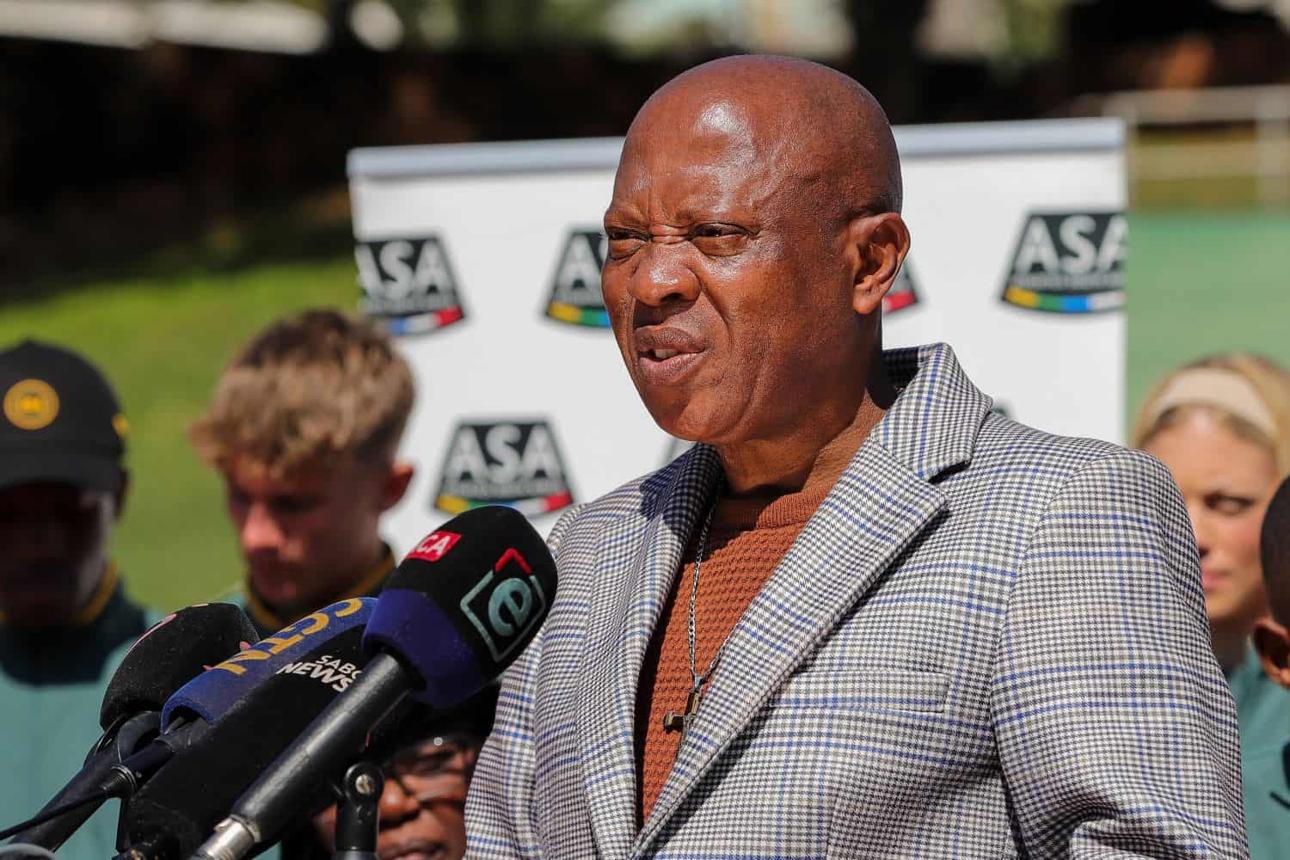
“World Athletics has instructed Athletics South Africa to remove suspended president James Moloi in accordance with an independent disciplinary panel’s findings and to adopt a substantially revised constitution within six months, followed by fresh elections. The intervention has raised concerns about governance, financial accountability and the potential consequences for South African athletes if the federation fails to meet the international body’s requirements.”
Athletics South Africa Faces Six-Month Reform Deadline as World Athletics Warns of Possible Sanctions
South African athletics is confronting a significant governance challenge after World Athletics instructed Athletics South Africa (ASA) to address leadership and constitutional concerns within a defined period or risk international sanctions. The intervention has placed the national federation under increased scrutiny, raising questions about accountability, institutional stability and the protection of athletes’ competitive opportunities.
The developments come at a time when South Africa continues to produce internationally competitive sprinters, middle-distance runners and long-distance athletes. However, the administrative problems facing the federation threaten to overshadow those achievements, making governance reform an urgent priority for the country’s athletics community.
According to reporting published by Business Day on 20 October 2026, World Athletics expects ASA to implement the findings of an independent disciplinary panel concerning suspended president James Moloi. The international governing body has also demanded a comprehensive revision of the federation’s constitution within six months. Fresh elections are expected to follow under the revised constitutional arrangements.
Leadership changes and disciplinary findings
The controversy surrounding ASA’s leadership centres on Moloi, who was suspended in October 2025 following concerns about the use of the federation’s corporate credit card and financial controls. The matter subsequently proceeded through disciplinary and governance processes involving national and international athletics authorities.
An independent disciplinary panel chaired by retired judge Basheer Waglay reportedly found Moloi guilty of two charges relating to the misuse of ASA funds. Its findings, dated 6 October 2026, recommended his removal as president and as a member of the federation’s executive board.
World Athletics subsequently instructed ASA to implement the panel’s decision without delay. Reports published on 21 October indicated that the federation’s board had resolved to give effect to the recommended removal and had communicated the decision to its council members.
The allegations and disciplinary findings have placed financial accountability at the centre of the debate over athletics administration in South Africa. According to Sunday World’s reporting, a forensic investigation examined nearly 400 corporate-card transactions between May 2023 and April 2024 and identified more than R300,000 in unauthorised or personal expenditure.
The case highlights the importance of clear financial procedures, accurate recordkeeping, appropriate expenditure limits and independent oversight in organisations entrusted with public confidence and sporting responsibilities.
Nevertheless, the leadership dispute is only one part of the wider problem. World Athletics has indicated that ASA’s difficulties extend beyond an individual officeholder and reflect structural weaknesses in the federation’s governance arrangements.
Why constitutional reform has become essential
World Athletics’ intervention follows a fact-finding mission led by Zakhele Dlamini, president of the Southern African Confederation of Athletics and a vice-president of the Confederation of African Athletics. The mission examined the federation’s governance and functioning and identified concerns involving executive divisions, decision-making authority, overlapping responsibilities and conflicts of interest.
These concerns matter because a national sporting federation must operate according to clear rules that establish who can make decisions, how those decisions are approved and which independent mechanisms exist to investigate alleged misconduct.
A constitution provides the framework for these responsibilities. When its provisions are unclear or insufficiently enforced, disagreements over authority can weaken an organisation’s ability to manage competitions, administer finances and represent athletes effectively.
World Athletics has therefore called for a comprehensive constitutional revision rather than a limited amendment addressing only the immediate leadership dispute.
Among the principles highlighted by the international governing body are the authority of ASA’s council as the federation’s supreme decision-making body, clearly defined voting rights and appropriate separation between governance, oversight and day-to-day administration.
The proposed reforms also address conflicts arising when individuals occupy overlapping national and provincial positions. Such arrangements require safeguards to prevent multiple representation or voting rights from undermining fair decision-making.
Furthermore, World Athletics has called for sufficiently independent electoral, disciplinary and financial oversight mechanisms, alongside appropriate provisions covering term limits, gender balance, athlete representation and transparency.
These measures are intended to strengthen institutional accountability and ensure that the federation operates for the benefit of athletics as a whole rather than the interests of individual officeholders.
The six-month deadline and possible international consequences
The timetable established by World Athletics gives ASA a defined period in which to demonstrate that it can implement the required changes.
According to Business Day’s report, the federation must provide World Athletics and the Confederation of African Athletics with a detailed timetable for constitutional revision within one month of the relevant letter. The revised constitution must then be formally adopted within six months, with the international bodies reviewing the proposed provisions before adoption.
Fresh elections are expected within a further three months after the new constitution is adopted. Dlamini has been appointed as an independent observer for the constitutional reform and election process.
The consequences of failing to comply could be substantial. World Athletics has warned that failure to adopt a satisfactory constitution within the prescribed period, or deliberate obstruction of the agreed process, could result in the matter being referred to its council for consideration of sanctions under Article 13 of its constitution.
A possible suspension is particularly serious because national federations rely on recognition by international governing bodies to participate fully in the global sporting system.
However, the threat of sanctions should not be confused with confirmation that a suspension has already occurred. The reported position is that ASA has been given a reform deadline and warned about the potential consequences of non-compliance.
The immediate challenge is therefore to complete the necessary reforms while preserving the stability of competitions and the administrative systems that support athletes.
Political oversight and the role of government
The dispute has also attracted attention from South Africa’s political leadership.
Sport, Arts and Culture Minister Gayton McKenzie disclosed that he had urged World Athletics to take a firm position on the federation’s governance difficulties. According to reporting by Briefly.co.za on 22 October, McKenzie supported the international body’s reform process while arguing against unilateral government intervention that might expose South African athletics to further complications.
The situation illustrates the difficult relationship between government oversight and the independence of sporting federations.
Public authorities have a legitimate interest in accountability where public resources support sporting programmes. At the same time, international sports organisations generally require their member federations to operate within recognised governance frameworks and their own constitutions.
A sustainable solution must therefore balance lawful oversight, financial transparency and the independence of sports administration.
Government support could help facilitate cooperation between national and provincial structures, improve monitoring of public funding and encourage the timely implementation of agreed reforms. Nevertheless, the federation itself must establish credible systems capable of operating consistently beyond the immediate controversy.
What the crisis means for South African athletes
The most important consideration is the potential effect on athletes who have little or no control over decisions made by federation officials.
South Africa has established itself as a competitive force in international athletics, with sprinting, relay events, middle-distance running and road racing producing notable performances. Athletes such as Akani Simbine, Bayanda Walaza, Sinesipho Dambile and Prudence Sekgodiso have helped maintain international interest in the country’s athletics programme.
Recent reporting has also highlighted Tayla Kavanagh’s record-breaking performances in long-distance road running, demonstrating the breadth of South African talent.
These achievements depend on more than individual ability. Athletes need properly administered national championships, reliable selection procedures, access to international competition and clear communication from their governing federation.
Coaches, clubs, provincial associations, medical teams and support personnel also depend on functioning administrative structures to plan training programmes and competition schedules.
If international sanctions were imposed, participation and recognition within the international athletics system could be affected, depending on the scope of the measures adopted. This could create uncertainty around international entries, national representation and the recognition of performances.
It is important, however, not to treat every potential consequence as an existing restriction. The reports reviewed do not establish that South African athletes have already been barred from international competition because of this dispute.
The immediate priority should be to ensure that athletes receive accurate information, that scheduled events continue where possible and that administrative disagreements do not unnecessarily disrupt preparation.
Restoring trust through transparency
For ASA, the reform process represents an opportunity to rebuild confidence among athletes, clubs, officials, sponsors and the public.
A credible financial governance system should require documented expenditure, appropriate authorisation, timely reconciliation of accounts and independent auditing. Clear disciplinary procedures should also establish how complaints are received, investigated and resolved without improper interference.
Electoral reform is equally important. Members should understand who is eligible to vote, how candidates qualify for office and how disputes are handled. Transparent procedures can reduce uncertainty and strengthen confidence that leadership decisions reflect the legitimate interests of the federation’s membership.
Athlete representation must also be meaningful. Competitive athletes understand the practical consequences of administrative decisions involving selection, scheduling, funding and access to facilities. Giving them an appropriate voice can help ensure that governance reforms address the needs of the people the federation exists to serve.
In addition, gender balance and independent oversight should be treated as important elements of institutional resilience rather than simply formal constitutional requirements.
These changes will only be effective if they are implemented consistently. A revised constitution cannot by itself guarantee good governance unless its rules are supported by effective monitoring, responsible leadership and consequences for misconduct.
The road ahead
As the deadline approaches, ASA will need to demonstrate measurable progress in constitutional reform, consultation and election planning. Cooperation with World Athletics, the Confederation of African Athletics and the appointed independent observer will be essential to ensuring that the process remains credible.
The federation must also communicate clearly with its members. Regular updates on milestones, proposed constitutional changes and election arrangements could help prevent further uncertainty and allow stakeholders to contribute constructively.
Ultimately, the objective should extend beyond resolving the immediate leadership dispute. South African athletics needs governance structures that protect financial resources, promote fair representation, support effective administration and place athletes’ interests at the centre of decision-making.
The coming months will test whether the federation can translate international pressure into lasting institutional improvement. Successful reform could strengthen accountability and create a more stable environment for future generations of runners.
Failure, by contrast, could prolong uncertainty and increase the risk of international sanctions that would place additional pressure on athletes and the wider athletics community.
For now, the central message is clear: South Africa’s athletic talent must be matched by responsible administration. The country’s achievements on the track deserve a federation whose leadership, financial controls and constitutional arrangements inspire confidence. The success of the reform process will ultimately be measured not only by compliance with an international deadline, but by whether athletes can continue pursuing excellence within a stable, transparent and accountable sporting system.



