




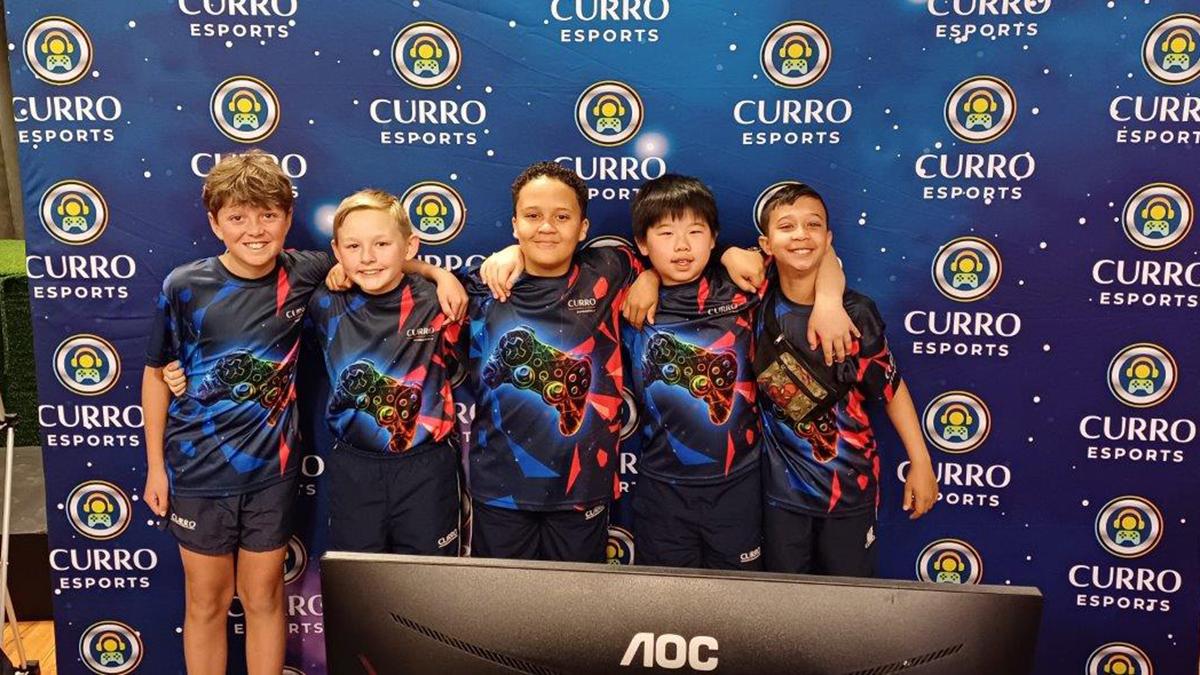
“South African school esports is gaining recognition as young competitors, including Seth Solomons and Curro Durbanville High School’s CDV Wolves Prime Rocket League team, demonstrate the commitment, teamwork and competitive ability required to succeed in gaming. Their achievements highlight the potential of organised esports to create opportunities for young people while encouraging schools, sponsors and communities to take competitive gaming seriously as a developing sporting discipline.”
South African School Esports Gains Momentum as Rocket League Champions Inspire a New Generation
A new generation of competitive athletes
South Africa’s esports industry is continuing to develop as schools, students and gaming organisations create new opportunities for young people to compete in organised digital sports. The growing popularity of competitive gaming is challenging traditional ideas about athletic achievement, demonstrating that discipline, strategy, communication and teamwork can also thrive in digital arenas.
One of the latest examples comes from Curro Durbanville High School in Cape Town, where the CDV Wolves Prime Rocket League team has established itself as a leading force in school esports. According to Eyewitness News, the three-player squad won consecutive championships in 2025 and 2026, highlighting the competitive standards being achieved by South African school gamers.
The team’s success is particularly significant because it demonstrates how organised esports can provide young people with opportunities to develop their abilities, represent their schools and pursue ambitions beyond recreational gaming. For students who are passionate about video games, structured competitions can transform a personal interest into a demanding sporting commitment.
Among the players attracting attention is Seth Solomons, who competes in Rocket League. The game combines football-inspired objectives with vehicles capable of accelerating, jumping and performing aerial manoeuvres. Players must coordinate their movements, anticipate opponents’ decisions and execute strategies under considerable pressure.
Solomons told Eyewitness News that he had been gaming for six years and had invested approximately 1,000 hours in preparation for competition. His commitment illustrates the amount of practice that can underpin success in modern esports.
Competitive gaming requires discipline and preparation
The achievements of the CDV Wolves Prime demonstrate why esports should not automatically be dismissed as casual entertainment. Competitive players must develop technical ability, learn complex game mechanics, study opponents and make rapid decisions while communicating effectively with teammates.
In Rocket League, a match can change within seconds. Players must judge distances, control momentum, manage defensive positions and recognise when to attack. An individual mistake can create an immediate scoring opportunity for an opponent, making concentration and teamwork essential.
Preparation also involves reviewing performances and identifying weaknesses. Successful teams need to understand how their strategies work against different opponents and adapt when an initial approach fails.
These requirements make competitive gaming a useful environment for developing transferable skills. Players may strengthen their problem-solving abilities, digital literacy, strategic thinking and communication skills while learning how to respond to pressure.
Nevertheless, the benefits depend on maintaining healthy routines. Young competitors need adequate sleep, physical activity, education and appropriate limits on screen time. Schools and families can help players balance their ambitions with their wider responsibilities.
The experience of the CDV Wolves Prime offers an example of how gaming can become a structured team activity when supported by coaching, practice and an organised competitive environment.
Schools are becoming important esports development centres
Schools have an important role to play in expanding access to competitive gaming. They provide communities where students can discover their interests, participate in organised activities and receive guidance from teachers, coaches and fellow learners.
Curro Durbanville’s experience illustrates how school esports can create a pathway for talented players. Rather than competing entirely as individuals, students can represent their institutions and work towards shared goals.
According to the Eyewitness News report, esports manager Tanya Neethling helped guide the CDV Wolves’ journey to consecutive titles. She also highlighted a continuing challenge: some members of the public do not yet recognise esports as a legitimate sporting activity.
Changing that perception will require more than individual victories. Schools need transparent competition rules, consistent training programmes, appropriate supervision and clear standards for participation. Organised tournaments can then demonstrate that competitive gaming involves measurable performance, preparation and accountability.
Schools can also use esports to introduce students to opportunities beyond professional playing. Tournament organisation, broadcasting, video editing, graphic design, commentary, marketing and software development are all relevant areas of the wider gaming economy.
As a result, esports programmes may serve both sporting and educational purposes. They can help students explore digital careers while giving passionate gamers a positive environment in which to develop their abilities.
Corporate investment can strengthen grassroots development
Commercial partnerships are another important factor in the growth of South African esports. Sponsors can provide tournament infrastructure, equipment, competition platforms and opportunities for players to gain experience.
Eyewitness News highlighted the contribution of Telkom’s gaming activities to the broader development of competitive gaming. Johann von Backstrom, the company’s senior manager for content and gaming, emphasised the importance of grassroots development in strengthening the talent pipeline for larger teams.
This approach recognises that professional esports cannot depend solely on established competitors. New talent needs opportunities to practise, participate in tournaments and progress through increasingly demanding levels of competition.
Investment in school and community programmes can help establish that foundation. Regional qualifiers, coaching sessions and inter-school leagues allow emerging players to test their abilities before potentially progressing to university or professional competitions.
However, sustainable investment requires more than promotional events. Programmes must be accessible, regularly organised and supported by appropriate equipment and reliable internet connectivity.
Sponsors can also help address financial barriers by supporting travel, providing shared gaming facilities and ensuring that students from less-resourced communities have opportunities to participate.
For companies, these initiatives offer a way to connect with younger audiences while contributing to digital skills development. For esports organisers, they can create partnerships that make competitions more sustainable.
Accessibility and inclusion remain central opportunities
Esports can offer participation opportunities to people who face barriers in some traditional sporting environments. Online competition, adaptive technologies and different game formats can allow a wider range of participants to engage with competitive activities.
The Eyewitness News report highlighted the potential for esports to create inclusive opportunities for women, children and people with disabilities. It also discussed the growing participation of female gamers and the accessibility of mobile gaming across the continent.
For South African schools, this potential creates an opportunity to build welcoming teams and encourage students with different backgrounds and abilities to participate.
However, accessibility should not be assumed simply because a competition takes place online. Gaming equipment can be expensive, internet access may be unreliable and some players may require adapted controllers or other assistive technologies.
Schools and sponsors can help by providing shared facilities, supporting accessible equipment and establishing clear policies against harassment and discrimination.
Female players also need opportunities to compete, receive coaching and progress into leadership roles. Inclusion is strongest when it is reflected in the everyday structure of competitions rather than treated as a promotional message.
By addressing these practical barriers, South African esports organisations can broaden their talent pool and build stronger communities around competitive gaming.
South Africa’s wider esports ecosystem
The development of school competitions forms part of a broader South African esports landscape that includes universities, independent tournament organisers, commercial gaming events and national representation.
University competitions provide another potential progression route for students who want to continue competing after leaving school. The Varsity Esports competition, for example, has featured EA Sports FC, Rocket League and Valorant, connecting university teams with a more formal competitive structure.
Meanwhile, national events demonstrate the potential of large-scale gaming tournaments to attract players and spectators. Hyprop’s SHIFT Gaming Experience concluded its national finals at Canal Walk in October 2026, with champions crowned in Beat Saber, EA Sports FC 26 and Brawlhalla. Its organisers reported more than 42,000 competitors and visitors across eight shopping centres.
These developments illustrate the variety of environments in which South African esports can grow. School programmes can introduce new participants, universities can provide further competition, and commercial tournaments can offer wider exposure.
The next challenge is to connect these environments more effectively. Clear progression pathways, consistent competition calendars and collaboration between schools, universities and tournament organisers could help emerging players identify their next steps.
Not every participant will become a professional competitor, nor should that be the only measure of success. A healthy ecosystem also creates opportunities for recreational competition, technical training, content production and careers supporting the industry.
The challenges facing young competitors
Despite its opportunities, esports development faces several challenges. Access to suitable computers or consoles, high-speed internet and reliable competition facilities remains uneven.
Financial support is another concern. Travel, equipment upgrades, coaching and entry fees can become expensive, particularly for families supporting young competitors.
There is also a need to balance competition with education and wellbeing. The substantial practice commitment described by Solomons demonstrates the dedication required to compete successfully, but young players must avoid allowing training to undermine schoolwork, sleep or physical health.
Schools and organisers can respond by establishing reasonable training schedules, safeguarding procedures and transparent rules. Parents should understand competition commitments, while coaches should encourage healthy habits and respectful behaviour.
Career expectations also require careful management. Professional esports can be competitive and unpredictable, and only a limited number of players earn sustainable incomes from competition alone. Students should therefore be encouraged to pursue education and develop transferable skills alongside their gaming ambitions.
Addressing these challenges will help ensure that esports programmes create lasting value for young people rather than focusing exclusively on tournament results.
The road ahead for South African school esports
The success of Curro Durbanville’s CDV Wolves Prime offers an encouraging example of what structured school esports can achieve. Consecutive Rocket League championships provide evidence of the team’s competitive strength, while the experiences of players such as Solomons illustrate the commitment behind those results.
The broader opportunity lies in building systems that allow more students to participate. Schools, sponsors, esports organisations and communities can work together to improve access, strengthen coaching and create reliable competition pathways.
South Africa also has an opportunity to develop the professional skills that support gaming beyond the players themselves. Broadcasting, event management, software, digital marketing and creative production can all contribute to a stronger domestic industry.
For the next generation, the message is clear: esports can be more than a hobby when it is approached with discipline, balance and a commitment to learning.
The CDV Wolves Prime have demonstrated that young South African gamers can achieve notable success in organised competition. Their example may encourage other schools to explore esports and give more students an opportunity to discover their potential.
As competitive gaming continues to evolve, the lasting measure of progress will be whether South Africa can turn isolated successes into accessible, inclusive and sustainable opportunities for young people across the country.



