




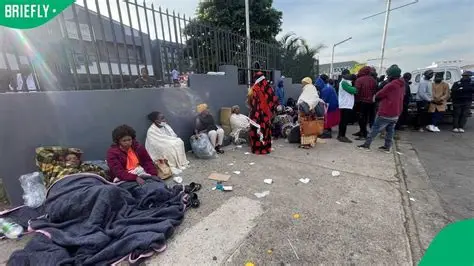
“Although officials hailed the 30 June 2026 anti-migrant protests as orderly, closer examination reveals widespread violence, intimidation, and forced displacement of thousands of migrants. The activism surrounding these protests has sparked a national reckoning on xenophobia, human rights, and the role of civil society in shaping South Africa’s political discourse.”
On 30 June 2026, South Africa witnessed one of its most significant waves of anti-migrant activism in recent years. While the National Joint Operational and Intelligence Structure (NatJoints) declared the protests “peaceful,” the lived experiences of migrants tell a starkly different story. Violence, intimidation, and displacement defined the protests, raising urgent questions about the nature of activism, the boundaries of political expression, and the fragility of social cohesion in a country still grappling with inequality and unemployment.
Roots of the Movement
The protests were spearheaded by the March and March movement, which issued an ultimatum in May 2026 demanding that all undocumented migrants leave South Africa by 30 June. This ultimatum, though legally baseless, carried weight due to threats of violence. Activists framed their campaign as a defense of South African jobs and communities, but critics argue it was a thinly veiled xenophobic mobilization.
Escalation of Violence
In the weeks leading up to the protests, vigilante groups raided migrant-owned businesses, demanded identity documents, and ordered foreign nationals to vacate communities. Employers dismissed foreign workers to avoid becoming targets, while landlords evicted tenants under activist pressure. By late June, at least four migrants had been killed, and thousands sought refuge in churches, embassies, and temporary shelters.
The Day of Protest
On 30 June, protesters gathered across Gauteng, KwaZulu-Natal, and other provinces. While police maintained order in public spaces, violence simmered beneath the surface. Migrants reported harassment, property destruction, and threats. The protests were not isolated incidents but part of a broader campaign of intimidation that had already destabilized communities.
Humanitarian Fallout
Thousands of displaced migrants were forced to sleep outdoors in winter conditions. Families who had lived in South Africa for years fled homes, abandoning livelihoods. Civil society organizations scrambled to provide food, shelter, and medical care, but resources were stretched thin. The humanitarian crisis highlighted the vulnerability of migrants and the inadequacy of state protection.
Activism and Counter-Activism
The protests sparked counter-activism from human rights groups, churches, and NGOs. Organizations condemned the violence and called for stronger state intervention. The Nelson Mandela Foundation and Desmond Tutu Foundation issued statements rejecting xenophobia and warning against misusing liberation struggle legacies to justify exclusionary activism.
Political Implications
The anti-migrant activism intersects with South Africa’s broader political landscape. With local elections scheduled for November 2026, activists are leveraging xenophobic sentiment to mobilize support. Social media campaigns, often featuring vigilante-style videos and AI-generated content, amplify the movement’s reach. Some leaders even invoke Nelson Mandela’s name to legitimize their cause, a move widely criticized as historical distortion.
Economic Realities
Ironically, research by the Institute for Security Studies (ISS) and the University of Johannesburg shows that immigrants contribute 9% to South Africa’s GDP, despite comprising only 6.5% of the population. This evidence challenges the narrative that migrants are responsible for economic decline, highlighting instead their role in sustaining industries and communities.
Conclusion
The 30 June protests reveal the dual nature of activism in South Africa: a powerful tool for mobilization but also a dangerous weapon when rooted in exclusion and violence. As the country approaches elections, the challenge lies in distinguishing legitimate political activism from xenophobic campaigns that undermine democracy and human rights. The events of June 2026 will likely shape South Africa’s political discourse for years to come, forcing citizens, leaders, and activists alike to confront the uncomfortable truths about identity, belonging, and justice.



