




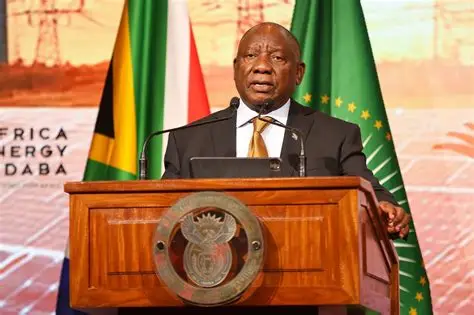
“Presidency and Business Leadership South Africa (BLSA) have launched Phase 3 of their joint partnership, focusing on reforms to unlock growth potential and job creation. The plan sets ambitious targets of 3% annual GDP growth and one million new jobs by 2030, backed by private-sector collaboration and institutional strengthening.”
South Africa has entered a pivotal stage in its economic recovery and transformation journey. On August 20, 2026, President Cyril Ramaphosa and Business Leadership South Africa (BLSA) announced the Growth Plan 2030, a comprehensive framework designed to propel the country toward sustainable development. This initiative, representing Phase 3 of the Government-Business Partnership, is a bold attempt to shift the national focus from crisis management to proactive growth strategies.
Background: From Crisis to Stability
The partnership was first established in 2023, at a time when South Africa faced severe structural challenges:
- Electricity shortages crippled industries and households.
- Logistics inefficiencies undermined trade competitiveness.
- Fiscal instability eroded investor confidence.
Phase 1 and Phase 2 of the partnership concentrated on stabilizing these critical sectors. Achievements included:
- Over 400 consecutive days without loadshedding, thanks to reforms in the energy sector.
- Freight rail corridors opened to private operators, improving efficiency.
- Removal from the FATF grey list, restoring credibility in global financial markets.
- Improved credit ratings following fiscal reforms.
These successes laid the foundation for the current growth-oriented agenda.
The Growth Plan 2030: Key Objectives
The new plan sets ambitious targets:
- Lift GDP growth above 3% annually.
- Create one million jobs by 2030.
- Strengthen institutional capacity within the state.
- Unlock productivity through reforms in energy, logistics, and governance.
President Ramaphosa emphasized that the partnership has moved beyond “fixing what’s broken” to “unlocking potential.” This marks a significant shift in South Africa’s economic policy narrative.
Role of Business Leadership South Africa (BLSA)
BLSA CEO Busi Mavuso highlighted the importance of private-sector involvement. More than 30 CEOs pledged resources and expertise to support the plan. Mavuso noted that the renewal marks a “change in emphasis”—from repairing broken systems to driving growth.
Implications for Business Policy
The Growth Plan 2030 carries profound implications:
- Policy Stability: Predictable reforms enhance business confidence.
- Job Creation: Investment in manufacturing, services, and technology will be critical.
- Global Competitiveness: Improved infrastructure and governance make South Africa more attractive to investors.
Challenges Ahead
Despite optimism, challenges remain:
- Persistent inequality threatens inclusive growth.
- Global economic volatility could undermine progress.
- Institutional weaknesses in governance may slow implementation.
Expert Analysis
Economists argue that achieving 3% growth will require:
- Deep structural reforms in energy and logistics.
- Enhanced public-private collaboration.
- Investment in skills development to match job creation targets.
Conclusion
The Growth Plan 2030 represents a turning point in South Africa’s economic trajectory. By combining government leadership with private-sector expertise, the country aims to transition from crisis response to proactive growth. If successful, this initiative could redefine South Africa’s role in the global economy and deliver tangible benefits to millions of citizens.



