




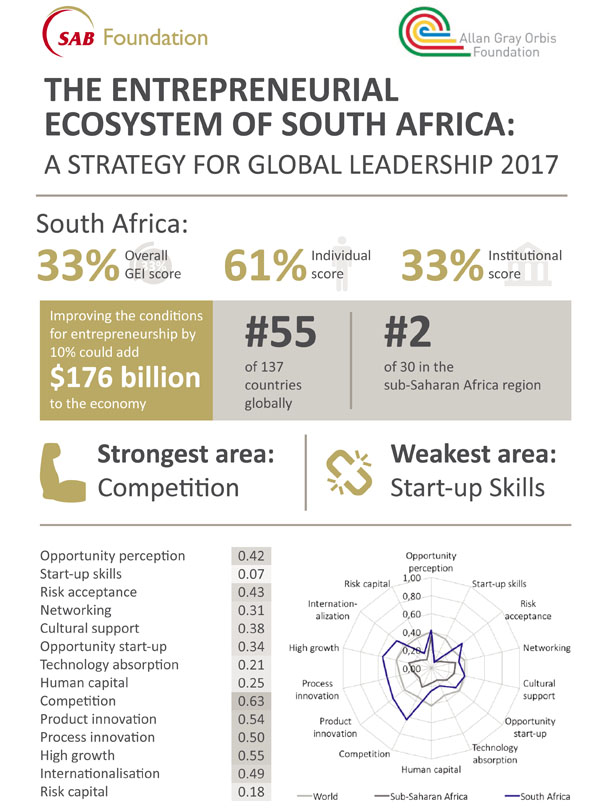
“The State of the SMME 2026 Report, published by Shoprite Group and World Wide Worx, shows that while 42% of small businesses describe themselves as growing and 85% expect moderate to high growth, most remain unable to scale beyond micro-level operations. Access to markets, reliable customers, and funding remain the biggest barriers to sustainable expansion.”
South Africa’s entrepreneurial ecosystem continues to demonstrate resilience in the face of economic headwinds. The newly released State of the SMME 2026 Report provides a comprehensive snapshot of the small, medium, and micro enterprise (SMME) sector, highlighting both encouraging growth signals and persistent structural challenges. Conducted by World Wide Worx and commissioned by the Shoprite Group, the survey of 800 businesses underscores the paradox of South African entrepreneurship: survival and profitability are evident, yet scaling remains elusive.
Key Findings
- Longevity of Businesses: Nearly one-third (32.1%) of surveyed businesses have operated for more than two decades, proving resilience.
- Micro-Dominance: The majority (39.1%) employ just 1–5 people, showing the sector’s reliance on micro-enterprises.
- Profitability: Over half (53.6%) reported net profit after tax above 10%, a strong indicator of financial health.
- Growth Expectations: 85% anticipate moderate to high growth in the coming year, reflecting optimism despite challenges.
The Scaling Challenge
Despite profitability and longevity, most SMMEs fail to transition into larger employers. This stagnation is attributed to:
- Limited Market Access: 56.9% cite access to customers as their biggest growth constraint.
- Funding Gaps: 70.8% believe improved access to funding would boost competitiveness, yet 90.9% rely on personal resources.
- Corporate Procurement Barriers: 78.1% of respondents emphasize the importance of regular orders from large corporations, but few secure them consistently.
Expert Commentary
Arthur Goldstuck, CEO of World Wide Worx, stresses that “market access, appropriate finance, and practical business support need to work together if we want to help more SMMEs scale.” Similarly, Shoprite’s Maude Modise highlights the resilience of small businesses but warns that without structural support, their economic impact will remain limited.
Sectoral Implications
- Retail & Supply Chains: Large corporations hold the key to unlocking growth by integrating SMMEs into procurement pipelines.
- Digital Transformation: 29.7% of respondents identify digital tools as critical for expansion, signaling opportunities in e-commerce and fintech.
- Policy & Regulation: Government initiatives must focus on reducing compliance burdens and improving access to finance.
Case Studies
- A 25-Year-Old Textile Business: Profitable but unable to expand due to lack of consistent corporate orders.
- A Tech Startup in Johannesburg: Growing rapidly but constrained by limited venture capital availability.
- A Rural Agribusiness Cooperative: Demonstrates resilience but struggles with logistics and market penetration.
Opportunities for Entrepreneurs
- Partnerships with Corporates: Entrepreneurs should actively pursue supplier development programs.
- Leveraging Digital Platforms: E-commerce marketplaces can help bypass traditional barriers to market access.
- Alternative Financing Models: Crowdfunding, angel investment, and fintech lending platforms offer new avenues for capital.
Risks and Challenges
- Over-Reliance on Self-Funding: Limits growth potential and increases vulnerability.
- Infrastructure Deficits: Energy and logistics challenges (Eskom, Transnet) continue to hinder expansion.
- Regulatory Complexity: Compliance costs remain high, particularly for startups.
Conclusion
The State of the SMME 2026 Report paints a nuanced picture: South African entrepreneurs are resilient, profitable, and optimistic, yet systemic barriers prevent them from scaling. Unlocking market access, improving funding mechanisms, and fostering corporate partnerships are essential to transforming survival into sustainable growth. For policymakers, corporates, and entrepreneurs alike, the message is clear: resilience is not enough—scaling must become the next frontier of South African entrepreneurship.



