




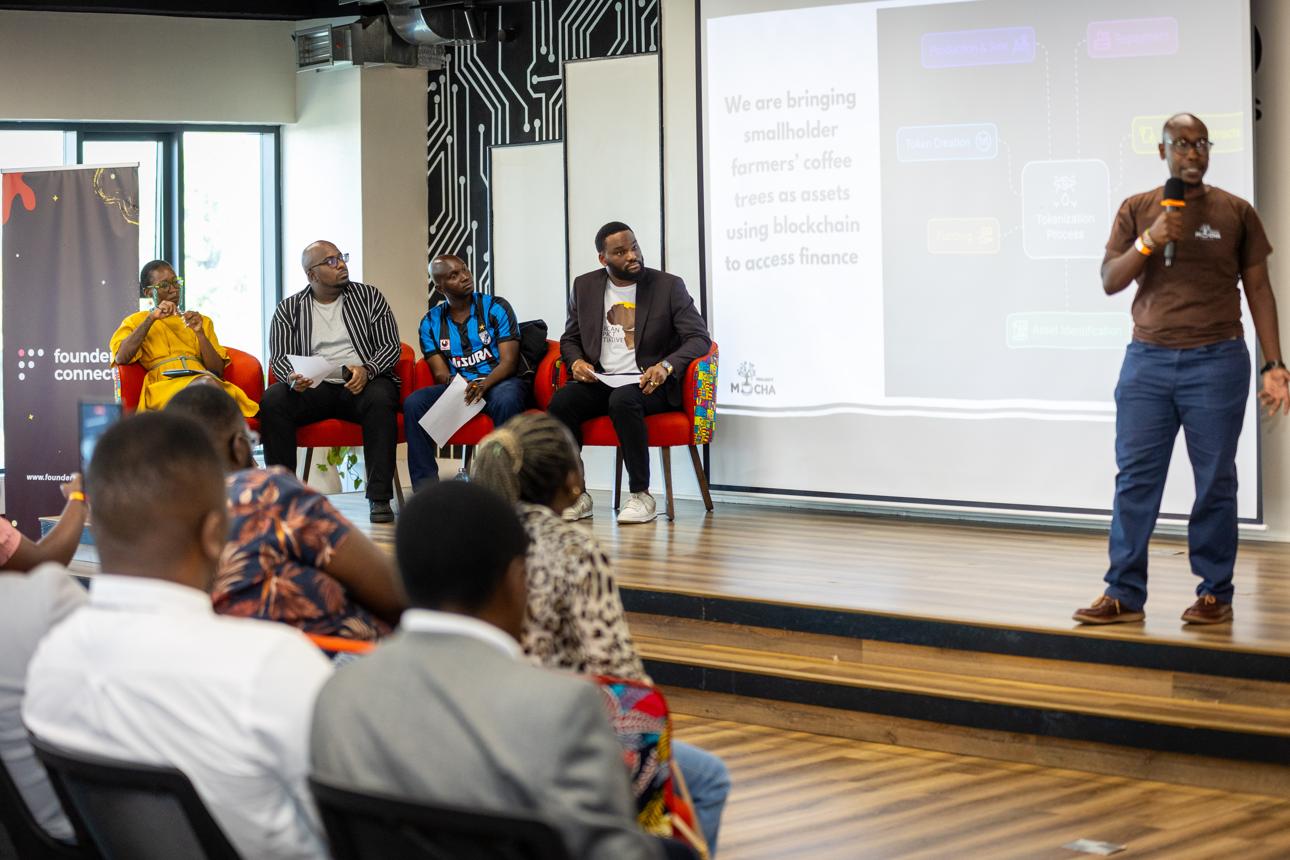
”Innovation City Cape Town is promoting its fifth Business Speed Dating event, scheduled for 18 November, which is designed to connect 30 founders under 30 with investors and growth partners through pre-arranged meetings. Its latest newsletter also invites public input on which technology-driven priorities should shape Cape Town’s future, including AI-powered public services, smarter transport, digital infrastructure and support for startups.”
Cape Town strengthens startup-investor links as debate grows over the city’s digital future
Cape Town seeks to connect young entrepreneurs with investors
Cape Town’s innovation community is placing renewed emphasis on entrepreneurship, investor engagement and technology-driven urban development as it promotes initiatives intended to strengthen the city’s startup ecosystem.
In a newsletter published on 29 October 2026, Innovation City Cape Town highlighted two related developments: the return of its Business Speed Dating event on 18 November and an invitation for residents and members of the technology community to identify the digital initiatives they believe should receive priority in the city’s future development.
Together, these initiatives illustrate two important dimensions of innovation. The first is helping entrepreneurs access the relationships and resources required to develop their businesses. The second is considering how technology can improve the way a city operates and how its residents access services.
The announcement comes as South African cities and businesses continue to explore ways to use digital technologies, entrepreneurship and new business models to address economic and social challenges. However, the long-term impact of such initiatives will depend on whether discussions and networking opportunities translate into practical projects, investment, sustainable companies and improvements in everyday life.
Business Speed Dating targets emerging entrepreneurs
According to Innovation City Cape Town, its Business Speed Dating initiative is returning for its fifth edition on 18 November 2026. The programme is designed to connect 30 founders under the age of 30 with investors and growth partners through pre-arranged pitching sessions.
The format seeks to make entrepreneurial networking more focused by arranging introductions around potential business opportunities rather than leaving participants to establish every connection independently.
For young entrepreneurs, this kind of access can be particularly valuable. Developing a business requires more than a promising idea. Founders often need capital, industry expertise, customer relationships, operational guidance and a clear understanding of the markets they want to serve.
An entrepreneur developing a financial technology platform, for example, may need introductions to financial institutions and compliance specialists. A founder working on an agricultural technology product may benefit more from meeting distributors, farming organisations and potential commercial partners than from speaking exclusively with financial investors.
Structured networking can help bring these different participants together. Nevertheless, a successful introduction is only the beginning of a longer commercial process. Entrepreneurs must still demonstrate that their products solve real problems, that customers are willing to pay for them and that their businesses can operate sustainably.
The newsletter also states that applications are approaching their closing dates. Founder applications are scheduled to close on 31 October, while applications for growth partners close on 6 November.
These deadlines create an immediate opportunity for eligible entrepreneurs and potential partners to investigate participation through the organiser’s original announcement.
Why investor access matters for South African startups
South Africa has an established base of technology businesses, research institutions and entrepreneurial communities. However, moving from an early-stage concept to a commercially successful enterprise can remain difficult.
Founders must often navigate several stages of development, including product design, customer testing, regulatory requirements, hiring, marketing and financing. Each stage introduces different risks, and a business that successfully develops a prototype may still struggle to find customers or secure sufficient working capital.
Investor access is therefore important, although it is not a complete solution.
Early-stage businesses need funding that matches their development stage and commercial prospects. Some may benefit from angel investment, while others could be better suited to venture capital, strategic partnerships, revenue-based financing or government-supported innovation programmes.
The right investor can offer more than money. Industry experience, introductions to potential customers, governance support and advice on expansion may help a founder avoid costly mistakes.
At the same time, entrepreneurs must understand the terms attached to investment. Equity financing can dilute ownership, while debt creates repayment obligations. Strategic partnerships can provide market access but may also introduce commercial dependencies.
A networking event can help founders begin these conversations, but investment decisions require proper due diligence, credible financial information and a clear understanding of the business model.
The importance of initiatives such as Business Speed Dating should consequently be assessed not only by the number of introductions made but also by the quality of the relationships that continue after the event.
Cape Town’s smart-city debate expands the innovation conversation
Alongside its startup announcement, Innovation City Cape Town invited its audience to consider which technology-driven initiative should be prioritised by the city’s next council. The options highlighted in the newsletter include AI-powered public services, smarter transport, stronger digital infrastructure and additional support for startups and entrepreneurship.
This invitation introduces a broader question: how can innovation produce visible improvements for residents?
Smart-city development is frequently associated with advanced technology, digital platforms, connected infrastructure and data-driven decision-making. Yet a city’s success should not be measured simply by the number of digital systems it introduces.
The more important measure is whether those systems improve service delivery, reduce unnecessary costs, increase accessibility and make urban life more efficient.
For example, digital platforms could potentially make it easier for residents to report service problems, obtain information about municipal processes or track the progress of requests. However, their effectiveness would depend on reliable systems, accurate information, appropriate staffing and clear accountability.
Technology should support public services rather than become an additional barrier for residents who already struggle to access them.
Artificial intelligence could support public services
One option raised in the newsletter is the use of artificial intelligence in public services.
AI tools may help public institutions organise information, assist with routine enquiries, identify patterns in service requests and support administrative workflows. In suitable circumstances, these applications could reduce repetitive tasks and allow staff to concentrate on more complex responsibilities.
For residents, the potential benefits include faster access to information and more convenient digital interactions.
However, public-sector AI also introduces important questions about accuracy, privacy, transparency and accountability. Automated systems can produce incorrect answers, mishandle personal information or perform unevenly across different groups of people.
Municipal authorities considering such technologies would need to define clear responsibilities, establish human oversight and explain how residents can challenge incorrect decisions.
Digital services must also accommodate people who have limited internet access, lack suitable devices or are unfamiliar with online systems. Maintaining alternative channels, including in-person assistance and telephone services where appropriate, would help prevent digital transformation from excluding vulnerable residents.
Consequently, AI should be evaluated against clearly defined service-delivery objectives rather than adopted simply because it is a prominent technology trend.
Smarter transport remains a practical innovation opportunity
Transport is another priority identified in Innovation City Cape Town’s public discussion.
Urban mobility affects employment, education, commerce and the overall accessibility of economic opportunities. Congestion, unreliable travel information and disconnected transport services can increase the time and cost associated with moving through a city.
Digital innovation could help address some of these challenges through improved journey information, coordinated transport data, traffic management and better communication with commuters.
For instance, reliable real-time information could help passengers plan journeys and respond to delays. Better data integration could also help transport planners understand travel patterns and identify where services may require adjustment.
Nevertheless, software cannot independently solve every transport problem. Infrastructure investment, operational coordination, affordability, public safety and effective planning remain essential.
Smart transport programmes therefore need to connect digital systems with practical improvements to the wider transport network.
Digital infrastructure is the foundation of innovation
The newsletter also identifies digital infrastructure as a possible priority, specifically highlighting better connectivity and broader access.
Reliable connectivity supports a wide range of activities, including online education, digital payments, remote work, business operations and access to public information.
For startups, affordable and dependable internet can make it easier to reach customers, use cloud-based tools and collaborate with partners beyond their immediate geographical area.
For households, connectivity can support access to educational resources, employment opportunities and essential digital services.
However, access is not simply a question of whether a network exists. Affordability, device availability, service reliability and digital skills also influence whether people can benefit.
A city seeking inclusive digital development would therefore need to consider the needs of communities that remain underserved, rather than concentrating exclusively on advanced services for already connected residents.
Supporting startups can strengthen the wider economy
The fourth priority presented in the newsletter is support for a thriving technology ecosystem, including greater assistance for startups, innovation and entrepreneurship.
A healthy startup ecosystem depends on several connected elements: entrepreneurs, investors, universities, research organisations, experienced business leaders, customers and public institutions.
When these participants collaborate effectively, new ideas may move more quickly from research and experimentation into commercially useful products.
Startups can also create opportunities for specialised employment and help established organisations develop new solutions. However, the benefits are not automatic. Many young businesses fail to achieve sustainable revenue, and innovation programmes cannot guarantee commercial success.
Support initiatives should therefore focus on practical needs, including access to customers, business mentoring, suitable financing, technical expertise and opportunities to test products in real-world conditions.
For Cape Town, the broader challenge is to ensure that startup support reaches beyond a small group of well-connected founders. Participation by entrepreneurs from different backgrounds and communities can widen the range of problems addressed and the people who benefit from new solutions.
Measuring the impact of innovation
Both the Business Speed Dating event and the smart-city discussion raise an important question about how innovation should be evaluated.
For the startup programme, useful indicators could include the number of meaningful business relationships established, follow-up meetings arranged, commercial partnerships developed and investments secured over time. These are proposed evaluation measures, not results reported by the organiser.
For urban technology initiatives, measures could include improvements in service response times, transport information, connectivity access, public satisfaction and the cost of delivering services.
Transparent evaluation would help organisers and public institutions determine which approaches work and where changes are needed.
It would also make it easier to distinguish promotional activity from measurable progress. A successful event may generate enthusiasm, but its lasting value depends on what participants accomplish afterward.
Similarly, a smart-city proposal may sound promising, but implementation requires funding, technical capability, public engagement and accountable management.
Outlook: turning ideas into measurable progress
Innovation City Cape Town’s 29 October newsletter highlights the relationship between entrepreneurship and urban development. Its upcoming Business Speed Dating event seeks to connect young founders with investors and growth partners, while its smart-city invitation encourages discussion about the technologies and services that should receive priority.
Neither announcement, by itself, establishes that new investments have been secured or that municipal technology priorities have been adopted. Their significance lies instead in the opportunities they present for engagement and planning.
The next stage will be to turn introductions into commercial relationships and public discussion into evidence-based decisions.
For entrepreneurs, this means developing viable products, understanding customer needs and following up on potential partnerships. For city leaders and technology stakeholders, it means identifying problems worth solving, consulting residents and measuring whether proposed solutions deliver tangible benefits.
South Africa’s innovation ambitions will ultimately depend not only on generating new ideas but also on building the institutions, infrastructure and commercial relationships needed to put those ideas into practice.
Cape Town’s initiatives offer an opportunity to advance that conversation. Their lasting contribution will become clearer through the partnerships, businesses and public-service improvements that emerge from the work that follows.



