




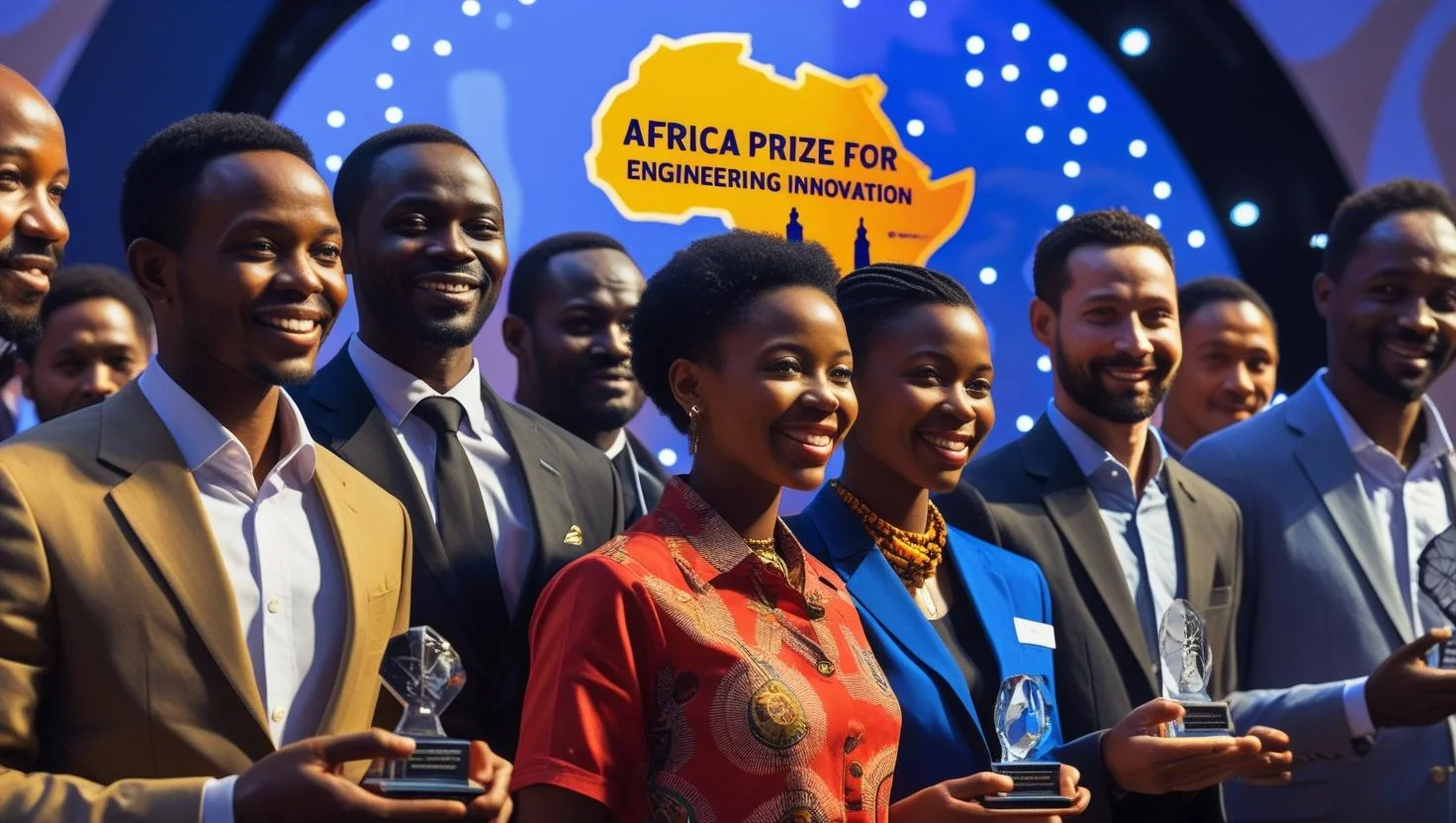
“Professor Dyllon Randall’s Pee-Cycling technology recovers nutrients from human urine to produce reusable water and liquid fertiliser, addressing Africa’s water scarcity and rising fertiliser costs. Biomedical researcher Sincengile Ntshingila’s LabZero virtual lab enables students to practice tissue culture digitally, reducing contamination risks and expanding access to advanced biomedical training.”
South Africa’s innovation landscape continues to shine on the global stage, with two Cape Town-based innovators — Professor Dyllon Randall and Sincengile Ntshingila — being shortlisted for the Africa Prize for Engineering Innovation 2026. Their recognition underscores the country’s potential to leverage engineering ingenuity to address pressing social and economic challenges, particularly in areas of water sustainability and biomedical education.
The Africa Prize for Engineering Innovation
The Africa Prize, awarded annually by the Royal Academy of Engineering, is regarded as the continent’s leading award for engineering-led entrepreneurship. In 2026, only 16 innovators from 11 African countries were shortlisted, placing Randall and Ntshingila among the continent’s most promising entrepreneurs. The prize not only provides financial support but also mentorship, networking opportunities, and exposure to investors, making it a launchpad for scalable solutions.
Pee-Cycling: Rethinking Sanitation
Professor Randall, a chemical engineer specialising in water quality, developed Pee-Cycling, a system that recovers valuable nutrients from human urine. Traditional sanitation systems operate on a “flush and forget” model, discarding resources daily. Pee-Cycling instead collects urine through specially designed urinals and processes it to produce high-grade fertiliser and reusable water.
- Key Benefits:
- Reduces dependence on costly synthetic fertilisers.
- Addresses water scarcity by recycling wastewater.
- Provides sustainable solutions for agriculture and food security.
Randall’s innovation is particularly relevant in Africa, where fertiliser prices have surged and water scarcity continues to affect millions. By turning waste into value, Pee-Cycling demonstrates how circular economy principles can be applied to sanitation.
LabZero: Virtual Biomedical Training
Ntshingila’s LabZero tackles a different but equally critical challenge: access to advanced biomedical training. Tissue culture techniques are essential for vaccine development, regenerative medicine, and drug research. However, mistakes in physical labs can contaminate experiments and waste expensive materials.
LabZero provides a browser-based virtual laboratory, allowing students to practise cell culture digitally before entering real labs.
- Key Benefits:
- Reduces contamination risks.
- Cuts down on plastic waste.
- Expands access to institutions lacking costly lab facilities.
By democratising biomedical education, LabZero could help South Africa and other African nations build stronger research capacity, particularly in underserved communities.
Broader Context: Innovation and Youth Unemployment
South Africa faces one of the world’s highest youth unemployment rates, with over 60% of people aged 18–24 unemployed. Innovations like Pee-Cycling and LabZero highlight how engineering can create new industries and jobs. Their success stories serve as inspiration for young entrepreneurs, showing that local innovation can drive both economic growth and social impact.
Global Significance
Both projects have implications beyond South Africa:
- Pee-Cycling could be adopted in regions facing water stress, from India to the Middle East.
- LabZero could revolutionize biomedical education globally, offering scalable training solutions for universities in developing countries.
Their recognition at the Africa Prize signals that South African innovation is not only solving local problems but also contributing to global knowledge economies.
Challenges and Opportunities
While promising, both innovations face challenges:
- Scaling Pee-Cycling requires investment in infrastructure and public acceptance of urine-derived fertilisers.
- Expanding LabZero demands partnerships with universities and integration into curricula.
However, with mentorship and exposure from the Africa Prize, both innovators are well-positioned to overcome these hurdles.
Conclusion
The shortlisting of Randall and Ntshingila for the Africa Prize for Engineering Innovation 2026 is more than a personal achievement — it is a testament to South Africa’s growing reputation as a hub for engineering-led innovation. Their projects exemplify how creativity and science can converge to solve real-world problems, offering hope for a future where African innovation drives global change.



