




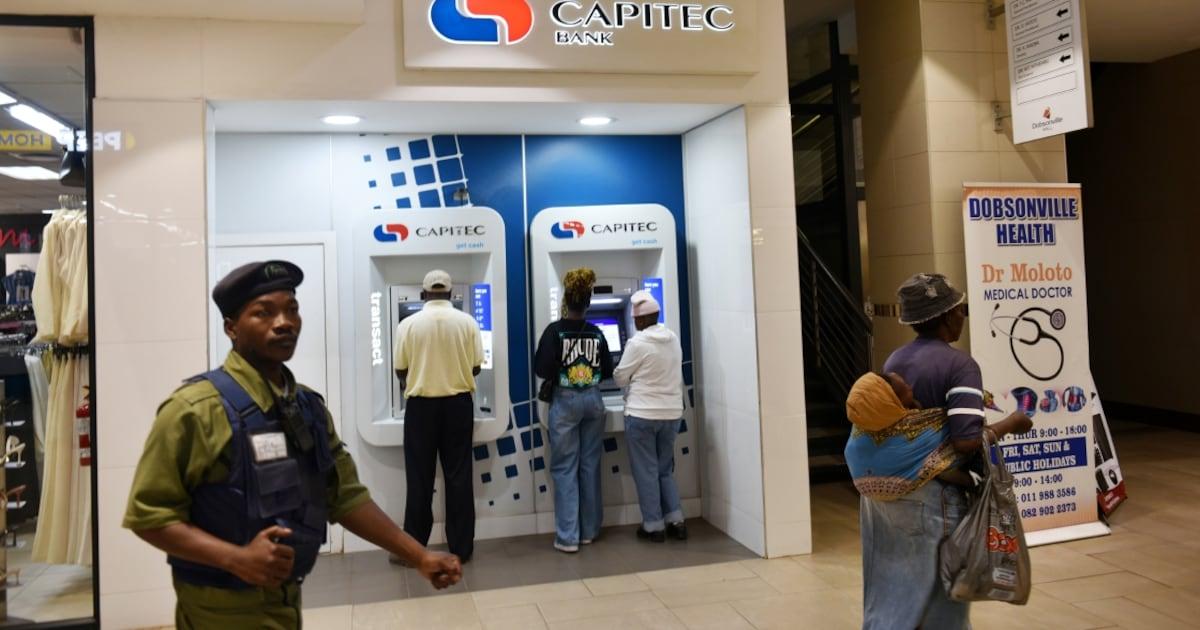
“South Africa’s major banking groups have collectively exceeded R2 trillion in stock-market value, with Capitec approaching a R600 billion valuation as its shares rally and investors increasingly favour its growth prospects. The performance highlights the resilience of the country’s banking sector, intensifying competition among traditional lenders and digital financial institutions, and growing investor confidence in banks despite continuing economic challenges.”
Capitec Nears R600 Billion Valuation as South African Banks Surpass R2 Trillion
South Africa’s banking industry has reached a significant financial milestone, with its six largest banking groups collectively surpassing R2 trillion in market capitalisation as Capitec Bank approaches a valuation of R600 billion. The latest market performance highlights the growing strength of South Africa’s banking sector, increasing investor confidence in established financial institutions and the intensifying competition reshaping the country’s banking landscape.
According to Business Day’s report published on 12 November 2026, Capitec has emerged as the country’s most valuable banking group by market capitalisation, overtaking FirstRand and strengthening its position among South Africa’s leading financial institutions. The development comes amid a broader recovery in banking shares following market turbulence earlier in the year.
Capitec Leads South Africa’s Banking Market Recovery
Capitec’s market valuation reached approximately R580 billion on Tuesday, according to Business Day, placing the bank within reach of the R600 billion milestone. Its shares have gained approximately 18% over the past month and 14% over six months, reflecting strong investor interest in its growth strategy and financial performance.
The lender’s share price has also approached R5,000, representing a remarkable transformation since its listing on the Johannesburg Stock Exchange in 2002, when its shares traded at approximately R2.75.
Capitec’s expansion has been supported by a business model focused on accessible banking, simplified financial products, efficient operations and a substantial retail customer base. The institution serves approximately 26 million customers, giving it significant reach across South Africa’s consumer banking market.
Investors have increasingly recognised the bank’s ability to generate earnings growth while maintaining operational efficiency. Its strategy has concentrated on financial products and services that offer attractive returns relative to the capital required to deliver them.
Consequently, Capitec has become a prominent example of how a retail-focused banking institution can challenge established competitors through execution, customer acquisition and cost-effective service delivery.
FirstRand, Standard Bank and Absa Maintain Strong Positions
Although Capitec leads by market value, other major South African banks continue to command substantial investor attention.
FirstRand, which previously held the position of South Africa’s most valuable banking group, is valued at approximately R550 billion. Its shares have gained around 11.55% over the past month and 8.7% over six months.
Standard Bank Group, Africa’s largest lender by assets and profit, has a market capitalisation of approximately R520 billion. The institution’s shares have increased by 6.84% over the past month and 1.83% over six months.
The bank maintains an extensive African presence, operating across more than 20 countries. Its reported assets of approximately R3.8 trillion underline its importance within South Africa’s financial system and the wider continental banking market.
Absa Group is valued at approximately R220 billion, while Nedbank’s market capitalisation stands just below R142 billion. Investec’s Johannesburg-listed shares represent approximately R41 billion in market value, with its London-listed operations valued at approximately R100 billion.
Together, these institutions demonstrate the scale and financial significance of South Africa’s banking industry.
Banking Shares Recover After Global Market Turbulence
The banking sector’s latest performance follows a period of market uncertainty associated with geopolitical developments earlier in 2026.
The March market sell-off linked to military developments involving the United States, Israel and Iran affected global investor sentiment and placed pressure on financial markets.
However, South African banking shares have subsequently recovered, supported by investor confidence in their earnings prospects, capital positions and long-term growth opportunities.
The recovery suggests that investors continue to view major South African banks as relatively resilient institutions capable of navigating periods of economic uncertainty.
Nevertheless, market capitalisation should not be confused with bank assets, deposits or profits. A bank’s market value reflects investors’ expectations regarding its future earnings, growth opportunities, risks and competitive position.
Therefore, a higher valuation does not automatically indicate that an institution has the largest balance sheet or the greatest number of customers.
Competition Intensifies Across South Africa’s Banking Industry
While established banks continue to dominate the sector, competition is increasingly coming from retailers, insurers and digital banking businesses.
Shoprite recently agreed in principle to partner with Investec to expand its financial services offering, including introducing a debit card and developing a broader transactional account proposition.
The proposed alliance would allow Shoprite Financial Services to distribute banking products through its stores, brands and digital platforms, while Investec supplies the banking infrastructure, regulatory capabilities and balance sheet support.
The partnership remains subject to regulatory approval and is intended to expand customer access to financial services.
Meanwhile, Pepkor is preparing to develop its own banking proposition using its extensive retail footprint and customer base.
Insurance businesses are also expanding their participation in banking. Sanlam and Old Mutual have been pursuing financial services strategies designed to diversify revenue and strengthen customer relationships.
These developments represent a significant competitive challenge for traditional banks, particularly in the mass-market segment where affordability, accessibility and everyday transactions influence customer decisions.
Capitec’s growth therefore takes place within an increasingly competitive environment rather than an uncontested banking market.
Digital Banking Continues to Reshape Customer Expectations
Technology has become one of the most important factors influencing competition within South Africa’s banking sector.
Customers increasingly expect convenient digital payments, accessible mobile banking, efficient account management and affordable financial services.
Capitec’s success has been partly associated with its ability to provide relatively straightforward banking products through a combination of digital platforms and physical service channels.
Other banks are also investing in digital infrastructure, payments innovation, artificial intelligence, cybersecurity and customer experience improvements.
The broader industry is increasingly focused on reducing transaction friction, improving service delivery and using technology to strengthen operational efficiency.
Digital banking, however, does not eliminate the importance of trust, customer support and financial security. Institutions must continue to protect customers against fraud, identity theft, unauthorised transactions and other digital financial risks.
As banking services become increasingly technology-driven, cybersecurity and responsible data management remain essential components of sustainable growth.
South Africa’s Economic Conditions Remain Important
Despite the impressive market valuations, South Africa’s banking industry continues to operate within an economy facing structural challenges.
Unemployment, household affordability pressures, uneven economic growth and the financial difficulties experienced by some businesses remain important considerations.
These factors influence consumer borrowing, repayment capacity, savings behaviour and demand for financial services.
Banks must consequently balance growth ambitions with responsible lending, effective credit-risk management and appropriate capital allocation.
Strong banking performance can support economic activity by facilitating payments, extending credit to businesses and households, financing investment and maintaining financial stability.
However, the relationship between banks and the wider economy also means that prolonged economic weakness can eventually affect loan quality, customer activity and profitability.
Investors will therefore continue monitoring economic indicators, interest-rate developments, credit losses and banking-sector earnings.
Absa’s Strategic Transformation Reflects Industry Pressures
Absa’s position illustrates how established institutions are responding to competitive challenges.
The bank is pursuing a refreshed pan-African strategy intended to diversify earnings and reduce dependence on a limited number of markets.
At the same time, its South African retail banking business has faced pressure from competitors, particularly in home loans and individual deposits.
The appointment of experienced leadership within personal and private banking forms part of its efforts to strengthen customer relationships and improve business performance.
These strategic adjustments demonstrate that even large banking groups must continuously adapt to changing customer expectations, technological developments and competitive conditions.
The banking industry is increasingly characterised by institutions seeking to improve efficiency, strengthen product offerings and expand their presence in attractive customer segments.
What the R2 Trillion Banking Valuation Means
The combined market capitalisation exceeding R2 trillion represents a notable milestone for South Africa’s financial markets.
It reflects the substantial economic importance of the country’s major banking groups and their ability to attract investment despite persistent economic challenges.
The achievement also demonstrates the importance of the Johannesburg Stock Exchange as a platform for financial-sector investment and capital allocation.
However, investors should interpret the milestone alongside other indicators, including earnings growth, return on equity, capital adequacy, dividend sustainability and credit quality.
Market valuations can change rapidly in response to interest rates, geopolitical developments, earnings announcements and investor sentiment.
Consequently, the banking sector’s latest valuation should be viewed as a snapshot of market confidence rather than a guarantee of future performance.
Outlook: Growth, Innovation and Competition
South Africa’s banking industry enters the remainder of 2026 with considerable momentum.
Capitec’s rise, FirstRand’s continued market strength and Standard Bank’s continental footprint demonstrate the sector’s competitive depth.
At the same time, retailers and insurance groups are introducing new financial services models that could reshape customer relationships and payment systems.
The coming years are likely to bring greater competition around digital payments, lending, customer acquisition, financial inclusion and personalised banking services.
Traditional banks will need to maintain strong operational performance while responding to changing consumer behaviour.
For customers, increased competition could create opportunities for improved convenience, wider product choices and more accessible financial services.
For investors, the central question will be whether current market valuations can be supported by sustainable earnings growth and effective risk management.
Ultimately, South Africa’s banking industry remains one of the country’s most important financial pillars. Its latest market milestone reflects investor confidence in established institutions, the growing influence of digital banking and the continuing transformation of financial services.
Capitec’s approach to customer-focused banking has helped it become the country’s most valuable banking group, while its competitors continue to invest in innovation, efficiency and expansion.
The sector’s ability to sustain this momentum will depend on economic conditions, responsible lending, technological investment and the capacity of banks to deliver lasting value to customers and shareholders alike.



