




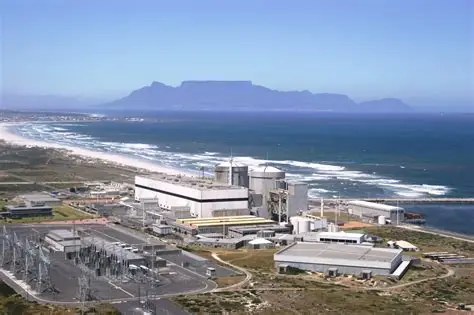
“A herpesvirus outbreak among sardines off South Africa’s coast has led to mass fish deaths, blocking Koeberg nuclear power station’s seawater intake and forcing Eskom to halve output from one of its two reactors. The incident highlights how environmental health crises can directly impact national energy infrastructure and public health resilience.”
South Africa’s energy sector has long been under pressure, with Eskom struggling to balance demand and supply amid aging infrastructure and maintenance backlogs. On August 24, 2026, a new and unexpected challenge emerged: a herpesvirus outbreak among sardines along the southwestern and west coast, leading to mass fish mortality. This environmental health crisis directly impacted Koeberg nuclear power station, Africa’s only nuclear facility, forcing Eskom to reduce output and raising alarms about the vulnerability of energy systems to ecological shocks.
Background: Koeberg’s Role in South Africa’s Grid
Koeberg, located near Cape Town, is a cornerstone of South Africa’s energy mix. With a total capacity of 1,800 MW, it provides stable baseload power that complements the country’s coal-heavy generation fleet. Nuclear energy is particularly valued for its reliability, but Koeberg’s dependence on seawater cooling makes it uniquely exposed to marine ecosystem disruptions.
The plant’s cooling system draws seawater from the Atlantic Ocean to regulate reactor temperatures. Any obstruction in this intake system can trigger automatic shutdowns or reductions in output to prevent overheating. In this case, the buildup of dead sardines clogged the intake, forcing Eskom to halve output from one reactor while the other was already offline for scheduled maintenance.
The Herpesvirus Outbreak
Preliminary investigations by South Africa’s Department of Environment suggest that the sardine deaths were caused by pilchard herpesvirus, a pathogen known to affect marine fish populations. While not harmful to humans directly, the outbreak has significant ecological and economic implications. Sardines are a key species in South Africa’s marine food chain, supporting commercial fisheries and serving as prey for larger predators.
The sudden mortality event disrupted not only the fishing industry but also energy production, illustrating the interconnectedness of environmental health and industrial systems. Scientists are now studying whether climate change, pollution, or other stressors may have exacerbated the outbreak.
Energy-Health Nexus
This incident underscores a critical but often overlooked dimension of energy security: the role of environmental health. Traditionally, energy debates in South Africa have focused on coal dependence, renewable integration, and Eskom’s financial woes. However, Koeberg’s disruption shows that ecosystem health can directly affect energy reliability.
From a public health perspective, the sardine die-off also raises concerns about food security and livelihoods. Sardines are a staple in South African diets and a major export commodity. A prolonged outbreak could reduce supply, increase prices, and affect nutrition, particularly in lower-income communities.
Eskom’s Response
Eskom announced that the seawater intake area would be cleared and normal power generation resumed once safe. The utility emphasized that the reduction was a controlled adjustment, not an emergency shutdown, and that grid stability remained intact.
Still, the incident comes at a sensitive time. South Africa has managed to avoid load shedding for over a year, thanks to improved coal fleet performance and Koeberg’s contribution. Any prolonged disruption at Koeberg could reintroduce rolling blackouts, undermining public confidence and economic recovery.
Wider Implications
- Energy Infrastructure Vulnerability
- Koeberg’s reliance on seawater cooling highlights the risks of single-point dependencies.
- Similar vulnerabilities exist in other coastal power plants worldwide, where algae blooms, jellyfish swarms, or pollution can disrupt operations.
- Marine Ecosystem Health
- The herpesvirus outbreak may be symptomatic of broader ecological stress.
- Overfishing, warming waters, and pollution could weaken fish populations, making them more susceptible to disease.
- Policy Considerations
- South Africa’s energy policy must integrate environmental monitoring into infrastructure planning.
- Early warning systems for marine health could help prevent future disruptions.
Expert Perspectives
Marine biologists warn that the herpesvirus outbreak could recur if underlying stressors are not addressed. Energy analysts argue that Eskom must diversify cooling technologies or enhance intake filtration systems to reduce vulnerability. Public health experts highlight the need for coordinated responses that consider both energy and food security impacts.
Conclusion
The sardine herpesvirus outbreak and its impact on Koeberg nuclear power station serve as a stark reminder of the interconnectedness of energy, environment, and health. As South Africa navigates its energy transition, resilience must be built not only against technical failures but also against ecological shocks.
This incident may prove to be a turning point, prompting policymakers to adopt a more holistic approach to energy security — one that recognizes the vital role of environmental health in sustaining industrial systems and public well-being.



