




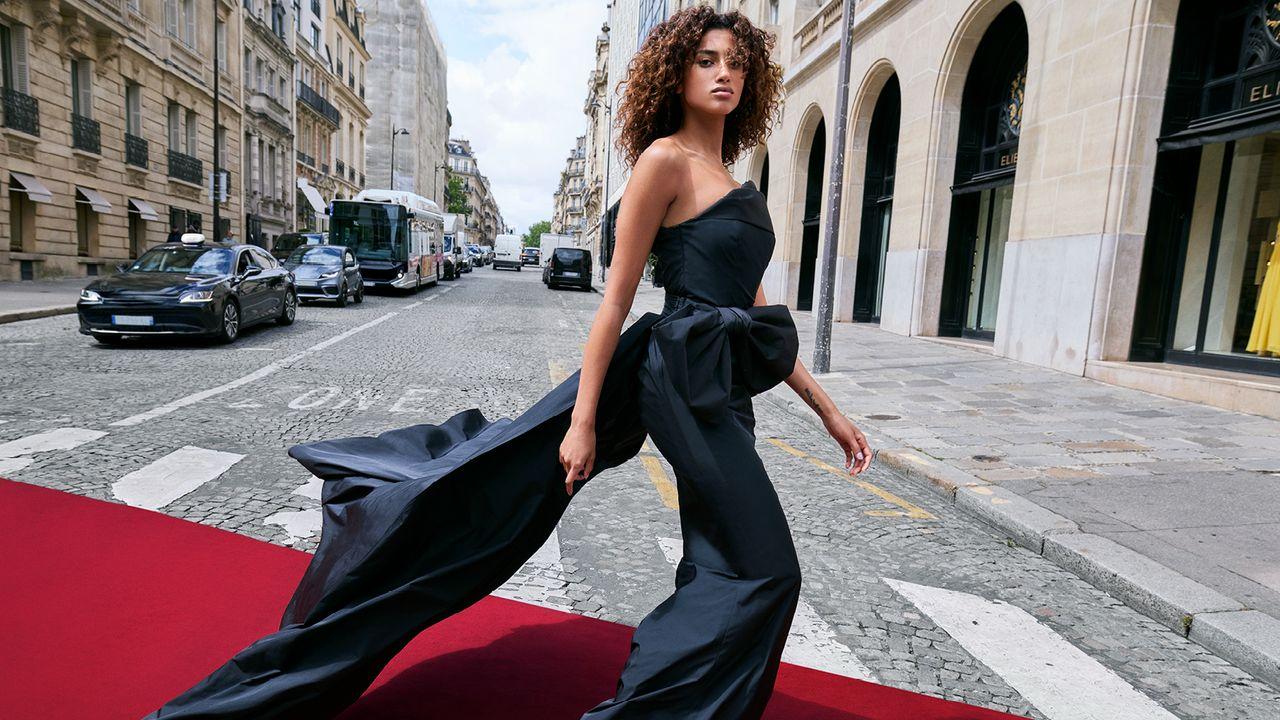
”Lebanese luxury designer Elie Saab is collaborating with Swedish fashion retailer H&M on a collection combining glamorous embellishment, eveningwear and contemporary tailoring. According to South African fashion coverage published on 15 October, the collection is scheduled to launch locally on 22 October 2026 at Sandton City, the V&A Waterfront and online through Superbalist.”
Elie Saab and H&M bring couture-inspired luxury fashion to South Africa
South Africa’s fashion retail industry is preparing for a significant designer collaboration as internationally recognised fashion house Elie Saab partners with H&M to introduce a collection inspired by couture glamour, sophisticated tailoring and contemporary elegance. The collection is scheduled to arrive in selected South African retail locations on 22 October 2026, offering local shoppers an opportunity to explore the designer’s signature aesthetic through a more accessible retail format.
The announcement is particularly relevant to the country’s fashion market because it connects the prestige of international luxury design with the commercial reach of a major high-street retailer. It also highlights the continuing relationship between luxury brands, designer collaborations and consumers who want distinctive fashion without necessarily purchasing traditional haute couture.
Elie Saab’s journey from Beirut to international luxury fashion
Elie Saab established his reputation through refined bridalwear and designs characterised by intricate detailing, elegant silhouettes and elaborate embellishment. Founded in Beirut, the fashion house subsequently became associated with international red-carpet dressing and the world of haute couture.
Saab’s work combines traditional craftsmanship with a recognisable sense of glamour. Fine fabrics, carefully considered proportions, decorative finishes and feminine silhouettes have helped establish the label’s identity across couture, ready-to-wear clothing and accessories.
His collaboration with H&M introduces these design principles to a different commercial environment. Rather than presenting only the exclusive creations traditionally associated with a luxury fashion house, the partnership seeks to reinterpret selected elements of Saab’s aesthetic for a wider audience.
This distinction is important. Haute couture operates within a specialised market where garments can require substantial craftsmanship, individual fittings and significant financial investment. A designer collaboration, by contrast, can translate recognisable design characteristics into products intended for broader retail distribution.
Although the two formats differ, the creative challenge remains similar: preserving a designer’s identity while adapting it to the needs, expectations and price considerations of a different customer base.
What shoppers can expect from the collection
The announced collection includes womenswear, menswear and accessories, including footwear. Its defining features include embellished gowns, shimmering separates, sharply cut tailoring, fine lace, gradient sequins and signature monogram details.
These elements suggest a collection designed around versatility and visual impact. Statement gowns may appeal to customers looking for formalwear, while tailored pieces and separates could offer alternatives for evening events, celebrations and more elevated everyday dressing.
Accessories also play an important role in translating a designer’s aesthetic into a complete wardrobe. Footwear and coordinated styling pieces can help shoppers incorporate the collection’s visual identity without necessarily purchasing a full outfit.
The emphasis on tailoring is equally significant. Well-defined silhouettes can provide structure, while embellishment and decorative finishes introduce the glamour associated with Saab’s established design language.
However, customers should distinguish between couture garments and products created for a mass-market collaboration. The collection is inspired by the designer’s fashion-house identity, but the collaboration does not mean every item is a haute couture creation. Product materials, construction methods and finishing details should be assessed individually.
South African launch locations and online access
According to the published South African launch announcement, the collection is scheduled to become available on 22 October 2026 at Sandton City in Johannesburg, the V&A Waterfront in Cape Town, and online through Superbalist.
The choice of these retail channels provides access to customers in two major South African shopping destinations while also offering an online purchasing option.
Sandton City is an important luxury and premium retail destination in Johannesburg. Meanwhile, Cape Town’s V&A Waterfront attracts both local shoppers and international visitors. Together, the locations provide prominent settings for a collection built around designer recognition and aspirational fashion.
Online access could also benefit customers who cannot conveniently visit either shopping centre. Nevertheless, availability may differ by product, size and location, and shoppers should confirm the details directly with the retailer before travelling or placing an order.
The announced date also creates an opportunity for fashion consumers to plan their purchases ahead of the launch. Those interested in particular items should check official product listings, pricing, sizing information and any applicable purchase restrictions.
No verified South African prices were established in the sources reviewed for this article. Therefore, shoppers should not assume that the collection will cost the same as Saab’s mainline luxury products or that every item will fall within a particular budget.
Why the collaboration matters for luxury fashion
Designer collaborations have become an important way for fashion companies to introduce distinctive creative identities to new audiences. They allow established designers to explore different distribution channels while giving retailers an opportunity to offer products that stand apart from their regular collections.
For H&M, the partnership brings the recognisable language of a couture designer into a retail environment with a broader customer base. For Saab, it creates an opportunity to introduce elements of his creative world to shoppers who may admire his work but have never purchased from his principal fashion house.
The arrangement also demonstrates that luxury fashion is not defined exclusively by price. Although exclusivity and craftsmanship remain central to traditional luxury positioning, consumers can also connect with a designer through silhouettes, styling, visual identity and creative inspiration.
Nevertheless, accessibility should not be confused with equivalence. A high-street collaboration and a bespoke couture garment occupy different positions in the market. Their construction, production processes, materials and levels of individualisation may differ considerably.
For shoppers, the practical value lies in understanding what each product offers and choosing according to personal taste, budget and intended use.
The South African consumer and the appeal of occasionwear
The collection’s focus on gowns, shimmering separates and tailored clothing could resonate with South African consumers preparing for weddings, formal celebrations, graduations, end-of-year functions and other social occasions.
Fashion plays an important role in how people express identity, confidence and personal style at these events. Designer-inspired pieces can provide alternatives to conventional occasionwear, particularly for customers who prefer statement details and carefully structured silhouettes.
At the same time, South Africa is a diverse market with significant differences in household income, shopping habits and access to premium retail. The success of a designer collaboration will therefore depend partly on whether customers consider the available products worth their prices.
Product versatility may be one factor in that decision. A tailored jacket that can be styled for professional settings and evening occasions could offer a different form of value from a gown designed for infrequent formal use.
Similarly, accessories may appeal to consumers who want to experiment with a designer’s aesthetic without committing to a complete outfit.
Ultimately, individual purchasing decisions will depend on the collection’s actual pricing, fit, quality and availability once the products reach stores and online channels.
Opportunities and challenges for the luxury retail sector
The collaboration arrives at a time when fashion retailers must balance brand differentiation with changing consumer expectations. Shoppers increasingly encounter fashion through social media, online retail platforms, celebrity styling and international campaign coverage.
Consequently, a recognisable designer partnership can generate interest before consumers even enter a store. Strong visual identities and distinctive pieces can also encourage fashion conversations across digital platforms.
However, initial attention does not automatically translate into sustained commercial success. Retailers must ensure that product availability, customer service, sizing information and pricing meet shoppers’ expectations.
Limited availability can increase excitement, but it can also frustrate customers who cannot find their preferred sizes or products. Clear communication about launch arrangements and stock availability will therefore be important.
There is also the question of long-term brand positioning. Luxury labels need to preserve the identity that distinguishes their principal collections, while retailers must ensure that collaborations complement rather than undermine their existing product ranges.
When executed carefully, these partnerships can introduce new customers to established designers and encourage shoppers to explore fashion beyond familiar brands.
The wider significance for fashion design
The Elie Saab and H&M collaboration reflects a broader conversation about how fashion ideas move between different market segments. Designers can maintain distinctive creative identities while exploring new audiences, provided the collaboration is developed with attention to design integrity and commercial realities.
For emerging designers, these partnerships also demonstrate the value of building a clear and recognisable aesthetic. Strong design signatures can help a label distinguish itself in a competitive environment where consumers have access to an enormous range of products.
South Africa has its own growing conversation around design identity, craftsmanship and international recognition. Recent coverage of South African Fashion Week has highlighted local designers, handmade excellence and an upcoming partnership with the historic Pierre Cardin fashion house.
Although the Elie Saab collaboration is an international partnership rather than a South African designer initiative, its arrival offers local consumers another opportunity to engage with global fashion.
It also provides a useful comparison between international designer collaborations and the development of homegrown luxury brands. Both can contribute to a diverse fashion landscape, although they serve different creative and commercial purposes.
What consumers should know before buying
Before purchasing from the collection, shoppers should verify product prices, available sizes, fabric composition, care instructions and return conditions through the relevant retailer.
Customers purchasing online should also confirm delivery arrangements and whether particular products are available for their location. Those visiting Sandton City or the V&A Waterfront should check the launch information directly with the retailer before making a special trip.
Importantly, shoppers should assess each garment on its own merits. A designer name can provide useful information about a collection’s creative direction, but it does not replace careful consideration of comfort, durability, fit and value.
For customers interested in sustainable wardrobes, versatility is another consideration. Selecting garments that work with existing clothing can help maximise their usefulness beyond a single event or season.
Conclusion: A new chapter in accessible designer fashion
The Elie Saab and H&M collaboration represents a notable development in South Africa’s luxury-inspired fashion retail calendar, with the announced local launch scheduled for 22 October 2026.
By combining Saab’s established language of glamour, embellishment and tailoring with H&M’s broader retail reach, the partnership seeks to introduce a distinctive designer aesthetic to a wider audience. Its significance will ultimately depend on how consumers respond to the collection’s products, pricing, availability and quality.
For South African fashion enthusiasts, the launch offers an opportunity to explore couture-inspired design through a different retail format. For the wider industry, it reinforces the continuing importance of creative identity, accessible distribution and meaningful connections between designers and consumers.



