




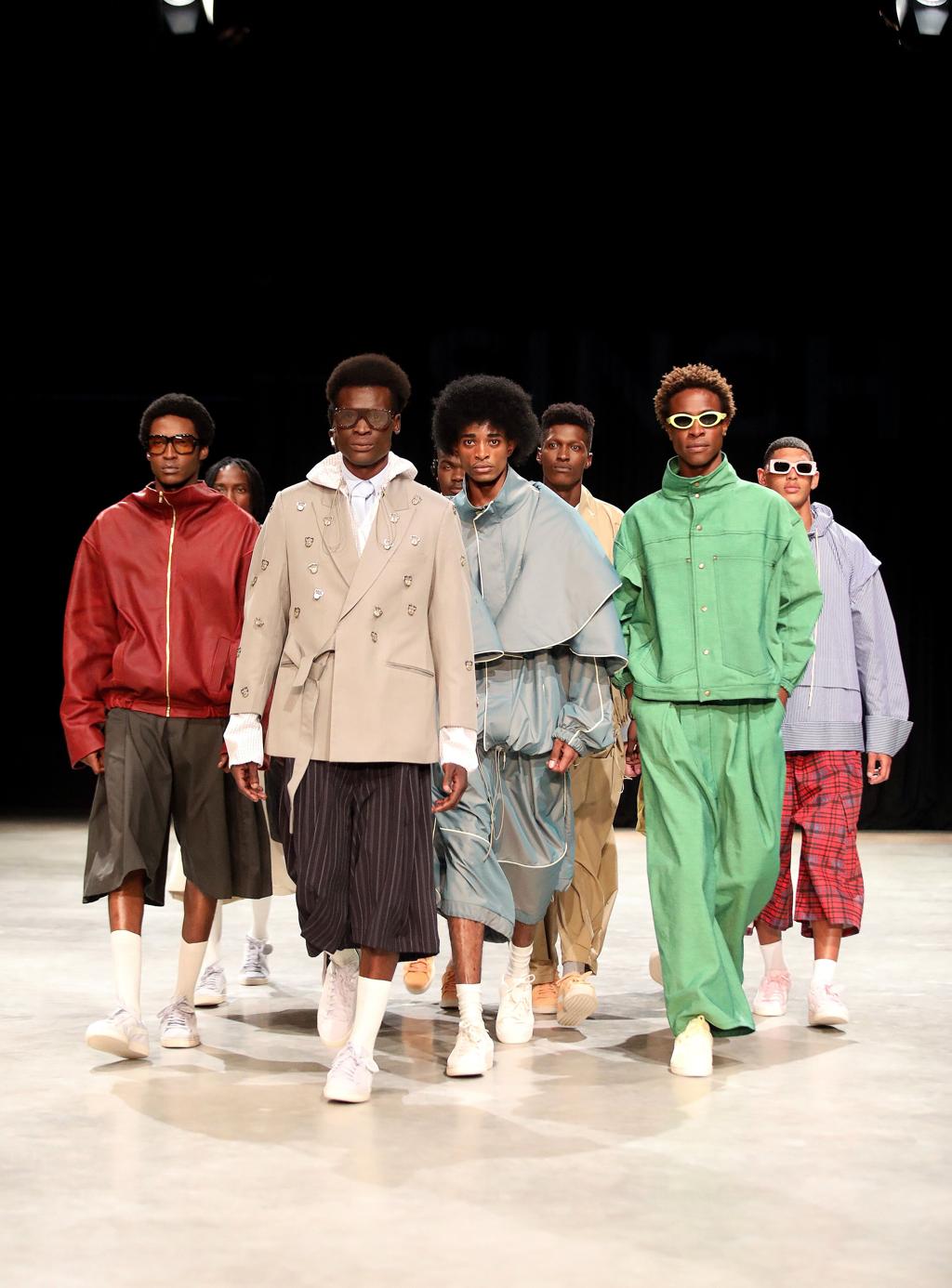
“South African Fashion Week has brought renewed attention to sustainable fashion through Fundudzi by Craig Jacobs’ The New Earth, a collection that reconstructs pre-owned, surplus and discarded clothing into contemporary designs. The collection highlights the potential of upcycling, longer garment lifespans and responsible consumption while raising broader questions about textile waste and the fashion industry’s reliance on producing and purchasing new clothing.”
South African Fashion Week Puts Sustainability in the Spotlight as Fundudzi’s The New Earth Reimagines Discarded Clothing
A new direction for sustainable fashion in South Africa
South African fashion is increasingly exploring how creativity can contribute to environmental responsibility, and the latest edition of South African Fashion Week (SAFW) has placed that conversation firmly in the spotlight. Among the collections attracting attention is The New Earth, presented by Fundudzi, the fashion label founded by designer Craig Jacobs. The collection challenges conventional ideas about newness by demonstrating how pre-owned, surplus and discarded garments can become the starting point for contemporary fashion.
Reported by Sowetan on 27 October 2026, the collection forms part of a broader fashion programme that celebrates South African design, craftsmanship and cultural expression. Its sustainability message is particularly relevant at a time when the fashion industry faces questions about clothing waste, resource consumption and the environmental consequences of producing garments at high volumes.
Rather than treating unwanted clothing as material with little remaining value, The New Earth presents existing garments as resources for further creativity. The collection explores how designers can dismantle, combine and reconstruct familiar materials into new silhouettes, giving clothing a different identity without necessarily requiring entirely new textiles.
This approach offers an alternative perspective on fashion consumption. It suggests that innovation does not always depend on introducing new materials or manufacturing more products. In some cases, the most meaningful design opportunities can emerge from reconsidering what already exists.
Transforming discarded garments into contemporary designs
The central idea behind The New Earth is the transformation of existing clothing. According to the collection’s presentation, pre-owned, surplus and discarded garments are reworked into fresh designs that challenge conventional expectations about how clothing should be produced and valued.
The collection incorporates tailoring, denim, knitwear and sheer layers, combining familiar materials in different ways. Inspired by Southern Africa’s geological landscapes, its colour palette draws on the muted tones of earth, stone and weathered terrain. These references connect the garments to the natural environment while reinforcing the collection’s emphasis on material transformation.
Upcycling, the process of repurposing existing materials into products with renewed or different value, is central to this approach. Unlike conventional production, which may begin with newly manufactured fabric, upcycling starts with materials that already have a history.
That history can become part of the finished garment’s identity. A previously worn item might contribute its texture, stitching, structure or fabric to a new piece. Through careful design, these elements can become distinctive features rather than imperfections to be concealed.
However, successful upcycling requires more than attaching old fabrics to new garments. Designers must consider the quality of available materials, the durability of seams, the suitability of different fibres and the comfort of the finished clothing. They also need to ensure that reconstruction does not compromise the garment’s usefulness.
The New Earth therefore presents sustainability as both a creative challenge and an opportunity to reconsider the relationship between materials and design.
Challenging the culture of constant consumption
One of the wider issues raised by the collection is the fashion industry’s dependence on constant production and consumption. Clothing trends can change quickly, encouraging consumers to replace garments even when those items remain wearable. At the same time, unsold merchandise and unwanted clothing create challenges for retailers, manufacturers, second-hand markets and waste-management systems.
This cycle raises an important question: must fashion always depend on producing something new to remain innovative?
Fundudzi’s collection suggests that the answer is no. By reconstructing existing garments, designers can explore fresh aesthetics while reducing their reliance on virgin materials for at least part of their production.
Nevertheless, sustainable fashion cannot be achieved through upcycling alone. The environmental benefits of any collection depend on several factors, including where its materials originate, how they are processed, how long the finished garments last and whether they replace purchases that would otherwise have involved newly produced clothing.
The distinction is important because sustainability claims should reflect measurable outcomes rather than appearance alone. A garment made from recycled materials is not automatically environmentally preferable in every respect. Its production, transport, maintenance and eventual disposal also influence its overall impact.
For consumers, the collection offers a practical reminder that extending the useful life of clothing can be an important part of more responsible fashion choices.
Textile waste presents a challenge for South Africa
The collection also connects with a wider issue facing South Africa’s textile value chain: the limited capacity to recover unwanted clothing and turn it into new textile resources.
A June 2026 analysis by ENSafrica, titled Mending South Africa’s textile recycling gap, explained that many collected garments are downcycled into products such as industrial rags, stuffing and insulation rather than recycled into new fibres for clothing. Blended fabrics and insufficient sorting and processing infrastructure remain significant barriers to fibre-to-fibre recycling.
This distinction matters because collecting unwanted clothing is only one stage of a circular fashion system. After collection, garments must be sorted according to their condition, material composition and potential next use. Wearable items may be suitable for resale or redistribution, while others could be repaired, repurposed or directed towards appropriate recycling processes.
Garments made from mixed fibres can be particularly difficult to recycle because different materials may require different processing methods. Incomplete fibre labelling can also make it harder to identify suitable recycling routes.
Upcycling provides one possible response because designers can sometimes use existing garments without first converting them back into individual fibres. However, this method also has limitations. The availability of suitable garments, the labour required for reconstruction and the ability to produce consistent designs can affect how widely it can be adopted.
Consequently, initiatives such as The New Earth are most effective as part of a wider strategy that includes garment collection, repair, reuse, recycling infrastructure and improved product design.
The role of designers in building a circular fashion economy
Fashion designers have an important role to play in changing how materials move through the clothing economy. Their decisions influence which fabrics are selected, how garments are assembled and whether products can be repaired, altered or dismantled at the end of their useful lives.
Fundudzi’s approach demonstrates how design can begin with the materials available rather than a predetermined demand for new textiles. This reverses a familiar production model: instead of purchasing fabric to realise a design, the designer examines existing garments and develops new possibilities from their characteristics.
Such a process requires technical skill and experimentation. Different garments have different construction methods, fabric weights and wear patterns. Combining them successfully involves decisions about proportion, strength, colour, texture and fit.
It also offers opportunities to develop new skills within the fashion industry. Designers, pattern-makers, tailors and garment workers can contribute knowledge that helps extend clothing’s lifespan while creating products with distinctive visual identities.
For emerging South African designers, working with existing textiles may offer opportunities to experiment without depending entirely on newly sourced materials. Yet the business case must also be considered: collecting, sorting and reconstructing garments takes time, and sustainable brands need reliable access to customers who value the work involved.
Support for training, funding, equipment and market access can help creative businesses turn promising sustainability concepts into commercially viable operations.
Local craftsmanship and the value of creative collaboration
The development of The New Earth also reflects the importance of local creative production. According to Hypress Live’s report, formative parts of the collection were produced at Ananse Studios in Johannesburg’s Rosebank Design District. The collection was made possible through a donation from television producer and creative-industry patron Alan Ford, while Luxity served as its official accessory partner, supplying footwear.
These partnerships demonstrate how sustainable fashion can bring together designers, production spaces, patrons and commercial partners. Collaboration can provide access to resources that individual designers might struggle to secure independently.
Local production can also create opportunities for practical learning, specialist craftsmanship and employment. However, the extent of these benefits depends on the scale of production, the terms of employment and the continuity of work available to participating businesses.
For the South African fashion sector, a central challenge is ensuring that sustainability projects do not remain isolated runway statements. Their longer-term value will be greater when the techniques, business relationships and lessons developed through individual collections can inform ongoing production.
That could involve establishing dependable sources of reusable garments, developing repair and reconstruction services, documenting material origins and making durable products that customers can wear repeatedly.
The result would be a closer connection between fashion creativity and the systems needed to support circularity in practice.
Consumers can help extend the life of clothing
Consumers are essential to the development of more sustainable fashion practices. Although designers and manufacturers influence how clothing is made, individuals make decisions about what to buy, how to care for garments and when to repair, donate, resell or discard them.
One practical step is to reconsider the assumption that clothing loses its value when it is no longer fashionable. A well-maintained garment can remain useful for years, particularly when it is repaired, altered or styled differently.
Buying pre-owned clothing is another option. Second-hand shopping can extend the useful life of garments and reduce demand for newly manufactured products, especially when shoppers choose items they genuinely need and intend to wear regularly.
Consumers can also support designers who communicate clearly about their materials, production methods and environmental claims. Transparency helps shoppers distinguish between meaningful sustainability practices and marketing messages that lack supporting evidence.
However, responsibility should not fall entirely on individuals. Affordable access to repair services, convenient collection systems, reliable product information and better recycling infrastructure are also important. Retailers and manufacturers can contribute by designing durable garments, offering repair programmes and improving systems for managing unsold and returned products.
For South Africa, combining informed consumer choices with stronger industry practices could help make sustainable fashion more accessible beyond specialist boutiques and fashion events.
From runway statements to measurable environmental progress
The significance of The New Earth ultimately depends on the broader changes that can follow its creative message. A runway collection can demonstrate what is possible, inspire designers and attract public attention, but it cannot independently resolve the structural challenges associated with textile waste.
South Africa will need stronger cooperation between fashion brands, clothing manufacturers, waste-management organisations, policymakers and consumers to establish a more circular textile economy.
ENSafrica’s 2026 analysis identifies extended producer responsibility as one potential mechanism for financing textile collection, sorting, reuse and recycling. Such an approach could help distribute the costs of managing discarded products and encourage producers to consider recyclability when choosing materials and designing garments.
For designers and brands, progress could be measured through indicators such as the quantity of existing garments reused, the proportion of materials diverted from disposal, garment durability and the availability of repair or take-back services. Transparent reporting would help establish whether sustainability initiatives are delivering results beyond publicity.
Fundudzi’s collection offers a useful starting point for this discussion because it makes material reuse visible. Its designs show how garments that might otherwise be overlooked can become the basis for new creative work.
The challenge now is to connect such experimentation with practical systems that operate consistently and at a meaningful scale.
Conclusion: A more thoughtful future for South African fashion
South African Fashion Week’s sustainability spotlight demonstrates that environmental responsibility and creative ambition do not have to compete. Through The New Earth, Fundudzi by Craig Jacobs explores how discarded, surplus and pre-owned garments can be transformed into contemporary designs that question conventional ideas about fashion, value and newness.
The collection arrives amid broader concerns about textile waste, recycling limitations and the environmental costs of constant consumption. It offers a compelling illustration of upcycling while highlighting the need for better collection systems, repair opportunities, responsible manufacturing and more transparent sustainability practices.
For South African designers, the opportunity lies in building on local creativity and craftsmanship while developing commercially sustainable ways to extend the life of existing materials. For consumers, it lies in choosing clothing more thoughtfully and recognising that garments can retain value beyond their first purchase.
The next stage requires measurable action, investment and collaboration across the textile value chain. Runway collections can stimulate the conversation, but lasting progress will depend on the systems that support reuse, repair and recycling long after fashion week ends.
The New Earth therefore represents more than a design experiment. It offers a timely reminder that the future of fashion may depend not only on what the industry can create, but also on what it can preserve, transform and use again.



