




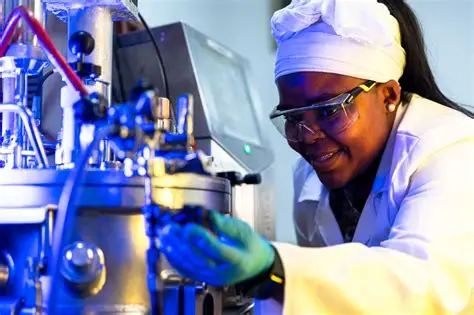
“South Africa has launched the Southern African Biomanufacturing Training Hub, a project spearheaded by the Council for Scientific and Industrial Research (CSIR) with funding from the European Union’s Global Gateway initiative and support from Germany’s KfW Development Bank. The hub will train up to 400 candidates annually in vaccine and pharmaceutical production, strengthening Africa’s health resilience and positioning South Africa as a biotechnology leader.”
South Africa has taken a decisive step in reshaping its biotechnology landscape with the establishment of the Southern African Biomanufacturing Training Hub. This initiative, backed by the European Union (EU) and Germany’s KfW Development Bank, represents a landmark investment in Africa’s scientific future. It is not only a technological milestone but also a political statement about South Africa’s ambition to lead the continent in biotechnology innovation.
Background & Context
The COVID-19 pandemic exposed Africa’s vulnerability to global supply chain disruptions in vaccines and medicines. South Africa’s government responded by prioritizing biotechnology as a strategic sector, linking it directly to national health security, industrial competitiveness, and pharmaceutical sovereignty. The new hub is designed to reduce reliance on imports and external supply chains, ensuring that Africa can produce its own vaccines and essential medicines.
Objectives of the Hub
- Training Capacity: Up to 400 candidates annually at multiple skill levels.
- Focus Areas: Bioprocess development, vaccine production, quality control, GMP (Good Manufacturing Practices), and large-scale operations.
- Strategic Goals: Strengthen health resilience, expand local vaccine and pharmaceutical production, and create a skilled workforce to drive innovation.
Infrastructure & Investment
The EU’s funding will upgrade CSIR’s facilities, enabling hands-on training with modern equipment. Pilot-scale biomanufacturing operations and specialized vaccine production modules will provide trainees with real-world experience. This infrastructure is designed to support both industrial competitiveness and public health resilience.
Political & Economic Implications
- Health Security: South Africa reduces dependence on imported vaccines and medicines.
- Industrial Competitiveness: By positioning itself as a biotechnology hub, South Africa gains leverage in continental trade and innovation ecosystems.
- Job Creation: Thousands of high-skilled jobs are expected, directly impacting economic growth.
Regional Impact
The hub is not limited to South Africa. It will serve the broader Southern African region, offering training and technology transfer to neighboring countries. This regional approach strengthens Africa’s collective capacity to respond to future pandemics and health crises.
Challenges & Risks
- Funding Sustainability: Long-term success depends on continued investment beyond the EU’s initial support.
- Brain Drain: Retaining skilled professionals in Africa will be critical.
- Regulatory Alignment: Harmonizing pharmaceutical standards across African countries remains a challenge.
Conclusion
The Southern African Biomanufacturing Training Hub is a bold step toward African biotechnology sovereignty. By combining international support with local ambition, South Africa is positioning itself as a continental leader in vaccine and pharmaceutical production. This initiative not only strengthens health resilience but also creates economic opportunities, making biotechnology a cornerstone of Africa’s future development.



